
DESTINATIONS · UMBRIA
Plan Umbria, Italy’s green heart
Assisi, Perugia, Orvieto and the wine towns around Montefalco: hill towns with fewer crowds than Tuscany and a slower rhythm.
The short answer: Perugia is the best base without a car, thanks to its hotels and connections. With a car, a countryside base between Perugia, Assisi and Montefalco lets you reach several hill towns in short drives. One day is enough for Assisi or Orvieto on its own. Two to three days cover Perugia and Assisi, and four to five days let you add Montefalco and smaller towns from a single base.
Last updated: November 3, 2026
Jump to: Town selector · What to skip · Where to go · Getting around · Food and wine · Month by month · Umbria or Tuscany · Where to stay
Why choose Umbria?
Umbria is the only region of central Italy without a coastline, and it travels like a string of hill towns. Each one is compact enough to see in half a day, so the region suits travelers who like to move slowly and stay in one base.
Best for: hill towns, religious art, food and wine, slow travel and repeat visitors to Italy. Ideal stay: 3–5 days from one base, or a day trip if you only have time for Assisi or Orvieto.
Which Umbria town fits your trip?
Umbria is small, but its towns are not interchangeable. Some sit on the railway, some need a car, and some are better as a half-day stop than as a base. So use this Umbria town selector to match each place to your trip before you book a hotel.
| Town | Best for | By train? | Time needed | Base or day trip |
|---|---|---|---|---|
| Perugia | Art, food, evenings out | Yes | 1–2 days | Base without a car |
| Assisi | St. Francis and the basilicas | Yes, station in the plain below | 1 day | Base or day trip |
| Spello | Flower-lined lanes, the Infiorate | Yes | Half day | Day trip or small base |
| Orvieto | Cathedral and underground caves | Yes, on the Florence–Rome line | 1 day | Base or day trip from Rome |
| Spoleto | Ponte delle Torri, summer festival | Yes | 1 day | Base for the south |
| Gubbio | Medieval stone town, cable car | No: bus from Perugia | 1 day | Day trip |
| Lake Trasimeno | Lake towns and Isola Maggiore | Yes, Passignano and Castiglione del Lago | 1 day | Day trip or quiet base |
| Montefalco | Sagrantino wine | No: bus or car | Half day | Day trip by car or tour |
| Bevagna | Small walled town, June festival | No: bus or car | Half day | Pair with Montefalco |
| Trevi | Olive groves and oil | Yes, station in the valley below | Half day | Day trip |
| Todi | Medieval main square, views | Limited: train and bus | Half day | Day trip |
| Città di Castello | Art museums, quiet north | Yes, regional line to Perugia | Half day | Day trip |
| Norcia | Cured meats, truffles, mountains | No: bus from Spoleto | 1 day | Day trip by car |
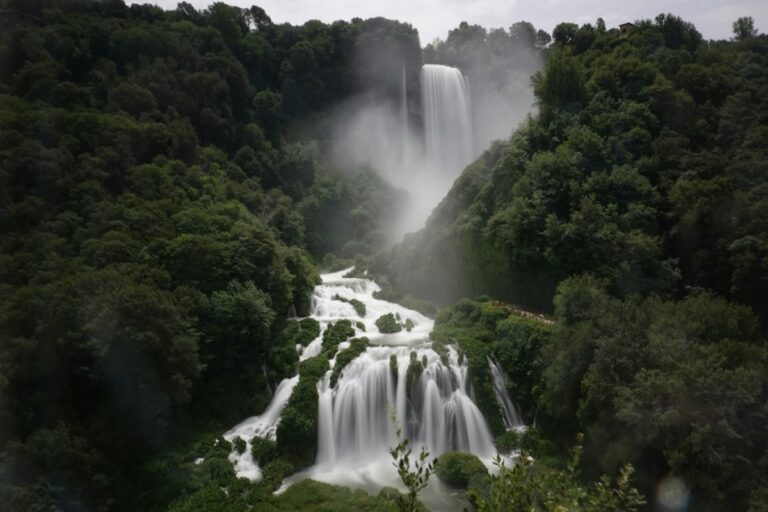
| Marmore Falls | Waterfall, timed water releases | Via Terni station | Half day | Day trip, timed to the release |
In short, a traveler without a car should stay on the two rail lines: Perugia, Assisi and Spello in the north, Spoleto and Orvieto in the south. With a car, however, the whole table opens up. For a day-by-day version of the same choices, see our Umbria itinerary.
What to skip in Umbria
- Skip three or four towns in one day. After all, each hill town needs a climb, a walk and a slow lunch. So two a day is plenty.
- Skip driving into the old towns. Instead, park outside the limited-traffic zones and walk or take the escalators.
- Skip rushing the steep towns if mobility is a concern. Every hill town has climbs and steps; Perugia’s Minimetrò and Spoleto’s escalators help, but plan short walks.
- Skip the Marmore Falls on a November weekday. There is no water release, so you would see only a thin stream.
- Skip Isola Polvese for now. Its ferry is suspended, so choose Isola Maggiore instead.
- Skip driving to Castelluccio on bloom weekends. In 2026, private cars were restricted and shuttles ran instead.
Where to go in Umbria: north, center and south
Splitting Umbria into three areas makes planning easier. Each area works from one base, so you can see it without changing hotels every night.
Northern Umbria: Perugia, Gubbio, Città di Castello and Lake Trasimeno
Perugia is the regional capital and the easiest base without a car. Also, the Minimetrò runs from the station up to the old town, and the city has the widest choice of hotels in the region. Start with our Perugia travel guide, then pick sights from our list of things to do in Perugia and compare the best tours in Perugia.
Gubbio is a medieval stone town on a steep slope. It has no railway station of its own. Instead, Busitalia line E001 runs from Perugia, and Trenitalia sells a Gubbio Link ticket that combines train and bus to the center. Above the town, meanwhile, the cable car to the Basilica of Sant’Ubaldo runs from 10:00 a.m. to 1:15 p.m. and from 2:30 to 5:00 p.m. in November, January and February, and it closes on Wednesdays in those months, according to the official cable car timetable (checked November 2026). December hours had not been published yet when we checked. Every May 15, the town also hosts the Festa dei Ceri, a race uphill with three huge wooden pillars.
Città di Castello, in the far north, is quieter and suits art lovers on a second visit. Also, regional trains between Città di Castello and Perugia Sant’Anna resumed in September 2026, after a long closure of the old FCU line.
Lake Trasimeno lies west of Perugia, on the border with Tuscany. Passignano sul Trasimeno and Castiglione del Lago both have stations, and Busitalia ferries cross to Isola Maggiore. However, the ferry to Isola Polvese has been suspended since June 29, 2026, so check the Busitalia lake timetable before you go (checked November 2026).
Central Umbria: Assisi, Spello, Montefalco, Bevagna and Trevi
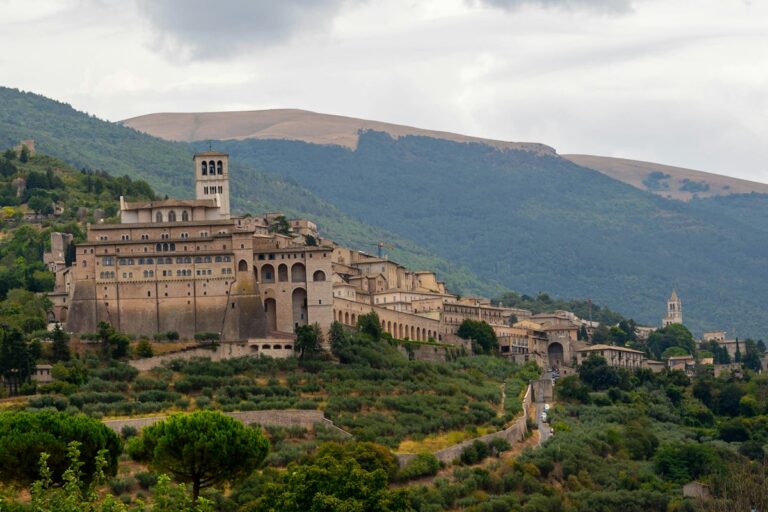
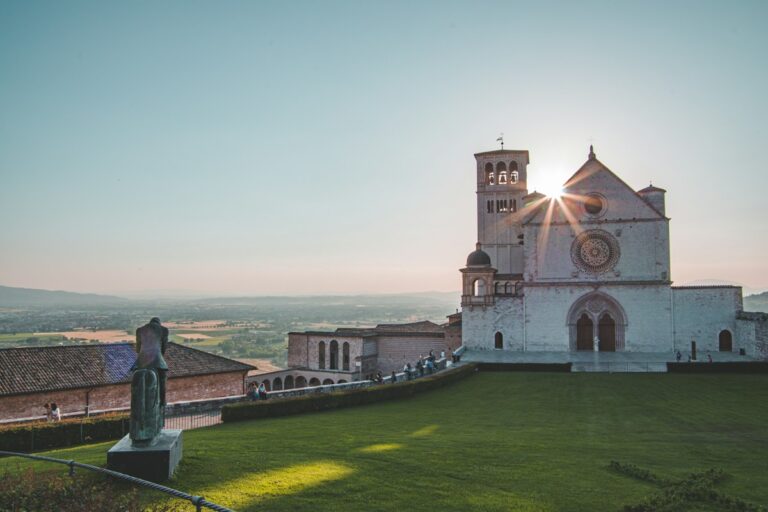
Assisi is the town of St. Francis and the reason many travelers come to Umbria. Its station sits in the plain below, so plan the bus up to the old town. Our Assisi day trip guide covers the train, the bus and a 5–6 hour route, while a guided tour of Assisi adds context inside the basilica.
Spello is one stop from Assisi on the same line. It is also small enough for half a day. Its Infiorate, the carpets of flower petals laid in the streets, follow the feast of Corpus Domini; in 2026 they took place on June 6 and 7, according to Umbria Tourism. The 2027 dates have not been announced yet (checked November 2026).
Montefalco is the home of Sagrantino, a red wine with DOCG status, Italy’s highest wine classification. The wineries sit outside the walls, so you need a car, a driver or a tour. In addition, the Strada del Sagrantino lists the producers. Alternatively, for a guided option, compare the Montefalco winery and olive oil mill tour.
Bevagna is a flat, walled town a short drive from Montefalco, so the two pair well in one day. In June it stages the Mercato delle Gaite, a medieval festival; in 2026 it ran from June 17 to 28, according to Umbria Tourism (2027 dates not yet announced). Trevi, on the railway south of Foligno, is ringed by olive groves and makes a good stop during the olive harvest.
Southern Umbria: Spoleto, Todi and Orvieto
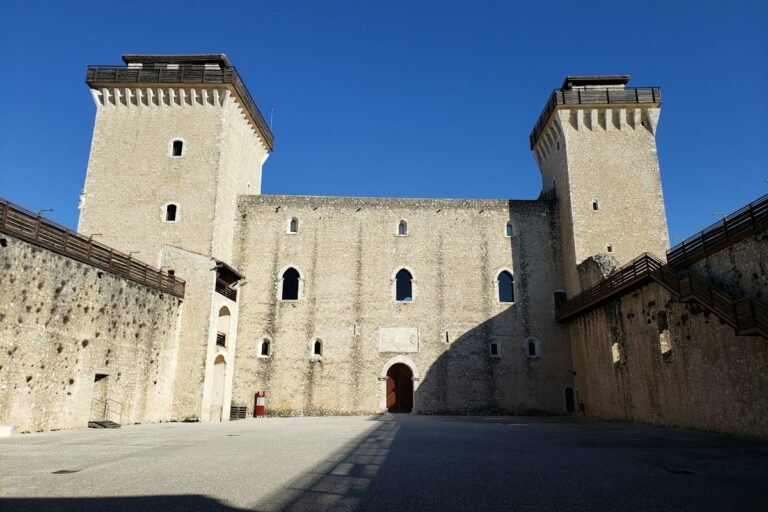
Spoleto is the most practical base for the south. It sits on the Rome–Ancona railway, and a network of escalators and walkways makes its upper town easier to climb. Then walk out to the Ponte delle Torri, the medieval aqueduct bridge over the gorge. In summer, the town also hosts the Festival dei Due Mondi; the 2026 edition ran from June 26 to July 12, according to the festival website (2027 dates not yet announced).
Todi is built around Piazza del Popolo, its medieval main square, with wide views over the Tiber valley. Since September 7, 2026, Trenitalia has run a mixed train and bus service between Terni, Todi Ponte Rio and Perugia Sant’Anna, according to its service notice (checked November 2026); a Todi Link ticket covers the bus up to the town. Ponte Rio station is below the old town, so a car is still simpler.
Orvieto stands on a block of volcanic rock on the Florence–Rome line. In fact, the fastest trains from Rome take about one hour (checked November 2026 on Trainline), which makes it the easiest Umbrian day trip from the capital. Our guide to things to do in Orvieto covers the cathedral, the wells and the caves, and the Orvieto day trip from Rome compares guided options.
Norcia, the Valnerina and the Marmore Falls
Norcia, in the mountains of the Valnerina, is famous for cured pork; Italians call a pork butcher a norcino after the town. It has no railway; instead, Busitalia line E401 connects it with Spoleto, according to Umbria Tourism. Above it, meanwhile, the plain of Castelluccio turns into a carpet of flowers in early summer. In 2026, the town of Norcia ran weekend shuttles from June 21 to July 12 and restricted private cars, so check the shuttle rules for the year you travel.
The Marmore Falls, near Terni, are a man-made waterfall controlled by a hydroelectric plant. As a result, the water flows only at set times. In November 2026 there is no release on weekdays, and on Saturdays and Sundays the falls run from 12:00 to 1:00 p.m. and from 3:00 to 4:00 p.m. In December, by contrast, releases run on weekends and on December 7, 8, 24, 25 and 28–31, from 12:00 to 1:00 p.m. and from 2:00 to 3:00 p.m. A full ticket costs €12 from age 10 and reduced tickets cost €10, according to the official falls site (checked November 2026). Schedules can change, so confirm on the official site on the day.
Getting to Umbria and getting around
By plane
Umbria’s own airport is Perugia San Francesco d’Assisi (PEG), with a small number of European routes. From the terminal, the Umbria Airlink bus runs to the Perugia and Assisi train stations. It costs €5 each way (€2.50 for children aged four to 12), according to the airport transport page (checked November 2026). Many travelers, however, fly into Rome or Florence and continue by train.
By train
Three rail lines matter for visitors. First, the Florence–Rome line serves Orvieto and Castiglione del Lago. Next, the Foligno–Terontola line serves Perugia, Assisi, Spello and Passignano. Finally, the Rome–Ancona line serves Foligno, Trevi, Spoleto, Terni and Narni. As a guide, the fastest trains take about one hour from Rome to Orvieto, about 2 hours 20 minutes from Rome to Perugia and about 1 hour 25 minutes from Florence to Perugia, depending on the connection (checked November 2026 on Trainline). For tickets and validation, read our guide to trains in Italy.
By bus and by car
Busitalia fills the gaps between stations, and Trenitalia’s Gubbio Link and Todi Link tickets combine train and bus. Still, buses thin out on Sundays and in winter. On the other hand, a car gives you the wine country, the Valnerina and the smaller hill towns. With a car, a base outside the big old towns also makes parking easier. Most historic centers are limited-traffic zones, so read our guide to driving in Italy and compare options for car rental in Italy before you pick up the keys.
Food and wine in Umbria
Umbrian food is simple and seasonal: truffles, olive oil, lentils, cured pork and red wine. Above all, the calendar decides what you eat, so it helps to know the seasons before you travel.
Truffle seasons in Umbria
Umbria’s regional truffle law (Law 6/1994, as amended in 2004) sets the harvest windows (checked November 2026). However, the region publishes an annual calendar that can shift these dates, so treat them as a guide.
| Truffle | Harvest season |
|---|---|
| Black winter truffle (Tuber melanosporum) | December 1 to March 15 |
| Summer truffle (scorzone) | Last Sunday of May to August 31 |
| White truffle (Tuber magnatum) | Last Sunday of September to December 31 |
Norcia celebrates the black truffle with Nero Norcia in late winter; in 2026 it ran over two weekends, February 20–22 and February 27 to March 1, according to Umbria Tourism. For other fairs, also see our guide to truffle festivals in Italy.
Olive oil, Sagrantino and chocolate
In fall, the olive mills open to visitors during Frantoi Aperti in Umbria, which runs from October 17 to November 15, 2026. For tastings beyond Umbria, compare our guides to olive oil tours in Italy and wine tours in Italy. Then, in mid-November, Perugia hosts Eurochocolate, from November 13 to 22, 2026, so the last olive-mill weekend overlaps with the first chocolate weekend.
Umbria month by month
Umbria changes a lot through the year. So this calendar shows what is happening and what to plan around. However, dates for 2027 appear only where the organizers have announced them.
| Month | What happens | Plan around it |
|---|---|---|
| January | Umbria Jazz Winter in Orvieto until January 3, 2027 | Quiet towns, short days, black truffle season |
| February–March | Nero Norcia truffle fair (2027 dates to be announced) | Black truffle season ends March 15 |
| April–May | Spring walking weather; Festa dei Ceri in Gubbio on May 15 | Book Gubbio early for May 15 |
| June | Infiorate in Spello, Mercato delle Gaite in Bevagna, Castelluccio in bloom | Check shuttle rules for Castelluccio |
| July | Umbria Jazz in Perugia, July 9–18, 2027 | Hotels in Perugia fill early |
| August | Hot inland; summer truffle season | Start early and rest at midday |
| September–October | Grape harvest; white truffle season starts | Good months for walking |
| November | Frantoi Aperti until November 15, 2026; Eurochocolate, November 13–22, 2026 | Marmore Falls run on weekends only |
| December | Black truffle season opens December 1; Umbria Jazz Winter from December 30, 2026 | Check holiday opening hours |
Umbria Jazz dates come from the Umbria Jazz website (checked November 2026). For the full summer festival guide, see our page on Umbria Jazz, and for a month-by-month view of the whole country, see Italy in November.
Umbria or Tuscany?
In practice, many travelers have time for only one of the two regions. Still, the right choice depends on your trip, not on which region is “better”.
| If you… | Choose | Why |
|---|---|---|
| Are visiting Italy for the first time | Tuscany, plus Orvieto | Florence and Siena are hard to skip; Orvieto fits in as a stop on the Rome line |
| Have already seen Florence | Umbria | Similar hill towns and food, with fewer crowds |
| Care most about religious art | Umbria | Assisi and the Basilica of St. Francis |
| Travel without a car | Either, with care | In Umbria, base yourself on the rail lines: Perugia, Assisi, Spello or Spoleto |
| Want to taste wine | Depends on the wine | Chianti and Montalcino in Tuscany, Sagrantino in Umbria |
| Have one extra day between Rome and Florence | Umbria | Stop in Orvieto or at Lake Trasimeno on the main line |
To combine the two, our Tuscany itinerary picks up where the Umbria plan ends.
Where to stay in Umbria
Without a car, sleep in Perugia or Assisi for the north and in Spoleto or Orvieto for the south. With a car, however, a farmhouse or agriturismo, a working farm with rooms, puts you between the hill towns and the wineries. Our guide to where to stay in Perugia compares the city’s areas, and our list of places to stay in Umbria covers specific hotels. Also, Perugia and Assisi both charge a nightly tourist tax; for how it works, see our guide to the Italy tourist tax.
What to do in Umbria
Walk the hill towns
Start in Perugia or Assisi, then add one smaller town a day instead of racing through several.
Taste Sagrantino
Montefalco’s red wine and the region’s olive oil are the food story of Umbria. Use our guide to olive oil tours in Italy to compare Umbrian mills, harvest timing and tasting formats.
See it from above
A hot-air balloon flight over the Assisi and Perugia countryside is the region’s signature splurge.
Looking for quieter places like these across Italy? See hidden villages and towns in Italy.
Selected Umbria experiences
Some links in this section lead to experiences Italy2Love has reviewed. If you book through them, Italy2Love earns a commission at no extra cost to you. A commission never changes what we recommend or the order we list it in.
Selected automatically from Italy2Love experience pages that match this page, ordered by Viator rating and number of reviews (checked September 2026). Prices and availability are shown live on Viator.
Plan your Umbria trip
How many days?
1 day: Assisi or Orvieto. 2–3 days: Perugia and Assisi. 4–5 days: add Montefalco, Spello or Todi from a countryside base.
Do you need a car?
Not for Perugia, Assisi or Orvieto, which have rail connections. For Montefalco, the smaller hill towns and the countryside, a car makes the trip much easier.
When to visit?
Spring and fall are the most comfortable seasons for walking steep hill towns. Early fall brings the grape harvest around Montefalco. Summer can be hot inland, and winter is quiet, with shorter days. In July, Perugia hosts Umbria Jazz, and Orvieto hosts its winter edition over New Year.
Plan the rest of your trip. Umbria rewards curiosity. These guides help you plan the towns, the food and the festivals.
- Umbria itinerary: four, five or seven days by train or car.
- Assisi day trip: trains, buses and a six-hour route.
- things to do in Orvieto: the Duomo, the wells and the caves.
- Eurochocolate Perugia: dates, events and travel tips.
Choosing your base? Compare places to stay in Perugia and Assisi below.
Affiliate links: if you book through them, Italy2Love earns a commission at no extra cost to you.
Still choosing between Umbria and its neighbors? See the best places to visit in Italy, region by region.
Keep planning: Boutique Hotel Aurora in Spoleto and Hotel Posta – Palazzo Guidoni in Orvieto.
Frequently asked questions
Is Umbria worth visiting?
Yes, especially for travelers who have already seen Florence or Rome. Umbria offers hill towns, religious art and food and wine with fewer crowds than Tuscany. Perugia, Assisi and Orvieto are the easiest places to start, and each can be seen in half a day to a day.
What is the best base in Umbria?
Perugia is the best base without a car, thanks to its hotels and connections. With a car, a countryside base between Perugia, Assisi and Montefalco lets you reach several hill towns in short drives.
Can you visit Umbria without a car?
Partly. Perugia, Assisi and Orvieto can be reached by train, although Assisi’s station is in the plain below the town. Montefalco, Spello, Todi and the countryside wineries are much easier with a car or a guided tour.
How many days do you need in Umbria?
One day is enough for Assisi or Orvieto on its own. Two to three days cover Perugia and Assisi, and four to five days let you add Montefalco and smaller towns from a single base.
Is Orvieto in Umbria or Tuscany?
Orvieto is in Umbria. It sits on the Rome–Florence railway, which makes it a popular stop or day trip for travelers moving between the two cities.
Is Umbria better than Tuscany?
Neither is better for every trip. For example, Tuscany suits a first visit to Italy because of Florence and Siena. Umbria, on the other hand, suits travelers who have already seen Florence and want similar hill towns and food with fewer crowds.
When is the best time to visit Umbria?
Spring and fall are the most comfortable seasons for walking the hill towns. Fall adds the grape and olive harvests, Frantoi Aperti and Eurochocolate in Perugia, while July brings Umbria Jazz.
Umbria rewards a slower pace
Pick one base, see one or two hill towns a day, and leave time for lunch.
Read before you go
More Umbria travel guides
Guides, events and experiences in and around Umbria, most recently updated first.
Marmore Falls: Water Release Times, Tickets and How to Visit
The Marmore Falls (Cascata delle Marmore) near Terni are one of Umbria's most famous sights, but they come with a catch: the…
Things to Do in Spoleto: Cathedral, Rocca and the Free Walkways
The best things to do in Spoleto are spread over a steep hill, but the town has a trick that most hill…
Things to Do in Assisi: Basilicas, Hours and a One-Day Plan
The best things to do in Assisi fit into one long day, but the town is at its best when you stay…
Umbria Itinerary: 4, 5 and 7-Day Plans by Train or Car (2026)
An Umbria itinerary for 4, 5 or 7 days: where to base yourself, which towns work by train, the Minimetrò and Orvieto…
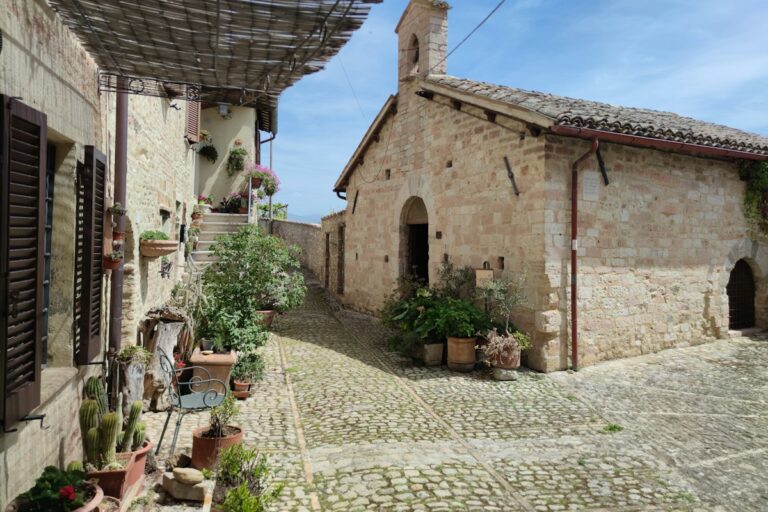
Montefalco and Bevagna: Sagrantino Wineries, Frescoes and a Day Plan
Montefalco and Bevagna are two neighboring small towns in the heart of Umbria's wine country. Montefalco is the home of Sagrantino, a…
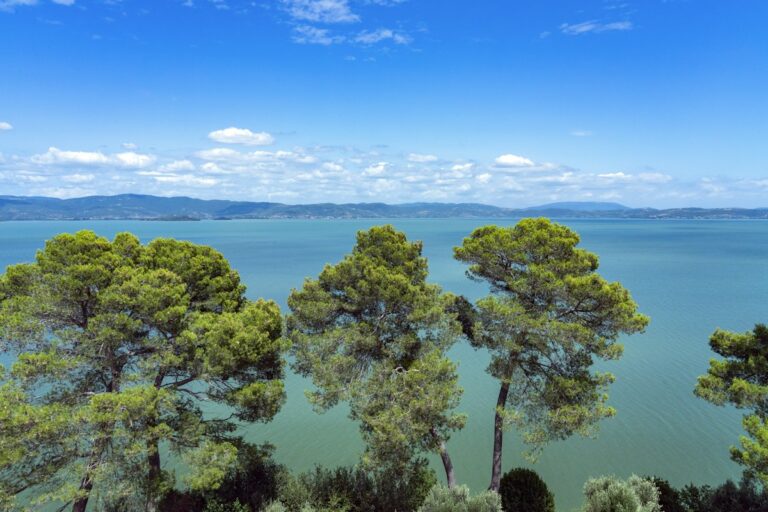
Lake Trasimeno: Ferry to Isola Maggiore, Towns and Winter Timetable
Lake Trasimeno is a large lake on Umbria's border with Tuscany. It has three islands, lakeside towns with train stations and the…
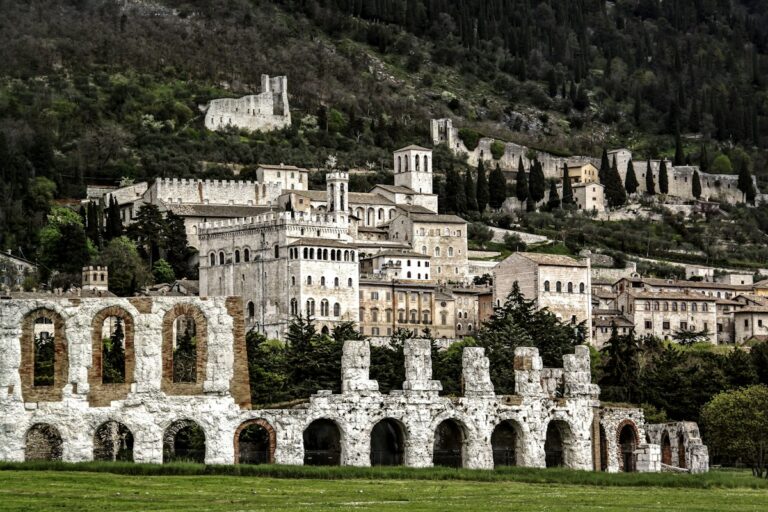
Things to Do in Gubbio: Cable Car, Palazzo dei Consoli and Corsa dei Ceri
The best things to do in Gubbio sit on a steep slope of Monte Ingino. The stone palaces and the Roman theater…
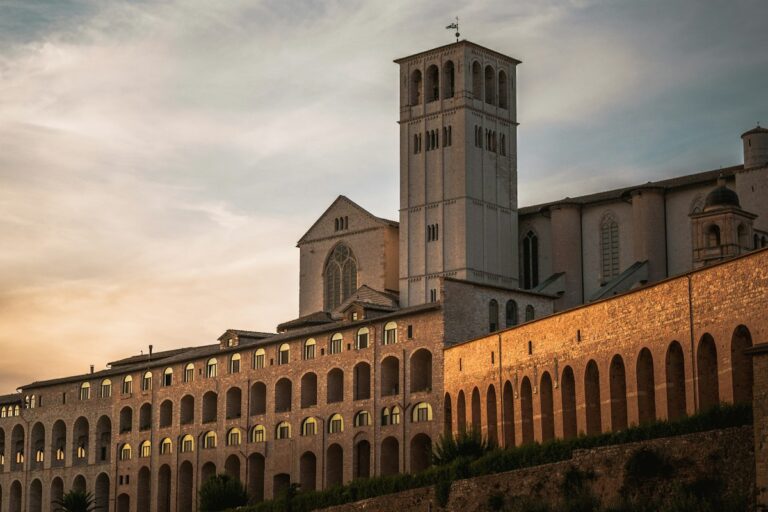
Assisi Day Trip from Rome or Florence: Trains, Bus and a 6-Hour Route (2026)
How to plan an Assisi day trip from Rome or Florence: regional trains, Busitalia line C to the basilica, official hours, free…

Eurochocolate Perugia 2026: Dates, Events and Travel Guide
Eurochocolate Perugia 2026 with confirmed dates, what to expect, how to get there, where to stay and practical tips for the chocolate…