
BLOG · Italy2Love Magazine Guide
Trains in Italy: Trenitalia vs Italo, Tickets, Stations and Strikes Explained (2026)
A decision guide to trains in Italy: Trenitalia vs Italo, high-speed and regional ticket rules, fares, main stations, luggage and strikes, checked on official sources in September 2026.
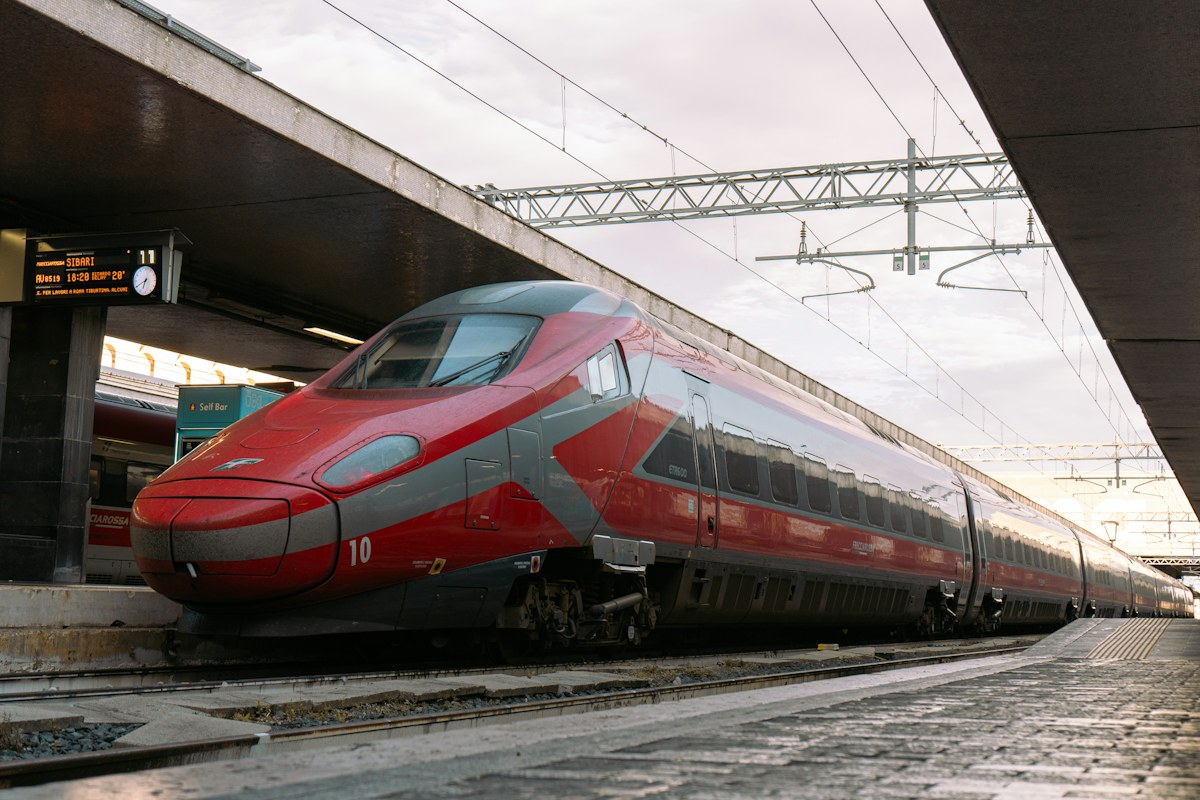
Trains in Italy are the easiest way to move between the big cities, but the system has two operators, several train types and two very different ticket logics. This guide puts those choices in order for first-time visitors: who runs which route, how tickets work, which station to use and what to do when a strike is called.
The short answer: for Rome, Florence, Bologna, Milan, Venice and Naples, take a high-speed train, either a Trenitalia Frecciarossa or an Italo. Both sell tickets for a specific train with an assigned seat, and cheaper fares sell out first, so book those legs early. For towns off the main line, you take a Trenitalia regional train. Its tickets work differently. Paper tickets must be validated before you board. Digital tickets, by contrast, activate at the departure time of the train you picked (checked September 2026).
Last updated: September 26, 2026
Trains in Italy at a glance
Routes and rules for trains in Italy come from the operators’ own pages, checked September 2026.
| Train type | Operator | Where it runs | Ticket logic | Book ahead? |
|---|---|---|---|---|
| Frecciarossa | Trenitalia | High-speed spine: Turin, Milan, Venice, Bologna, Florence, Rome, Naples, Salerno and beyond | Specific train, assigned seat | Yes, cheaper fares sell out |
| Frecciargento | Trenitalia | Rome to Puglia, Calabria and Genoa, partly on classic lines | Specific train, assigned seat | Yes |
| Frecciabianca | Trenitalia | Classic lines, such as the Tyrrhenian coast and Rome to the Adriatic | Specific train, assigned seat | Yes |
| Intercity | Trenitalia | Classic lines between medium and large towns | Specific train, assigned seat | Useful in summer |
| Regionale | Trenitalia and regional operators | Local lines, small towns, Cinque Terre, lakes | Paper: validate, then 4 hours. Digital: tied to your chosen train | Rarely needed |
| Italo | Italo (private) | High-speed network, 59 stations in 51 cities | Specific train, assigned seat | Yes, cheaper fares sell out |
Trenitalia or Italo: which one to choose
Trenitalia is the national operator, and it runs every category of train, from local commuter lines to the red Frecciarossa. Italo is a private company that runs high-speed trains only. On the main axis between Turin, Milan, Bologna, Florence, Rome and Naples, the two compete directly. As a result, it pays to compare both for the same departure time.
According to Trenitalia, the Frecciarossa reaches 300 km/h and offers up to four service levels: Standard, Premium, Business and Executive (checked September 2026). Meanwhile, Italo says its trains link 59 stations in 51 cities, from Reggio Calabria to the Trieste area (checked September 2026).
In practice, the choice comes down to three questions:
- Does the train go where you are going? Italo stops only on the high-speed network. For Pisa, Lucca, Siena, the Cinque Terre or most small towns, you need Trenitalia.
- Which departure fits your day? On the busy routes, both run many trains. For example, Trenitalia lists more than 100 daily Rome to Milan connections, and Italo lists 33 in each direction.
- Do you need a connection? A single Trenitalia ticket can combine a Frecciarossa with a regional train. However, the two do not sell each other’s trains. So a mixed trip means two tickets and no protection if the first train is late.
Typical travel times on the main routes
Travel times vary by train, because some stop more often than others. The figures below come from the operators’ own route pages, checked September 2026:
- Rome to Milan: Trenitalia lists two non-stop Frecciarossa trains in 2h50, according to its Rome to Milan page. Italo gives roughly 2 hours and 52 minutes, according to its route page.
- Rome to Florence: “just over an hour and a half” by Frecciarossa, according to the Trenitalia route page.
- Florence to Venice: about 2 hours on Italo’s fastest trains, according to its route page. It also lists 11 daily trains each way.
However, a stopping service on the same route can take much longer, so check the exact train.
How tickets work on trains in Italy
High-speed and Intercity: a seat on one train
Frecce, Intercity and Italo tickets are for a named train, date and seat. You do not validate them. Instead, the conductor checks the QR code on your phone or printout. If you miss the train, what happens next depends on your fare.
Regional trains: the rule that trips up visitors
Regional tickets follow different rules, and the format matters. According to Trenitalia, a paper regional ticket must be validated in the machines at the departure station before the train leaves. It is then valid for four hours (checked September 2026). Otherwise, you pay a fine on top of the fare.
By contrast, the digital regional ticket bought online or in the app needs no check-in. According to Trenitalia, it activates automatically at the scheduled departure of the train you selected and stays valid until that train arrives (checked September 2026). You can change the time without limit until departure on the day of travel. Therefore, if your plans shift, move the ticket to a later train before you board.
Fares: when booking early pays off
High-speed and Intercity trains in Italy use dynamic pricing. The cheapest quota sells out first, so early booking matters most for weekends, holidays and summer. Regional fares, by contrast, are fixed, so there is little reason to book them far ahead.
Trenitalia sells three main fare levels on the Frecce and Intercity. According to its fare conditions (checked September 2026):
- Base: the most flexible. You can change it before departure, and refunds come with a 20% deduction.
- Economy: on sale until midnight two days before departure. You can change the date or time only by paying the difference to the Base fare.
- Super Economy: on sale until midnight six days before departure, with no changes allowed.
In addition, Trenitalia now sells a paid refund option, called tiRimborso, for Economy and Super Economy tickets. Italo, meanwhile, sells Flex, Economy and Low Cost fares, with flexibility falling as the price drops. Always read the conditions at checkout.
Which station to use in each city
Most mistakes with trains in Italy happen here, because several big cities have more than one main station. Italo lists the same key stations on its network page (checked September 2026):
- Rome: Roma Termini is central and linked to both metro lines. Roma Tiburtina is east of the center, and many high-speed trains also stop there.
- Milan: Milano Centrale is the main hub. Some trains also stop at Milano Rogoredo, in the southeast.
- Florence: Firenze Santa Maria Novella, often shortened to SMN, is a short walk from the Duomo. It handles both high-speed and regional trains.
- Venice: Venezia Santa Lucia sits on the Grand Canal, in the historic center. Venezia Mestre is on the mainland, so do not get off there if your hotel is in Venice itself.
- Naples: Napoli Centrale, at Piazza Garibaldi, is the main station. Italo also serves Napoli Afragola, north of the city.
Luggage on Italian trains
There is no check-in on trains in Italy. You carry your bags on board and store them yourself. According to the Trenitalia FAQ, luggage travels free as long as it goes in the spaces provided (checked September 2026). Meanwhile, Italo sets a maximum of 75 x 53 x 30 cm per piece in Smart class, with more room in the higher classes (checked September 2026).
In practice, racks near the doors fill up fast, so board early and pack a bag you can lift yourself.
Strikes (sciopero): how to check and what still runs
Rail strikes, called sciopero (strike), are announced in advance in Italy. The Ministry of Infrastructure and Transport publishes them on its official strike calendar, which you can filter by sector (checked September 2026). Filter for “Ferroviario” (rail).
Even on strike days, some trains run. According to Trenitalia, regional trains are guaranteed from 6 to 9 a.m. and from 6 to 9 p.m. on weekdays (checked September 2026). On public holidays, the bands are 7 to 10 a.m. and 6 to 9 p.m. For long-distance trains, Trenitalia publishes a list of guaranteed services instead. So check the list the day before you travel.
Scenic regional lines worth planning around
Regional trains are also a reason to travel in themselves. For example, the Cinque Terre line links the five villages between Levanto and La Spezia Centrale. According to Trenitalia, the Cinque Terre Treno MS Card gives unlimited second-class regional travel on that stretch (checked September 2026). For a guided day instead, there is a Cinque Terre day trip from Florence.
Similarly, Italo lists Desenzano and Peschiera, on the southern shore of Lake Garda, among its stations. Our guide to Lake Garda tours covers what to do there.
Apps and planning your route by train
Download the Trenitalia and Italo apps before you land; both sell tickets and show delays. Then build your route around the high-speed line. Our 7 days in Italy itinerary and 2 weeks in Italy itinerary are built on train connections. For the lakes, Venice and Verona, see the northern Italy itinerary.
Where trains stop short, such as in the Tuscan countryside or Puglia’s villages, read our guide to driving in Italy. Finally, budget for the local Italy tourist tax in each city where you sleep.
The Cinque Terre line is one of the most useful regional routes for walkers. Our guide to Cinque Terre hiking shows how to combine the trails with the train.
Planning a specific route? Our step-by-step guides cover the Rome to Naples train and the Rome to Venice train, including stations, fares and onward connections.
Flying into Rome? Our guide to getting from Fiumicino to Rome compares the train with the other options.
Trains in Italy: frequently asked questions
Is Trenitalia or Italo better for tourists?
On the main high-speed routes, both are comfortable and fast, so compare the departure time and fare. For regional destinations such as Pisa, Siena or the Cinque Terre, only Trenitalia goes there.
Do I need to validate my train ticket in Italy?
Only paper regional tickets need validation, in the station machines before departure, and they are then valid for four hours. Digital regional tickets activate automatically at the departure of the chosen train, and high-speed tickets are never validated.
How far in advance should I book trains in Italy?
Book high-speed trains as early as your plans allow, because cheaper fares sell out first. Trenitalia Super Economy fares close six days before departure and Economy fares two days before, while regional fares are fixed.
Which station should I use in Venice?
Use Venezia Santa Lucia if your hotel is in the historic center. Venezia Mestre is on the mainland.
How do I know if there is a train strike in Italy?
Check the strike calendar of the Italian Ministry of Infrastructure and Transport, filtered for rail. On strike days, Trenitalia guarantees regional trains from 6 to 9 a.m. and 6 to 9 p.m. on weekdays.
Plan your route by rail
Build your Italy itinerary around the trains
Pick an itinerary built on fast connections, then add a day trip or two from each base, with prices and ratings read on Viator.
Book it: experiences for this trip
Matched to this article by place and interest, then ordered by Viator rating and number of reviews (checked September 2026). Prices and availability are shown live on Viator.
Keep exploring Italy