
Where to Stay · Italy2Love Magazine Guide
Masseria in Puglia or a Trullo? Where to Stay in Valle d’Itria
Choosing a masseria in Puglia or a trullo? Compare privacy, pools, food, location, car needs and seasons before booking in Valle d’Itria.
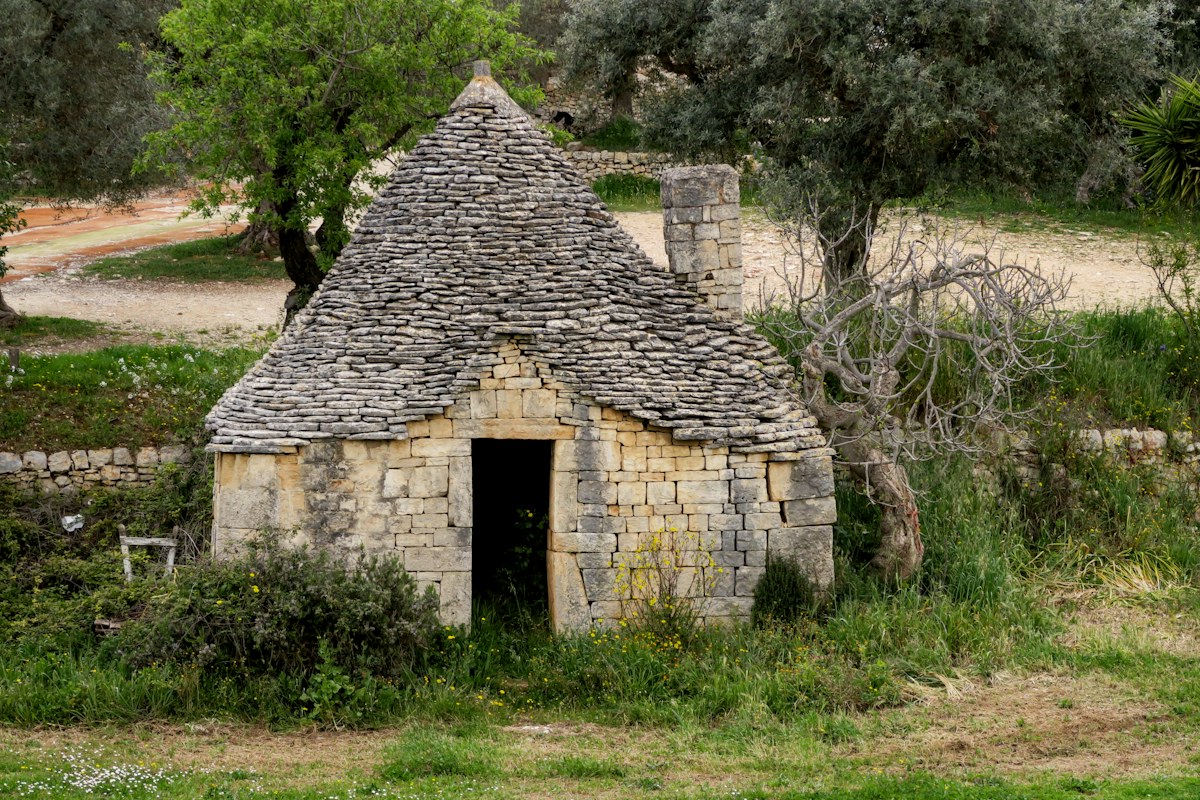
Choosing between a masseria in Puglia and a trullo changes more than the look of your room. In Valle d’Itria, a masseria usually gives you a larger rural estate, more shared services and a stronger food-and-farm dimension. A trullo usually offers distinctive architecture, privacy and a more independent stay—but comfort, layout and access vary widely.
The quick answer: choose a masseria if you want breakfast, a pool, staff, dinner or activities in one place. Choose a trullo if you value architectural character, seclusion and self-catering more than hotel-style service. If you will not rent a car, choose neither automatically: a town hotel or apartment in Martina Franca, Locorotondo, Cisternino or Alberobello may make the trip much easier.
Last updated: October 6, 2026
This guide focuses only on the accommodation decision. For towns, routes and trip planning, start with our Valle d’Itria travel guide; for the wider region, use the Puglia travel guide.
Masseria or trullo: the decision at a glance
| Decision factor | Masseria | Trullo |
|---|---|---|
| Overall experience | Country estate, often with hospitality services | Architectural stay, often private and self-contained |
| Food | Breakfast is common; dinner or farm products may be available | Often self-catering; restaurants may require a drive |
| Services | More likely to have reception, housekeeping, pool and activities | Varies from simple rental to serviced resort suite |
| Privacy | Private room or suite within a shared property | Often an entire small house or cluster |
| Space | Better odds for large rooms, common areas and accessible layouts | Original rooms can be compact, curved and connected in unusual ways |
| Best for | Food lovers, families, first-time rural travelers, service seekers | Couples, design lovers, independent travelers, small groups |
| Car need | Usually high in the countryside | Usually high outside Alberobello |
| Main booking risk | Assuming “farm stay” means a working farm or included meals | Assuming every room is original, cool, spacious or easy to access |
What is a masseria in Puglia?
A masseria is a historic rural farm complex rather than one fixed hotel category. Traditionally, the main house, agricultural buildings, courtyards and land formed a working estate. Today, restored masserie range from simple agriturismi to boutique hotels and full-service resorts. The name alone does not tell you whether agriculture is still active, dinner is served or the property operates like a conventional hotel.
For travelers, the advantage is the estate experience: olive groves, gardens, broad outdoor spaces and the possibility of eating or joining an activity without leaving the property. A masseria hotel in Puglia may offer a staffed reception, daily housekeeping, a restaurant, spa treatments or cooking and olive-oil experiences. A smaller family-run masseria may provide fewer services but a closer connection to the land.
When comparing a masseria in Puglia, look past the label. Ask what is actually produced on site, which meals are available on your dates, whether activities run seasonally and how far the nearest town is after dark.
What is it like to stay in a trullo?
A trullo is a limestone building with a corbelled conical roof. UNESCO describes the trulli of Alberobello as outstanding examples of mortarless dry-stone construction; rural trulli also appear throughout Valle d’Itria. Their thick walls, alcoves and roof forms create a stay that feels inseparable from the landscape.
That architectural character also produces practical differences. An original trullo may have small windows, compact rooms, low or irregular transitions and a bathroom or kitchen in a later extension. A listing described as a “trullo” may be one cone within a larger complex, a group of connected cones, or a modern villa incorporating historic structures.
The strongest trullo stays explain the layout clearly. Check floor plans or room-by-room photographs, not only exterior images. Confirm which spaces are private, whether the kitchen is indoors, how bedrooms connect and whether air conditioning reaches every sleeping area.
Choose by experience: service or independence?
Choose a masseria for an easy rural stay
A masseria is usually the lower-friction choice for a first countryside stay. Breakfast, a staffed front desk and an on-site restaurant can reduce planning. This matters after a long drive, on a family trip or when you want one slow day without getting back in the car.
- Breakfast and possibly dinner on site matter to you.
- Above all, you value a staffed reception, housekeeping and help arranging activities.
- Besides, a pool, gardens and shared spaces appeal more than managing a private villa.
- Olive oil, cooking, wine or farm-linked experiences are part of the plan.
- In addition, you need several room types for a family or group.
Choose a trullo for privacy and architecture
A trullo works best when the building itself is part of the reason for the trip. Independent units suit travelers who enjoy quiet mornings, outdoor cooking and evenings at home. They can be especially romantic, but “romantic” should not distract from checking storage, ventilation, bathroom privacy and road access.
- A private house appeals more than a room in a larger estate.
- You enjoy self-catering and are happy to shop locally.
- Similarly, silence, design and a strong sense of place matter more than hotel services.
- Driving for dinner and daily sightseeing does not bother you.
- Finally, you have checked that the sleeping layout fits your group.
Location matters more than the accommodation label
Two properties with the same description can create very different trips. A trullo inside Alberobello gives you evening access to the town after many day visitors leave, but it may have tighter streets, luggage restrictions and less outdoor space. A rural trullo between Locorotondo and Martina Franca can feel more private, yet requires a car for nearly everything.
Masserie near Ostuni and Fasano can work well for combining countryside with the Adriatic coast. Properties around Cisternino, Locorotondo and Martina Franca are more central for a valley-focused trip. The map pin, access road and driving time to dinner matter more than a broad phrase such as “near Alberobello.”
| Area | Best fit | Check carefully |
|---|---|---|
| Alberobello | Iconic trulli and walkable evenings | Parking, luggage access, street noise and private outdoor space |
| Locorotondo–Martina Franca countryside | Central rural base for the core valley | Road surface, distance to restaurants and exact map location |
| Cisternino–Ceglie Messapica | Food-focused stay and quieter countryside | Evening transport and seasonal restaurant hours |
| Ostuni–Fasano | Countryside plus easier coast access | Summer traffic and whether the property is truly in the valley |
Affiliate links: if you book through them, Italy2Love earns a commission at no extra cost to you.
Can you stay in a masseria or trullo without a car?
Sometimes, but it is rarely the simplest option. Rail and bus services connect several towns, while rural properties may sit kilometers from a useful stop. Taxi availability is not the same as in a large city, and a short distance on a map can involve narrow country roads without safe walking space.
Without a car, choose a property only if it offers a confirmed transfer, on-site meals and a realistic plan for your sightseeing days. Otherwise, stay in a town and book a driver or organized excursion for the countryside. Check current services with Ferrovie del Sud Est rather than relying on an old timetable copied into a blog post.
With a car, read our guide to renting a car in Italy. Ask the host whether the final road is paved, how the gate works after dark and whether parking is shaded, secure and close enough for luggage.
Which stay works best by season?
Spring: gardens, walking and variable pool openings
April and May suit countryside stays, but do not assume the pool is open or heated. A masseria with indoor common areas and dinner can be more comfortable during unsettled weather. In a trullo, confirm heating and the quality of the indoor living space.
Summer: air conditioning and shade become decisive
July and August reward properties with reliable air conditioning, deep shade and a pool that matches the number of guests. Thick stone walls can moderate temperature, but they do not replace effective cooling during a heat wave. Ask whether every bedroom is air-conditioned and whether outdoor dining areas are shaded at the hours you will use them.
Early fall: food, harvest atmosphere and shorter days
September and October can be ideal for a masseria connected to olive oil, wine or local cooking. Activities depend on the agricultural calendar and the host, so confirm what actually runs during your stay. A trullo remains appealing, but outdoor-only kitchens and unlit rural lanes deserve extra attention as days shorten.
Winter: choose year-round operations carefully
From November through March, some rural properties and restaurants reduce services or close. Confirm heating, breakfast, dinner and reception hours in writing. Martina Franca or another town base may provide more reliable dining and daily life than an isolated seasonal property.
Best choice for couples, families and groups
| Traveler | Usually the better fit | Why |
|---|---|---|
| Couple seeking privacy | Private trullo | Architecture, quiet and exclusive outdoor space |
| First visit to rural Puglia | Masseria | More services and easier logistics |
| Family with young children | Masseria or large trullo complex | Space, pool safety, meals and practical room layout matter most |
| Multigenerational group | Masseria with several rooms | Separate bedrooms, common areas and more accessible options |
| Food-focused traveler | Working or food-led masseria | Meals and producer experiences may be on site |
| Independent cook | Trullo with a verified kitchen | Markets, self-catering and private dining |
| Traveler without a car | Town hotel or apartment | Walking access to restaurants and transport |
The booking checklist that prevents disappointment
Do not book from the hero photograph alone. Send the property a short, specific list of questions before choosing any Valle d’Itria hotel, masseria or trullo.
- Exact unit: Which rooms shown in the listing are part of the unit I am booking?
- Original structure: Which spaces are inside historic trulli or masseria buildings, and which are modern additions?
- Cooling and heating: Is every bedroom air-conditioned or heated?
- Meals: Are breakfast and dinner served on my dates, and do they require advance booking?
- Pool: Is it private or shared, and what are the seasonal opening dates?
- Access: Is the last stretch paved, and can a standard rental car reach it easily?
- Location: How long does it actually take to drive to the nearest open restaurant at night?
- Noise and privacy: Are there weddings, events, neighboring units or shared outdoor areas?
- Accessibility: Are there steps, uneven stone floors, narrow doorways or detached bathrooms?
- Experiences: Which farm, cooking or olive-oil activities are running during the stay?
A third option: stay in a masseria with trullo rooms
The choice is not always binary. Some estates include trulli within a larger masseria and offer both architectural character and hotel services. This can be the best compromise for travelers who want a conical-roof room without giving up breakfast, reception or a restaurant.
Still verify the exact unit. A property may use trulli in its branding while assigning some guests to conventional rooms, or it may connect historic cones to modern suites. Neither is inherently better; clarity is what matters.
How long should you stay?
For most travelers, three or four nights are enough to experience the countryside without turning every day into a drive. Keep one accommodation rather than changing between a masseria and trullo on a short trip: moving consumes the time the rural stay is meant to protect. If your Puglia trip is longer, split by geography—Valle d’Itria and Salento, for example—rather than by accommodation novelty.
Use our Puglia itinerary to decide where the valley fits, then return to this comparison once you know how many nights you have and whether the coast is a priority.
Masseria or trullo: the final decision
Choose a masseria in Puglia when you want the countryside with support: breakfast, staff, shared facilities and the possibility of food or farm experiences. Choose a trullo when the building, privacy and independent rhythm are central to the trip. Choose a town stay when walkability matters more than rural atmosphere.
The best property is not the one with the most dramatic photograph. It is the one whose services, location and layout match how you will actually spend each day.
Planning the rest of Italy? Our guide to where to stay in Italy sorts the main bases by city, countryside and lakes. For other countryside stays, compare where to stay in the Tuscany countryside and where to stay in the Langhe.
Considering a farm stay outside Puglia too? Our guide to agriturismo in Italy covers what to check before you book.
Frequently asked questions
Is a masseria the same as an agriturismo?
No. Masseria describes a southern Italian farm-estate tradition and its buildings; agriturismo is a regulated hospitality activity connected to agriculture. A masseria may operate as an agriturismo, hotel, restaurant, event venue or private rental. Check the property’s actual services rather than treating the terms as interchangeable.
Is staying in a trullo worth it?
Yes, if you value the architecture and confirm the practical details. A trullo can be private, atmospheric and memorable, but room size, ventilation, bathroom layout, kitchen facilities and road access vary more than the exterior photographs suggest.
Is a masseria better for families?
Often, but not automatically. A masseria may offer larger grounds, meals, staff and several room types. Families should still check pool barriers, stairs, interconnecting rooms, children’s menus and whether events take place during the stay.
Can you stay in a trullo in Alberobello?
Yes. Alberobello has trulli used as accommodation, including units within or near the historic districts. Confirm parking, luggage access and whether outdoor space is private. A town trullo feels different from a secluded rural trullo in the wider valley.
Where is the best area for a masseria in Valle d’Itria?
There is no single best area. The Locorotondo–Martina Franca countryside is central for the core towns; Cisternino and Ceglie Messapica suit food-focused travelers; Ostuni and Fasano make coast access easier. Choose by daily driving plan, not by prestige.
Sources and freshness
Architectural facts were checked against the UNESCO World Heritage listing for the Trulli of Alberobello. Territorial context was checked against the Puglia tourism guide to Valle d’Itria. Accommodation services, transport and seasonal operations change; verify the details directly with the property and official transport providers for your dates.
Plan the rest of the trip
Build the rest of your Puglia trip
Once the base is set, plan the towns and day trips around it.
Keep exploring Italy