
DESTINATIONS · ART CITIES
Italy’s art cities, and the quieter ones next to them
Start with Rome, Florence, Venice or Naples, then balance your route with a smaller city at a gentler pace.
Choose by atmosphere, not just fame
Rome, Florence and Venice are on most first-trip lists for good reason. Smaller cities like Bologna, Lucca and Perugia offer serious art and architecture with fewer crowds. Start with a city hub, then use the alternatives to balance your route.
The short answer: most first trips combine Rome with Florence or Venice: three days for Rome, two to three for Florence and two for Venice. Book timed entry for the Vatican Museums, the Uffizi and the Accademia, and add a smaller city such as Siena, Lucca, Bologna or Perugia for a gentler pace.
Art cities in Italy fall into two groups: the famous names, led by Rome, Florence, Venice, Milan and Naples, and a ring of smaller cities with world-class art and thinner crowds. This guide shows what each big city does best, which quieter city pairs with it, and which museums to book first.
Updated September 2026.
The big art cities
City hub · Lazio
Rome
Ancient history, monumental architecture, neighborhood life and the Vatican Museums.
City hub · Tuscany
Florence
Renaissance art, a compact, walkable center and easy access to Tuscany.
City hub · Veneto
Venice
A city built on water, with art, quiet neighborhoods and the lagoon islands.
City hub · Campania
Naples
Baroque churches, archaeology, street life and the base for Pompeii.
Quieter alternatives
Region hub · Umbria
Perugia and Assisi
Medieval hill-town centers and Giotto’s frescoes in Assisi, at a slower pace than Florence.
Region hub · Tuscany
Siena and San Gimignano
Tuscany’s medieval towns, easy to reach on a day trip from Florence.
Guide · Emilia-Romagna
Bologna
Historic arcades, university energy and one of Italy’s strongest food cultures.
Guide · Tuscany
Lucca
A walled Tuscan city with a manageable scale and a gentler pace than Florence.
Guide · Lombardy
Bergamo
A compact historic upper town with a strong local character.
Guide · Lombardy
Milan
Design, fashion and major museums beyond the classic Renaissance route.
How the big art cities in Italy compare
Each of the major art cities in Italy has its own center of gravity. Rome spans more than two thousand years of building. Florence packs the Renaissance into a walkable core. Venice is a work of art in itself, Milan holds Leonardo and a strong design scene, and Naples mixes antiquity with baroque churches and loud street life. The table sums up where each one shines and which quieter city pairs well with it.
| City | Best for | Book first | Time to allow | Quieter partner |
|---|---|---|---|---|
| Rome | Ancient sites, the Vatican, baroque squares | Vatican Museums, Colosseum, Borghese Gallery | 3 days | Orvieto, Tivoli |
| Florence | Renaissance painting and sculpture | Uffizi, Accademia, Duomo climb | 2–3 days | Siena, Lucca, Bologna |
| Venice | Byzantine mosaics, Venetian painting, the city itself | Doge’s Palace, St. Mark’s Basilica | 2 days | Verona, Ravenna, Trieste |
| Milan | Leonardo, Gothic architecture, design | The Last Supper, Duomo rooftops | 1–2 days | Bergamo, Turin, Parma |
| Naples | Archaeology, baroque churches, the city below | Archaeological sites nearby | 2–3 days | Herculaneum, Paestum |
In short, pick Rome and Florence for a first trip focused on art, add Venice if you want atmosphere as much as museums, and treat Milan and Naples as strong second-trip choices. After that, the smaller art cities in Italy are where the trip gets personal.
What each major art city is best for
Rome: ancient sites, the Vatican and baroque squares
Rome works best around three anchors. First, the Vatican Museums and the Sistine Chapel need a morning of their own. Second, Ancient Rome: read the Colosseum tickets guide before you choose a time slot. Third, Bernini and Caravaggio at the Borghese Gallery, a small museum that is easy to underestimate. The Pantheon is a short stop that fits between the others.
Florence: the Renaissance in a compact core
Florence puts its masterpieces in a center small enough to cross on foot. The Uffizi holds Botticelli’s Birth of Venus and Primavera, and the Uffizi tickets guide explains how entry works. Michelangelo’s David stands in the Accademia Gallery a few blocks away. Finally, Brunelleschi’s dome is both architecture and a climb, so compare the Duomo ticket passes before you go.
Venice: a city that is itself the artwork
In Venice, the setting matters as much as the collections. St. Mark’s Basilica is covered in gold-ground mosaics, and the Doge’s Palace hangs huge canvases by Tintoretto and Veronese in the rooms where the Republic was governed. Read the St. Mark’s Basilica tickets and Doge’s Palace tickets guides first. Then leave time for the back canals of the quieter sestieri (the city’s six districts), where the art is in the churches and the light on the water.
Milan: Leonardo, Gothic spires and design
Milan is the art city people underestimate. Leonardo’s Last Supper is the headline, and access is strict: the official museum site says advance reservations are required for everyone, even for free admissions, and visits last 15 minutes for up to 40 people at a time (checked September 2026). For that reason, read the Last Supper tickets guide early. Meanwhile, the Duomo rewards a walk on its marble rooftops among the spires.
Naples: archaeology, baroque and the city below
Naples holds one of the great archaeological collections, since many finds from Pompeii and Herculaneum ended up in its National Archaeological Museum. Above ground, the historic center is dense with churches and chapels, and below it runs a second city of tunnels. In addition, Naples is the natural base for Pompeii, and the Herculaneum vs Pompeii comparison helps you choose between the two sites. Among the art cities in Italy, it is the one where daily life competes hardest with the museums.
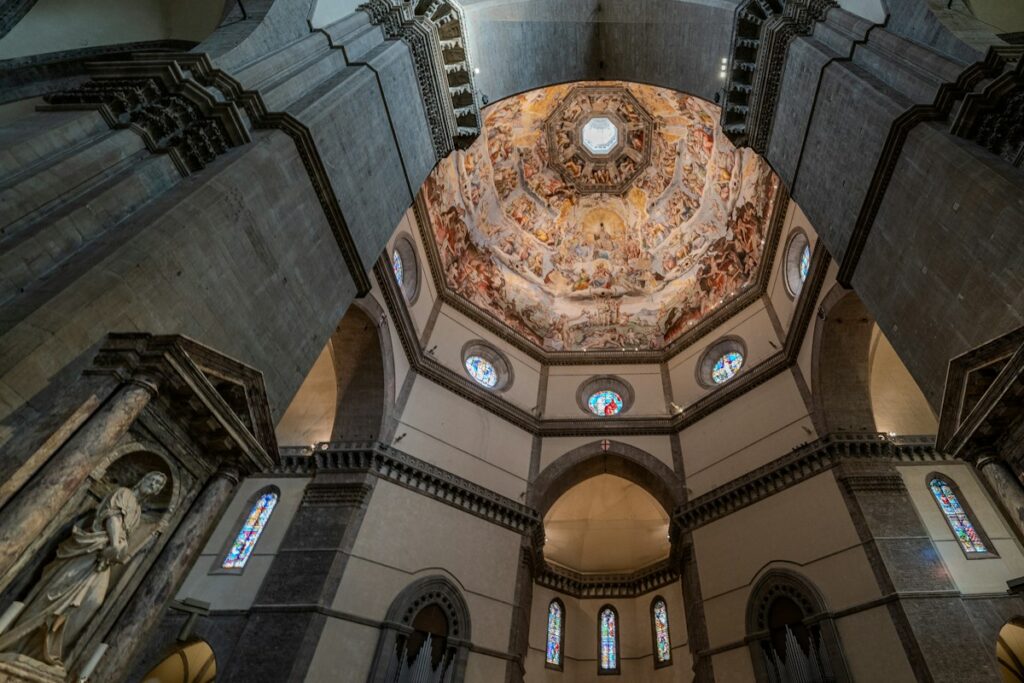
Quieter alternatives to the famous art cities in Italy
Crowds at the big names are real, but the answer is rarely to skip them. Instead, pair each famous stop with a smaller city that shares its strengths. Many of the quieter art cities in Italy are an easy train ride from the big ones, so you can base yourself in one and add the other as a day trip or a single night.
| If you love… | Try… | Why it works | Where to start |
|---|---|---|---|
| Florence | Siena | Gothic painting, the shell-shaped Piazza del Campo, a striped Duomo | Siena walking tour |
| Florence | Lucca | Intact Renaissance walls you can walk or cycle, Romanesque churches | Lucca bike tour |
| Florence | Bologna | Porticoes, medieval towers and a serious food culture | A stopover on the Florence to Venice line |
| Venice | Verona | A Roman arena, Romanesque churches, a lively old town | Verona walking tour |
| Venice | Ravenna | Early Christian and Byzantine mosaics on the UNESCO list | Ravenna mosaics tour |
| Venice | Trieste | Habsburg-era squares and grand cafés on the sea | Trieste tour |
| Rome | Orvieto | A hilltop cathedral with a mosaic façade and Signorelli frescoes | Orvieto day trip from Rome |
| Rome | Tivoli | The fountains of Villa d’Este and the ruins of Hadrian’s Villa | Villa d’Este or Hadrian’s Villa |
| Milan | Bergamo | A walled upper town, the Città Alta, above the modern city | Bergamo tour |
| Milan | Turin | Baroque arcades, royal palaces and the Egyptian Museum | A longer day trip or two nights |
| Milan | Parma | Correggio’s painted domes, plus Parmigiano and prosciutto | Parma food tour |
How to choose your alternative
Choose Siena if you want medieval art and one unforgettable square. Pick Lucca for a slow, flat town that suits cyclists, and Bologna if you care about food as much as frescoes. From Venice, Verona is the classic pairing, Ravenna is the choice for mosaic lovers, and Trieste feels Central European.
Around Milan, Bergamo is the easiest half-day, while Parma suits a slower day built around lunch. Finally, Perugia and Assisi in Umbria add Giotto’s frescoes and Umbrian painting to a Rome or Florence trip. Each of these smaller art cities in Italy gives you a full day of art without the queues of the big four.
Train routes that pair big and small art cities in Italy
The rail network makes the one-big-one-small formula easy to plan. High-speed trains link the major cities, and regional trains reach most of the smaller ones. As a result, you rarely need a car for a trip built around art cities in Italy. Then use these pairings as building blocks:
- Rome, Florence and Siena: take the Rome to Florence train, then add Siena as a day trip by bus or train.
- Florence, Bologna and Venice: the Florence to Venice train runs through Bologna, so a stopover there costs little extra time.
- Rome, Venice and Verona: the Rome to Venice train is a direct run, and Verona is an easy day trip from Venice by train.
- Rome, Naples and Pompeii: the Rome to Naples train is a short high-speed hop, and Pompeii follows by local train from Naples.
- Milan and Bergamo: Bergamo is close to Milan by regional train, so it needs no overnight stay.
For complete plans with nights and transfers, the Italy2Love itineraries string these pairs together, so you can see how two or three art cities in Italy fit into one week without rushing.
How to book museums without the stress
The rule of thumb is simple: book the sights that sell out, and keep the rest of the day flexible. In practice, the order below works for most trips.
- The Last Supper first, because its small, 15-minute slots are the hardest to get.
- The Vatican Museums, the Uffizi, the Accademia and the Borghese Gallery next, since time slots at these fill early in busy months.
- The Colosseum and the Doge’s Palace after that, especially for weekends and holidays.
- Churches, smaller museums and the quieter cities last. Walk-up visits usually work, but check the closing day, because many museums close one day a week.
For a one-page overview, the tickets in Italy hub collects every ticket guide on Italy2Love. Also note that state museums and archaeological parks offer free admission on the first Sunday of each month under the Domenica al museo (Sunday at the museum) scheme, according to the Italian Ministry of Culture (checked September 2026). The same page says booking is recommended or required where a site asks for it, so free days are busier, not easier. The free museum days guide explains how to use them well.
Guided experiences in the art cities of Italy
A good guide turns a crowded gallery into a story, and a timed entry saves the best hours of the morning. These experience pages cover the headline sights of the big art cities in Italy, with prices and ratings read on Viator:
- Vatican Museums and Sistine Chapel tour, for a guided route through the collections.
- Colosseum tour with the arena floor, for a closer look at Ancient Rome.
- Uffizi Gallery guided tour, with the Renaissance rooms explained.
- Accademia and David tour, built around Michelangelo’s statue.
- Florence Duomo dome climb, up inside Brunelleschi’s dome.
- St. Mark’s, Doge’s Palace, Murano and Burano tour, which pairs the basilica and palace with the lagoon.
- Last Supper tour in Milan, for a guided visit to Leonardo’s mural.
- Naples underground tour, beneath the streets of the historic center.
To compare more options by city, open the experience finder.
Book an art-city experience
Museums, walking tours and guided visits in the cities above.
Selected automatically from Italy2Love experience pages that match this page, ordered by Viator rating and number of reviews (checked October 2026). Prices and availability are shown live on Viator.
Frequently asked questions
Which Italian art city should you visit first?
Rome for ancient history and the Vatican Museums, Florence for the Renaissance in a compact, walkable center, Venice for a city built on water. Most first trips combine Rome with one of the other two.
Are there good alternatives to Florence?
Yes. Siena, Lucca, Bologna and Perugia all have major art and architecture at a smaller scale, and Siena and Lucca are easy day trips from Florence.
How many days do you need in an Italian art city?
Plan three days for Rome, two to three for Florence and two for Venice. Smaller cities like Lucca, Perugia or Bergamo work well with one full day or a single night.
Do you need to book museums in advance?
For the most visited museums, such as the Vatican Museums, the Uffizi and the Accademia in Florence, booking a timed entry ahead is strongly recommended, especially from spring to fall.
Which art cities in Italy are easiest to visit without a car?
All the big ones. Rome, Florence, Venice, Milan and Naples are best explored on foot and by public transport, and alternatives such as Bologna, Verona, Lucca and Bergamo are easy to reach by train. A car only helps for hill towns in the countryside.
What are good smaller art cities in Italy for a first trip?
Siena, Lucca, Bologna, Verona and Ravenna are worth considering. Each has a compact historic center, major art or architecture and easy rail access from a big city.
Is fall a good time to visit art cities in Italy?
Yes. Fall usually brings milder walking weather than summer and thinner crowds than the peak months, although Rome, Florence and Venice stay busy. Book timed-entry museums ahead in any season.
Can you see the Ravenna mosaics as a day trip?
Yes. Ravenna is usually visited as a day trip from Bologna, and its mosaic monuments sit close together in the historic center, so a full day covers the main ones.
Pick your city, then your pace
Use a big art city when it fits your trip, and an alternative when you want a different scale.