
BLOG · Italy2Love Magazine Guide
Scenic Train Journeys in Italy: 9 Routes Worth the Ride
Compare nine scenic train journeys in Italy, from the Bernina line and Cinque Terre to historic railways in Abruzzo, Tuscany and Sardinia.
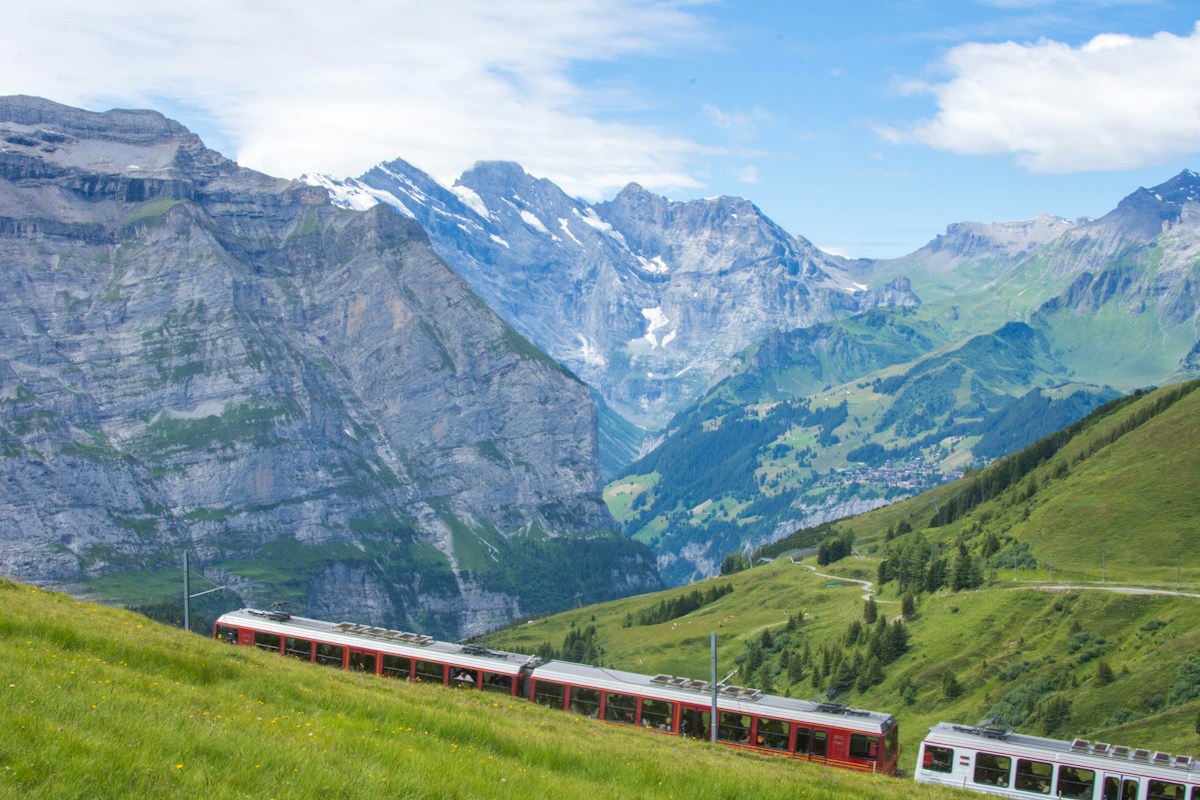
Scenic trains in Italy are not one single category. Some are everyday regional services with remarkable views; others are panoramic trains that cross a border; a third group consists of heritage railways that run only on selected dates. The right journey therefore depends less on a ranking and more on the landscape you want, the season you travel and whether the train must fit a wider Italian itinerary.
The short answer: choose the Bernina line from Tirano for the most dramatic Alpine scenery, the Vigezzina–Centovalli for a quieter cross-border day, the Cinque Terre railway for village-hopping, and the Sulmona heritage line for mountains, old stations and a deliberately slow day. For Sicily, Sardinia and Tuscany, check seasonal calendars before building the trip around the train.
Scenic train journeys in Italy at a glance
| Journey | Landscape | Service type | Best for | When to go |
|---|---|---|---|---|
| Bernina line: Tirano–St. Moritz | Glaciers, lakes, high Alpine pass, viaducts | Year-round cross-border railway; panoramic and regular trains | The biggest scenery | Year-round |
| Vigezzina–Centovalli: Domodossola–Locarno | Wooded valleys, stone villages, gorges | Year-round cross-border regional railway | A relaxed day from northern Italy | Spring and fall |
| Cinque Terre: La Spezia–Levanto | Cliffs, sea glimpses, five villages | Frequent regional trains | Combining rail with walking and boats | April–June, September–October |
| Calabrian Tyrrhenian coast | Strait of Messina, cliffs, beaches and sea | Regular regional and Intercity trains | A scenic transfer, not an excursion | Spring through fall |
| Messina–Catania–Syracuse | Ionian coast, Etna, fishing towns | Regular regional and Intercity trains | Building Sicily without a car | Year-round |
| Sulmona heritage railway | Abruzzo highlands and Apennine plateaus | Historic train on selected dates | Heritage rail and mountain villages | Fall and winter |
| Treno Natura in Tuscany | Crete Senesi and Val d’Orcia countryside | Steam or heritage diesel excursions | Food festivals and slow Tuscany | Spring and fall dates |
| Trenino Verde in Sardinia | Interior mountains, forests and remote villages | Seasonal tourist railway | Italy at its slowest | Published seasonal dates |
| Circumetnea around Mount Etna | Lava fields, orchards and Etna towns | Local narrow-gauge railway | Volcanic landscapes | Spring and fall |
If this is your first rail trip in the country, read our practical guide to trains in Italy first. It explains Trenitalia versus Italo, regional ticket rules, stations, luggage and strikes. This page has a different job: choosing a route where the journey itself earns a place in the itinerary.
1. The Bernina line from Tirano to St. Moritz
Best overall for: travelers who want the most dramatic scenery and do not mind crossing into Switzerland.
The Bernina railway begins in Tirano, in Lombardy, then climbs past the circular Brusio Viaduct, Lake Poschiavo and the high lakes near Ospizio Bernina before descending toward Pontresina and St. Moritz. It is the clearest answer to “what is the most scenic train near Italy?” because the landscape changes continuously and the engineering is part of the experience.
There are two ways to ride it. The named Bernina Express uses panoramic carriages and requires a seat reservation in addition to the ticket. Regular regional trains cover the same railway with ordinary windows and more flexibility. The official Rhaetian Railway lists the St. Moritz–Tirano journey at roughly two hours and fifteen minutes, while the longer Chur–Tirano run takes about four hours; check the timetable for your date because engineering works can alter the route.
Tirano is reachable by train from Milan, but doing Milan–Tirano–St. Moritz and returning in one day creates a very long schedule. If you want transport handled, compare our assessed Bernina Express day trips from Milan. If you travel independently, consider sleeping in Tirano or continuing into Switzerland instead of racing back.
2. The Vigezzina–Centovalli Railway
Best for: a lower-key Alpine journey with villages, woodland and fewer bucket-list crowds.
The narrow-gauge Vigezzina–Centovalli links Domodossola in Piedmont with Locarno in Switzerland. In roughly two hours it passes the Val Vigezzo, deep ravines, chestnut woods and small settlements before reaching Lake Maggiore. Unlike the Bernina line, the pleasure is intimate rather than monumental: forest, stone roofs and short bridges appear close to the carriage.
The railway operates as a real cross-border public service, not only as a tourist attraction. Buy the correct international ticket and carry a passport or national identity card. The official Vigezzina–Centovalli Railway publishes current timetables, tourist tickets and any supplement for panoramic trains. A useful one-way plan is Milan to Domodossola, the scenic railway to Locarno, then onward through Switzerland or back toward Lake Maggiore.
3. Cinque Terre by regional train
Best for: travelers who want to combine short train rides with villages, trails and a seasonal boat.
The line between La Spezia, the five Cinque Terre villages and Levanto is essential and occasionally beautiful—but it needs honest framing. Much of the railway runs through tunnels, so this is not a continuous window-view journey. The reward comes in flashes of sea and, above all, in what the train lets you do: step off in Riomaggiore, Manarola, Corniglia, Vernazza and Monterosso without a car.
Use it as the spine of a day rather than staying aboard end to end. Our Cinque Terre itinerary explains how to divide the villages over one, two or three days and when the train card makes sense. From Florence, travelers who do not want to manage the transfers can compare a Cinque Terre day trip from Florence; the independent version is better when you can sleep on the coast.
4. Reggio Calabria to Scilla and the Tyrrhenian coast
Best for: turning a transfer through southern Italy into a coast-viewing journey.
North of Reggio Calabria, trains follow the Tyrrhenian edge toward Scilla, Palmi, Pizzo and Tropea. The strongest early views look across the Strait of Messina toward Sicily; farther north, the line alternates between tunnels, cliffs, beaches and broad sea. This is not a branded panoramic train, and the exact view depends on the service and seat, but it is one of Italy’s most satisfying ordinary railway corridors.
Choose a daytime regional or Intercity train, not a night service, and treat Scilla or Tropea as a stop rather than watching them pass. Timetables and engineering work can change, so search the exact stations on Trenitalia. This route fits travelers continuing toward Sicily as well as a slower trip through Calabria.
5. Messina to Catania and Syracuse
Best for: a practical car-free Sicily itinerary with sea and volcano views.
The eastern Sicilian railway follows the Ionian coast from Messina toward Taormina-Giardini, Catania and Syracuse. On clear sections, the sea sits on one side and Mount Etna dominates the other. The line also works strategically: Taormina, Catania and Syracuse are three of eastern Sicily’s most useful bases, so the scenic ride replaces a transfer you would make anyway.
Do not assume every train is direct, and check whether works require a replacement bus on part of the route. For the best daylight, avoid an arrival after sunset. If Sicily forms part of a longer rail trip, the mainland Intercity services that cross the Strait of Messina by ferry add one of Europe’s strangest railway moments: the train carriages are shunted onto a ship before continuing on the island.
6. Sulmona and the Transiberiana d’Italia
Best for: historic carriages, high Apennine landscapes and a full-day excursion.
The Sulmona–Carpinone railway crosses the Abruzzo and Molise highlands, climbing through wide plateaus and mountain stations. Its popular nickname, the “Transiberiana d’Italia,” evokes the snow that can cover the route in winter, although the landscape is distinctly Apennine. Excursions may stop in places such as Roccaraso, Campo di Giove or Carovilli, but the destination changes with the event calendar.
This is not a train you can assume runs every day. It belongs to Italy’s heritage-rail revival, with journeys sold on selected dates and often linked to village events. Start with the official Fondazione FS journey calendar, then read the operator’s precise itinerary before reserving accommodation. Fall foliage and snowy dates are especially appealing—and therefore the first to sell out.
7. Treno Natura through the Tuscan countryside
Best for: pairing heritage rail with a festival, market or food-focused day.
Treno Natura excursions leave the modern fast-travel version of Tuscany behind. Historic steam or diesel trains run from the Siena area through the Crete Senesi and toward Val d’Orcia towns on selected dates. The rolling hills, cypress-lined ridges and small stations matter, but the day is usually designed around a destination event: a market, harvest festival or local celebration.
Choose the event first and the train second. A steam-hauled date may have a different route, timing and atmosphere from a heritage diesel trip, and departures are seasonal. This journey belongs naturally in a wider slow travel in Italy plan, but it should not replace a flexible Tuscany itinerary if you have only two or three days.
8. Trenino Verde in Sardinia
Best for: remote landscapes and travelers willing to plan around a limited calendar.
Sardinia’s Trenino Verde is less a single route than a network of tourist railways through the island’s interior. Depending on the published season, journeys may cross the Barbagia mountains, the Sarcidano plateau or stretches toward the western and northern coasts. Speeds are slow, services are sparse and the landscape—oak woods, granite, pasture and nearly empty stations—is the point.
Do not build flights or ferries around a route seen in an old blog post. Check the current Trenino Verde program, because active sections and dates change. For most international travelers this is easiest inside a Sardinia road trip, using the train as one booked day rather than as the island’s main transport system.
9. Ferrovia Circumetnea around Mount Etna
Best for: lava landscapes, local towns and a railway that feels part of everyday Sicily.
The narrow-gauge Circumetnea railway curves around the lower slopes of Mount Etna through lava fields, orchards and inland towns. It is a local service rather than a polished panoramic train, and that is part of its appeal. Views alternate with settlements and agricultural land, revealing a side of Etna that day tours often cross too quickly.
It is not a seamless sightseeing loop: connections, line works and the Catania metro interface can change how the journey functions. Consult the current notices and map on the official Ferrovia Circumetnea site before traveling. If your priority is reaching the summit area, book a dedicated Etna excursion instead; the railway explores the inhabited slopes, not the crater.
How to choose among the scenic trains in Italy
- For one unforgettable railway day: choose the Bernina line and sleep in Tirano or St. Moritz.
- For a quieter Alpine route: choose Domodossola–Locarno on the Vigezzina–Centovalli.
- For a car-free coastal stay: use the Cinque Terre line or Messina–Syracuse as transport, stopping along the way.
- For heritage atmosphere: book Sulmona or Treno Natura only after the official date appears.
- For true slow travel: choose Sardinia’s Trenino Verde and give the logistics room to breathe.
- For a scenic transfer: take the daytime Calabrian coast instead of adding a separate excursion.
Booking rules that prevent disappointment
Know whether you are booking a train, a seat or an excursion
A Bernina Express reservation is not the same thing as a base ticket. A heritage excursion is usually sold as one complete dated product. A Trenitalia regional ticket follows regional-ticket rules. Read the operator and product name, not only the route.
Check the operator again shortly before departure
Seasonal railways, mountain lines and coastal routes are sensitive to maintenance, weather and engineering work. Verify the timetable when booking and again a few days before travel. If a scenic segment is the main reason for the trip, avoid a same-day flight or non-refundable connection immediately afterward.
Use daylight as part of the itinerary
A cheap evening departure is poor value if the view disappears halfway through. Check sunset time, especially from October to March. For ordinary trains, a window seat is never guaranteed unless the service offers reservations; on regional trains, board early at the origin when possible.
Do not overpack the day
The best scenic train journeys in Italy become forgettable when surrounded by four hours of rushed connections. One major railway plus one town is usually enough. Our Italy itineraries and northern Italy itinerary help place rail days between realistic bases.
Frequently asked questions
What is the most scenic train journey in Italy?
The Bernina railway from Tirano to St. Moritz is the strongest all-round choice for dramatic scenery. It combines glaciers, high lakes, the Bernina Pass and the Brusio spiral viaduct. Part of the route is in Italy and most of it is in Switzerland.
Are Italy’s scenic trains included in a rail pass?
Some regular regional and international trains may be covered, but supplements and reservations can still apply. Heritage excursions and tourist railways are commonly separate products. Check the specific operator rather than assuming every train shown on a map accepts the same pass.
Do I need to reserve scenic trains in Italy?
Reserve named panoramic and heritage trains. Ordinary regional services usually do not offer or require seat reservations, while Intercity trains do. The Bernina Express panoramic carriage requires a reservation; regular trains on the same line are more flexible.
Which scenic train is easiest from Milan?
The Bernina line is the headline option via Tirano, but it makes a long independent day. The Vigezzina–Centovalli via Domodossola is quieter and connects well with Lake Maggiore and Locarno. Choose based on whether you want maximum drama or an easier slow-travel day.
What is the best season for scenic rail travel in Italy?
May, June, September and October balance daylight, color and manageable crowds on many routes. Winter makes the Bernina and Sulmona lines striking, but brings shorter days and weather risk. Heritage railways follow event calendars, so their available dates matter more than a general “best month.”
Editorial check: routes and operator information reviewed in October 2026. Timetables, seasonal calendars, engineering works and reservation rules can change; confirm them with the operator before travel.
Book it: experiences for this trip
Matched to this article by place and interest, then ordered by Viator rating and number of reviews (checked September 2026). Prices and availability are shown live on Viator.
Keep exploring Italy