
BLOG · Italy2Love Magazine Guide
Slowxury in Italy: The New Luxury of Traveling Slowly
Slowxury in Italy combines slow travel, authentic local experiences and understated comfort. Discover where to go, what to do and how to plan.
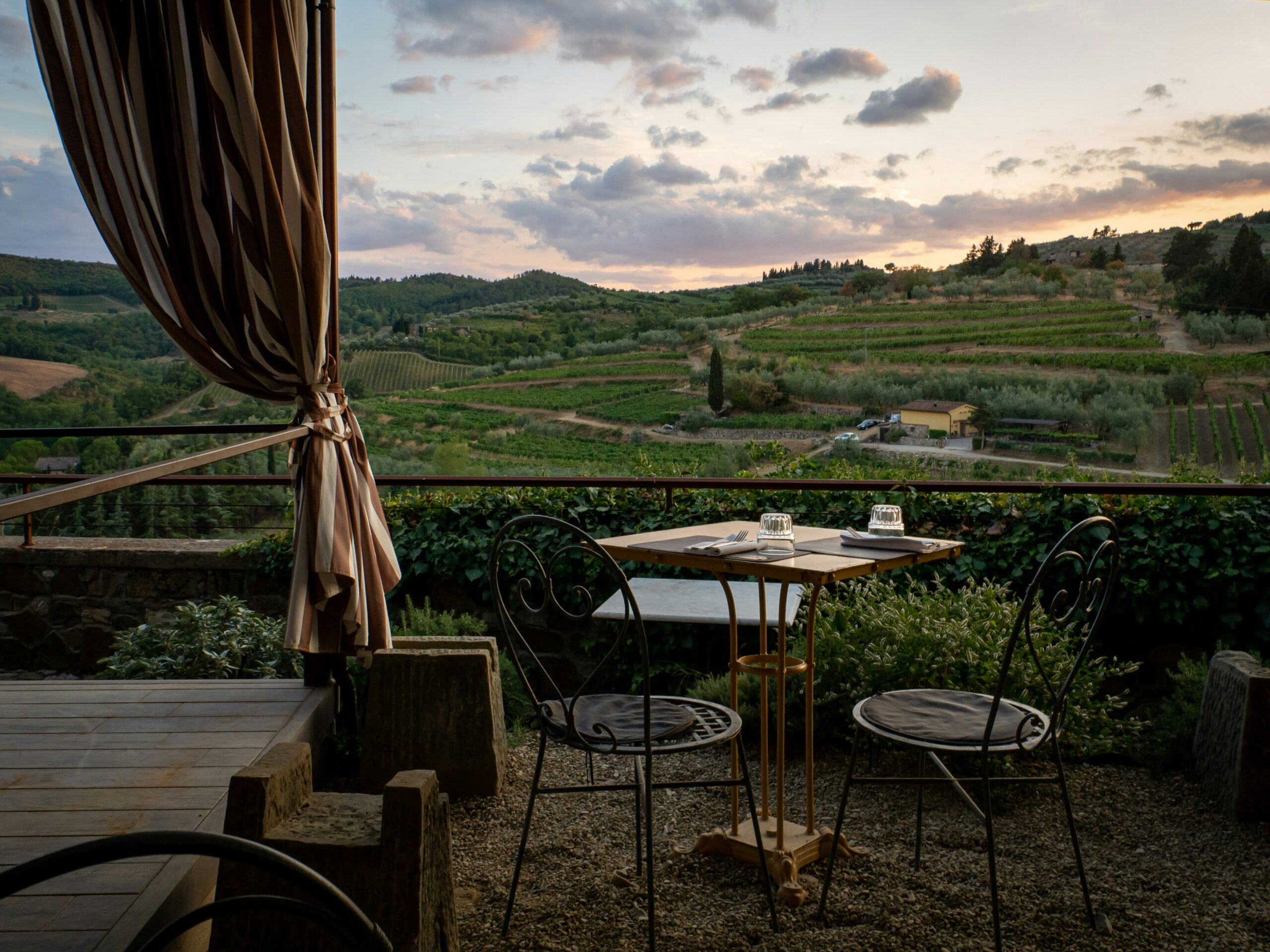
Slow travel in Italy is not about doing less for the sake of it. It is about choosing fewer places, staying longer and spending your time on experiences that bring you closer to the people, food and landscapes around you. Slowxury adds one element to that idea: comfort that protects your time without separating you from local life. A day on one of Italy’s scenic railways can make the movement between places part of the experience. For a regional model, see how to plan slow travel in Tuscany.
Instead of racing from Rome to Florence and Venice in five days, a Slowxury trip might mean waking before the crowds in Venice, cooking in a family home in Puglia, walking through a truffle wood with a local hunter or spending three nights among the vineyards of the Langhe. The luxury is not a marble lobby or a long list of amenities. It is space, access, attention and the freedom to travel at a human pace.
What does Slowxury mean?
Slowxury combines slow travel with understated luxury. The term describes trips built around time, authenticity and high-quality hospitality rather than status or excess. A Slowxury experience should feel personal, rooted in its destination and comfortable enough that logistics do not overwhelm the journey.
The idea entered the Italian travel conversation in 2026 as hotels and travel observers highlighted a shift from monument-counting to experience-collecting. Market estimates quoted in the Italian press placed the broader segment at €106 billion, with a projection of €239 billion by 2033. Those figures should be read as an industry forecast, not as a settled definition of a new market. The more useful signal is behavioral: travelers increasingly value local relationships, meaningful activities and time away from crowded schedules.
Slowxury is not simply a slower version of a luxury holiday. It is a better-edited trip: fewer transfers, deeper experiences and comfort that gives time back to the traveler.
Slowxury vs traditional luxury travel
| Traditional luxury | Slowxury |
|---|---|
| Prestige, exclusivity and visible amenities | Time, privacy and meaningful access |
| Several headline attractions in a short stay | Fewer places explored in greater depth |
| International standards that can feel similar anywhere | Comfort shaped by local architecture, food and culture |
| Service separates the guest from daily logistics | Thoughtful service creates room for local participation |
| Passive consumption | Cooking, walking, making, tasting and learning |
The two styles can overlap. A private guide, a beautiful small hotel or a driver for a wine-country day can belong to both. The difference lies in how they are used. On a Slowxury trip, convenience is valuable because it creates time for the place itself—not because it insulates you from it.
Why Italy is made for slow luxury travel
Italy rewards short distances and long attention. A regional train can move you from a city to a small town in under an hour, yet food, dialect, architecture and landscape may change completely. Wine areas such as the Langhe, Chianti and Etna are not single attractions but living systems of villages, farms and producers. Historic cities reveal a different character early in the morning, after day visitors leave or in neighborhoods outside the main route.
This makes Italy especially suitable for a trip based on one or two regional bases. From Florence, you can combine Renaissance art with an artisan workshop, a Florence cooking class and a day in the Tuscan countryside. In Piedmont, Alba or a Langhe village gives access to Barolo producers, truffle traditions and small restaurants. In Puglia, a masseria can connect olive groves, local cooking and the white towns of the Valle d’Itria.
10 Slowxury experiences to try in Italy
1. Share a table with a local family
Choose a home-based meal or small cooking experience where the host explains the dishes, ingredients and family customs. In southern Italy, orecchiette classes and family dinners can offer more cultural context than a formal tasting menu. Check whether the experience is genuinely hosted in a home, how many guests attend and whether dietary needs can be accommodated.
2. Cook with a local chef
The strongest classes begin at a market or focus on a regional technique rather than a generic menu. Pasta and tiramisu are accessible for first-time cooks; regional formats—Roman sauces, Sicilian street food or Puglian pasta—go deeper. Compare formats in our guide to cooking classes in Rome, or browse bookable experiences in Italy.
3. Visit a winery with the producer
A meaningful winery visit is not measured by the number of glasses. Look for time in the vineyard and cellar, a clear explanation of local grapes and a group small enough for questions. Our guide to wine tours in Italy compares regions and trip styles, while Barolo wine tours are a natural match for a slower stay in Piedmont.
4. Make something with an artisan
Italy’s craft traditions include Venetian masks and glass, Florentine leather and marbled paper, Umbrian ceramics, Cremonese violin making and Puglian weaving. Prefer a working studio over a demonstration designed mainly for shopping. A good workshop explains the material, lets you try one process and limits the group size. Use our guide to art workshops in Italy to compare crafts, formats and destinations.
5. Take a food tour with a resident
A local food walk can decode a neighborhood quickly, but quality varies. Look beyond the number of tastings: the route should include independent businesses, explain when and how locals eat, and leave enough time to speak with vendors. In Venice, a cicchetti walk through quieter bacari is most rewarding outside the busiest hours.
6. Go foraging or truffle hunting
Foraging makes the landscape part of the meal. Truffle hunts are the clearest Italian example: a licensed hunter and trained dog lead a woodland walk, usually followed by a tasting or lunch. Seasons and species differ by region, so begin with our guide to truffle hunting in Italy. For a bookable option, compare truffle hunting experiences in Tuscany.
7. Join a farm or harvest experience
Grape harvests, olive picking and visits to cheese producers can reveal how the countryside actually works. These activities are seasonal and weather-dependent. Ask what participation involves, whether the event is part of a real agricultural day and what happens if conditions change. The best experiences respect the farm’s work rather than turning it into a costume set. For a focused producer visit, compare olive oil tours in Italy by region, season and format.
8. Explore a village with someone who lives there
A resident can connect a church, square or workshop to family histories that no checklist contains. Choose one village or a compact valley instead of collecting several towns in one rushed day. Our guide to hidden villages and towns in Italy is a useful starting point.
9. Try wellness rooted in the landscape
Italian wellness can mean volcanic water in Ischia, thermal pools in Tuscany, mountain spas in Bormio or quiet countryside retreats. A Slowxury stay allows time for recovery instead of squeezing a spa stop between attractions. Compare natural pools, historic spa towns and resort formats in our guides to hot springs in Italy and thermal and wellness travel.
10. Turn the train journey into part of the trip
A scenic railway replaces airport transfers and motorway time with landscape. Northern Italy offers the most dramatic routes, including the Bernina line from Tirano into Switzerland. The Bernina Express from Milan can work as a guided day trip, although an overnight stay produces a slower and more flexible journey.
Where to experience Slowxury in Italy
- Langhe: stay between vineyards, visit a producer, eat in Alba and travel during truffle season if that is your priority.
- Venice: sleep in the historic city, walk at dawn, explore Cannaregio or Castello and avoid treating Venice as a day trip.
- Valle d’Itria: use a masseria as a base for Ostuni, Cisternino, Locorotondo, olive groves and local cooking.
- Florence and the Tuscan countryside: combine museums with Oltrarno workshops, markets, cooking and one well-paced wine-country day.
- Modena: connect the historic center with an acetaia, a market visit and the food traditions of the Emilian countryside.
- Procida: stay after day visitors leave and explore fishing harbors, kitchen gardens and small beaches on foot.
- Valnerina: choose forests, abbeys, walking routes and Umbrian food traditions away from the main circuit.
- Camogli: pair the small Ligurian port with coastal paths and San Fruttuoso, allowing weather to set the rhythm.
- San Martino di Castrozza: build the stay around Dolomite landscapes, forest walks and quiet mountain hospitality.
- Milan: slow the city down with Brera courtyards, Navigli walks, design ateliers, parks and neighborhood food.
How to plan a Slowxury trip to Italy
- Choose no more than two bases for a week. A seven-night trip works better as four nights plus three than as five one-night stops.
- Match the region to the experience. Start with what you want to do—wine, food, walking, crafts or wellness—then choose the destination.
- Book the scarce experience first. Small-group classes, private guides and seasonal harvest activities have limited capacity; leave ordinary sightseeing flexible.
- Protect unscheduled time. Keep at least half a day open every two or three days. Slow travel fails when every empty hour becomes another booking.
- Use trains for the main route. Rent a car only where the landscape genuinely requires one, such as dispersed wine or hill-town areas.
- Travel outside peak hours or seasons. Early mornings, late afternoons and shoulder months often matter more than choosing an unknown destination.
- Check what “local” means. Read the provider description, group size, host profile, meeting point, language and cancellation terms before booking.
The best time for slow travel in Italy
April to June and September to October offer the broadest balance of weather, open businesses and manageable crowds. Spring suits walking, gardens and countryside stays. Early fall brings grape harvests, food festivals and truffle seasons, although exact dates vary by region and species. Winter works especially well for art cities, thermal travel and food-focused weekends. July and August can still fit the concept if you stay longer in one place, choose mountains or rural areas and plan around the heat.
How to book an authentic experience
Look for concrete details rather than romantic language. The listing should name the host or provider, explain where the activity happens, state the group size and describe exactly what is included. Reviews are most useful when they mention pace, interaction with the host and whether the activity matched the description. For food and farm experiences, check dietary requirements, terrain and seasonality. For wine tours, decide in advance who will drive—or use a transfer.
Affiliate note: some experience links on Italy2Love lead to Viator. If you book through them, we may earn a commission at no extra cost to you. Availability, prices and cancellation conditions are controlled by the provider and should be checked on the booking page.
Choosing a slow base? Browse farm stays below, and see our guide to hidden villages in Italy for quieter places to stay.
Affiliate links: if you book through them, Italy2Love earns a commission at no extra cost to you.
Slowxury in Italy: frequently asked questions
Is Slowxury travel expensive?
Not necessarily. The concept values time and quality, but that can mean a family-run agriturismo, regional trains and one excellent guided activity rather than five expensive hotels. Spending more nights in fewer places may also reduce transport costs.
Is Slowxury the same as sustainable tourism?
No. Slower itineraries and train travel can reduce impact, but the label does not guarantee sustainability. Check transport choices, water and energy practices, local ownership, group size and how an activity affects residents and landscapes.
How many places should I visit in one week in Italy?
For a slow trip, choose one or two bases. Three can work when transfers are short, but changing hotels every night leaves little time for local experiences and makes the journey dependent on logistics.
Can I plan a Slowxury trip without a car?
Yes, especially around Venice, Florence, Milan, Bologna, Naples and other rail-connected cities. Rural wine areas and scattered villages are easier with a car, private driver or guided day trip. A mixed itinerary—train between bases, local transfer for one countryside day—is often the best balance.
The real luxury is an itinerary with room to breathe
Slowxury gives a contemporary name to something Italy has always rewarded: staying long enough for a place to become more than a backdrop. Choose fewer stops. Meet the people who cook, grow, make and guide. Let a train ride, a market morning or an unplanned dinner count as part of the trip. Comfort matters—but its best purpose is to protect the time and attention that make travel memorable.
Source note: the term and market forecast discussed above were reported by Il Fatto Quotidiano on October 2, 2026, citing WorldHotels research. Italy2Love uses the trend as a starting point and independently develops the planning guidance in this article.
Book it: experiences for this trip
Matched to this article by place and interest, then ordered by Viator rating and number of reviews (checked September 2026). Prices and availability are shown live on Viator.
Keep exploring Italy