
BLOG · Italy2Love Magazine Guide
Things to Do in Perugia: Fountains, Frescoes and Etruscan Gates (2026)
Things to do in Perugia, Umbria: the Fontana Maggiore, the Galleria Nazionale dell’Umbria, Perugino’s frescoes, the underground Rocca Paolina, Etruscan gates and the Minimetrò.
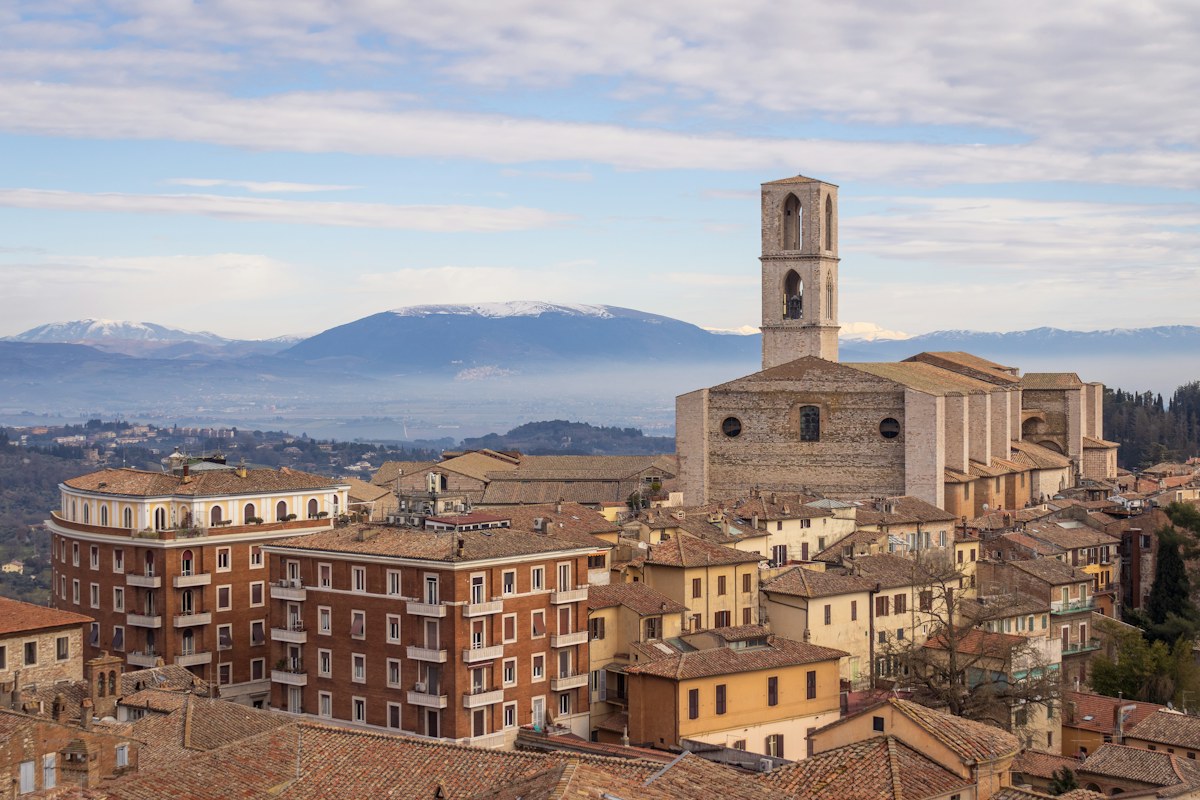
The main things to do in Perugia line up along one hilltop street, from a medieval fountain to a papal fortress. The capital of Umbria is a university town with Etruscan gates and a fine art collection. Also, it makes a practical base for Assisi and the hill towns of central Umbria.
The short answer: start at the Fontana Maggiore in Piazza IV Novembre. Then walk down Corso Vannucci to the Galleria Nazionale dell’Umbria for Perugino and Pinturicchio. Next, see the frescoes of the Collegio del Cambio and go underground through the Rocca Paolina. Finally, walk out through the Etruscan Arch. One day covers the center. Add a second day for Assisi, Montefalco or a hot-air balloon flight.
Last updated: September 25, 2026
Things to do in Perugia at a glance
| Sight | What it is | Time to allow |
|---|---|---|
| Fontana Maggiore | A 13th-century fountain by Nicola and Giovanni Pisano | 15 minutes |
| Galleria Nazionale dell’Umbria | The main collection of Umbrian art, in Palazzo dei Priori | 2 hours |
| Collegio del Cambio | The old bankers’ guild hall, frescoed by Perugino | 30 minutes |
| Rocca Paolina | The buried streets under a papal fortress | 30 minutes |
| Etruscan Arch | A monumental gate from the Etruscan walls | 15 minutes |
| Minimetrò | A small automated line from the lower town to the center | A few minutes per ride |
Piazza IV Novembre and the Fontana Maggiore
First of all, the heart of Perugia is Piazza IV Novembre. On one side stands the Cathedral of San Lorenzo. On the other, you see the Gothic Palazzo dei Priori, the old town hall. Meanwhile, in the middle, the Fontana Maggiore dates from the 1270s. Nicola Pisano and his son Giovanni carved its marble panels. They show the months of the year, the liberal arts and Bible scenes.
First, walk around the fountain slowly, because each panel tells a story. Then sit on the cathedral steps, as students do. From there, watch the passeggiata, the early-evening stroll, along Corso Vannucci.
The Galleria Nazionale dell’Umbria
The upper floors of Palazzo dei Priori hold the Galleria Nazionale dell’Umbria. In fact, it is the place to understand Umbrian painting, from the Middle Ages to Perugino, the local master who taught Raphael. In addition, you will see works by Pinturicchio, Piero della Francesca and Fra Angelico.
According to the official gallery site (checked September 2026), the museum opens daily from 8:30 am to 7:30 pm. The ticket office closes an hour earlier. However, hours can change for exhibitions and holidays, so check before you go. Allow about two hours.
The Collegio del Cambio and Corso Vannucci
In the same building, the Collegio del Cambio was the hall of the money changers’ guild. Around 1500, Perugino covered its Audience Hall with frescoes that mix classical heroes, prophets and sibyls. Also, look for his self-portrait on the wall. The room is small, so a visit takes about half an hour. For most visitors, it is one of the top things to do in Perugia for art.
Outside, Corso Vannucci takes its name from Pietro Vannucci, the painter’s real name. Today, it is the main street for cafés and shops. At its southern end, the gardens of Piazza Italia look out over the Umbrian valley toward Assisi.
Underground Perugia: the Rocca Paolina
In 1540, Perugia rebelled against a papal salt tax. In response, Pope Paul III built a fortress over an entire medieval neighborhood. Later, the fortress came down in the 19th century. However, its lower levels survived, with streets, arches and house fronts buried inside.
Today, public escalators run through the Rocca Paolina from the lower town. As a result, walking its buried streets is one of the most unusual things to do in Perugia. It is also free. Also, stop at the Porta Marzia, an Etruscan gate built into the fortress walls.
Etruscan Perugia and the old quarters
Long before the Romans, Perugia was one of the main Etruscan cities. The Etruscan Arch, or Arco Etrusco, is a massive stone gate from the ancient walls, later marked by the Romans. Similarly, the nearby Etruscan Well shows the skill of the city’s early engineers.
From the arch, walk to the Università per Stranieri. This university teaches Italian to students from abroad. Then continue to the round church of Sant’Angelo, one of the oldest in the city. For a guided view of the layers of history, consider the Perugia walking tour.
Getting around and when to visit
First, note that the historic center sits on a steep hill. By contrast, the train station, Fontivegge, is in the lower town. As a result, the easiest link is the Minimetrò, a small automated line. According to the Minimetrò site (checked September 2026), it has seven stations. Fontivegge connects to the railway, and the Pincetto terminal lies just below the center.
For events, the city hosts a summer jazz festival and a fall chocolate festival. See our guides to Umbria Jazz and Eurochocolate. Otherwise, spring and fall bring mild weather for walking the hills.
Day trips and experiences near Perugia
Above all, Perugia is well placed for a slower Umbria trip. For wine, the Montefalco winery and olive oil mill tour covers the Sagrantino country. For a view from above, the hot-air balloon flight near Assisi leaves at dawn. In addition, our Umbria travel guide covers Assisi, Spello and Todi. For other hill towns, see art cities and alternatives, and for tastings, our wine tours in Italy.
To see Perugia as part of a longer trip, our Umbria itinerary has 4, 5 and 7-day plans with Assisi, Spoleto and Orvieto, by train or by car.
Assisi is close by: our Assisi day trip guide covers the station, the bus and a six-hour route.
Things to do in Perugia: frequently asked questions
Is Perugia worth visiting?
Yes. It combines Etruscan gates, Umbrian painting and a lively university life. In addition, it is a practical base for Assisi.
How many days do you need in Perugia?
One full day covers the historic center. Add a second day for Assisi, Montefalco or another nearby hill town.
How do you get from Perugia station to the center?
Take the Minimetrò from Fontivegge, next to the train station, to the Pincetto terminal. Escalators and elevators then bring you up to the center.
What is the Rocca Paolina?
The remains of a papal fortress built in 1540 over a medieval neighborhood. Public escalators pass through its buried streets, and you can walk through it for free.
What is Perugia known for?
Its Etruscan walls, the Fontana Maggiore and the painter Perugino. It is also famous for chocolate and the Eurochocolate festival.
Plan your Umbria trip
Explore Umbria beyond Perugia
Compare walking tours, wine tastings and balloon flights in Umbria, with prices and ratings read on Viator.
Book it: experiences for this trip
Matched to this article by place and interest, then ordered by Viator rating and number of reviews (checked September 2026). Prices and availability are shown live on Viator.
Keep exploring Italy