
DESTINATIONS · LAZIO · TUSCIA
Plan Tuscia, the Etruscan land north of Rome
Hill towns on volcanic rock, crater lakes and Renaissance gardens, close to Rome and far from the crowds.
The short answer: Tuscia is the northern part of Lazio, roughly the province of Viterbo, between Rome and the borders of Tuscany and Umbria. The name comes from the Etruscans, who lived here before the Romans. Civita di Bagnoregio, Lake Bolsena, the medieval center of Viterbo, the Park of Monsters at Bomarzo, Villa Farnese at Caprarola and the Etruscan painted tombs of Tarquinia.
Last updated: September 28, 2026
Why choose Tuscia?
Tuscia is the northern corner of Lazio, around Viterbo, where the region meets Tuscany and Umbria. It was the heartland of the Etruscans, and its towns stand on cliffs of volcanic tuff above lakes and wooded valleys.
Best for: small towns, history, gardens and slow travel. Ideal stay: a day trip from Rome for one place, 2–3 nights to see the area properly.
Part of Lazio. Tuscia is one of the areas of the region around Rome. Lazio travel guide →
Where to go in Tuscia
Civita di Bagnoregio
A village on an eroding hilltop, reached on foot by a long pedestrian bridge.
Viterbo
The main town, with the Palace of the Popes and the medieval San Pellegrino quarter.
Lake Bolsena
A large volcanic lake with lakeside towns, beaches and two small islands.
Bomarzo and Caprarola
The Park of Monsters, a 16th-century garden of stone giants, and the Farnese villa at Caprarola.
Tarquinia and Tuscania
Etruscan painted tombs, a UNESCO World Heritage Site, and a town of Romanesque churches.
Castles and villages
Fortified towns and castles across the area, from Civita Castellana to Vignanello.
What to do in Tuscia
Walk a tuff town
Arrive early at Civita di Bagnoregio, or late in the afternoon, when the day-trippers have left.
Spend a day on the lakes
Lake Bolsena and the smaller Lake Vico, set in a nature reserve, are good for a slow afternoon.
Follow the Etruscans
Tombs, necropolises and museums from Tarquinia to Tuscania tell the story of the people who gave Tuscia its name.
Looking for places like these across Italy? See hidden villages and towns in Italy.
Plan your Tuscia trip
How many days?
1 day: Civita di Bagnoregio or Viterbo from Rome. 2–3 days: Viterbo, Civita, Lake Bolsena and Bomarzo from one base. 4–5 days: add Tarquinia, Tuscania and Caprarola.
Where to stay?
Viterbo is the most practical base. A lakeside town on Lake Bolsena or an agriturismo, a working farm with rooms, suits a slower trip.
Getting there
Regional trains connect Rome with Viterbo. For the villages, lakes and Etruscan sites, a car or a guided tour is much easier.
When to visit?
Spring and fall are best for walking the towns. Summer is hot inland but good for the lakes.
Frequently asked questions
Where is Tuscia?
Tuscia is the northern part of Lazio, roughly the province of Viterbo, between Rome and the borders of Tuscany and Umbria. The name comes from the Etruscans, who lived here before the Romans.
Is Tuscia the same as Tuscany?
No. Tuscia shares the hill-town landscape of southern Tuscany, but it belongs to Lazio, the region around Rome. It is much less visited than Tuscany.
Can you visit Tuscia as a day trip from Rome?
Yes, for one or two places, such as Viterbo or Civita di Bagnoregio. To see several towns and the lakes, plan at least one or two nights in the area.
Do you need a car in Tuscia?
Regional trains connect Rome with Viterbo, but most villages, lakes and Etruscan sites are much easier to reach by car or with a guided tour.
What is Tuscia known for?
Civita di Bagnoregio, Lake Bolsena, the medieval center of Viterbo, the Park of Monsters at Bomarzo, Villa Farnese at Caprarola and the Etruscan painted tombs of Tarquinia.
Tuscia rewards a night or two
Stay close to the towns and see them before and after the day-trippers.
Read before you go
More Tuscia travel guides
Guides, events and experiences in and around Tuscia, most recently updated first.
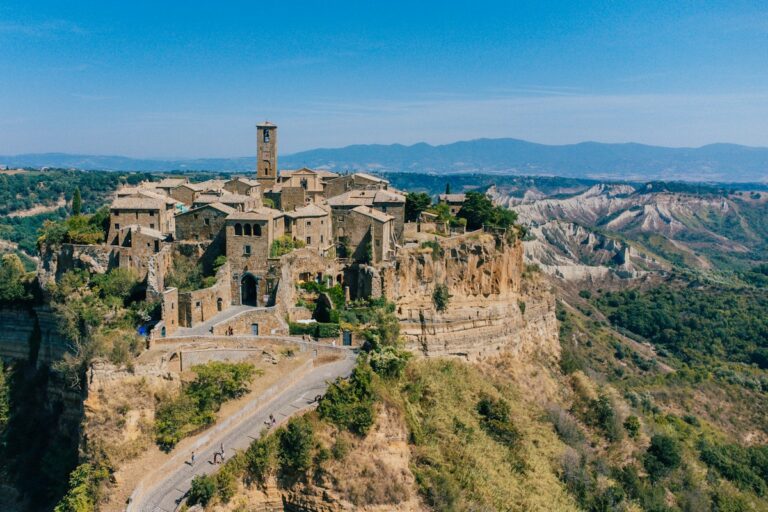
Things to Do in Tuscia: Viterbo, Civita di Bagnoregio, Bomarzo and Lake Bolsena (2026)
Things to do in Tuscia, the Etruscan land north of Rome: Viterbo, Civita di Bagnoregio and its access ticket, the monsters of…

Civita di Bagnoregio: The Dying Town, Bridge, Ticket and How to Get There (2026)
How to visit Civita di Bagnoregio: why the village erodes, the pedestrian bridge, the access ticket, buses from Orvieto, getting there from…
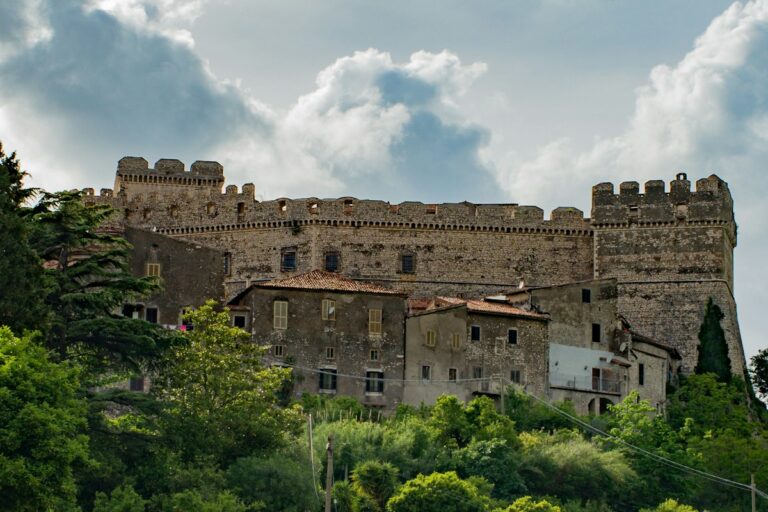
Castles in Lazio: 5 Castles Near Rome You Can Actually Visit (2026)
Castles in Lazio you can visit: Castel Sant’Angelo, Bracciano, Santa Severa, Sermoneta and Vignanello, with how each visit works and how to…