
BLOG · Italy2Love Magazine Guide
Tuscan Wines: Chianti, Brunello, Bolgheri and What to Taste (2026)
Tuscan wines explained by area: Chianti Classico, Brunello di Montalcino, Vino Nobile, Bolgheri and Vernaccia, with label rules checked September 2026 and tips for tasting on a trip.
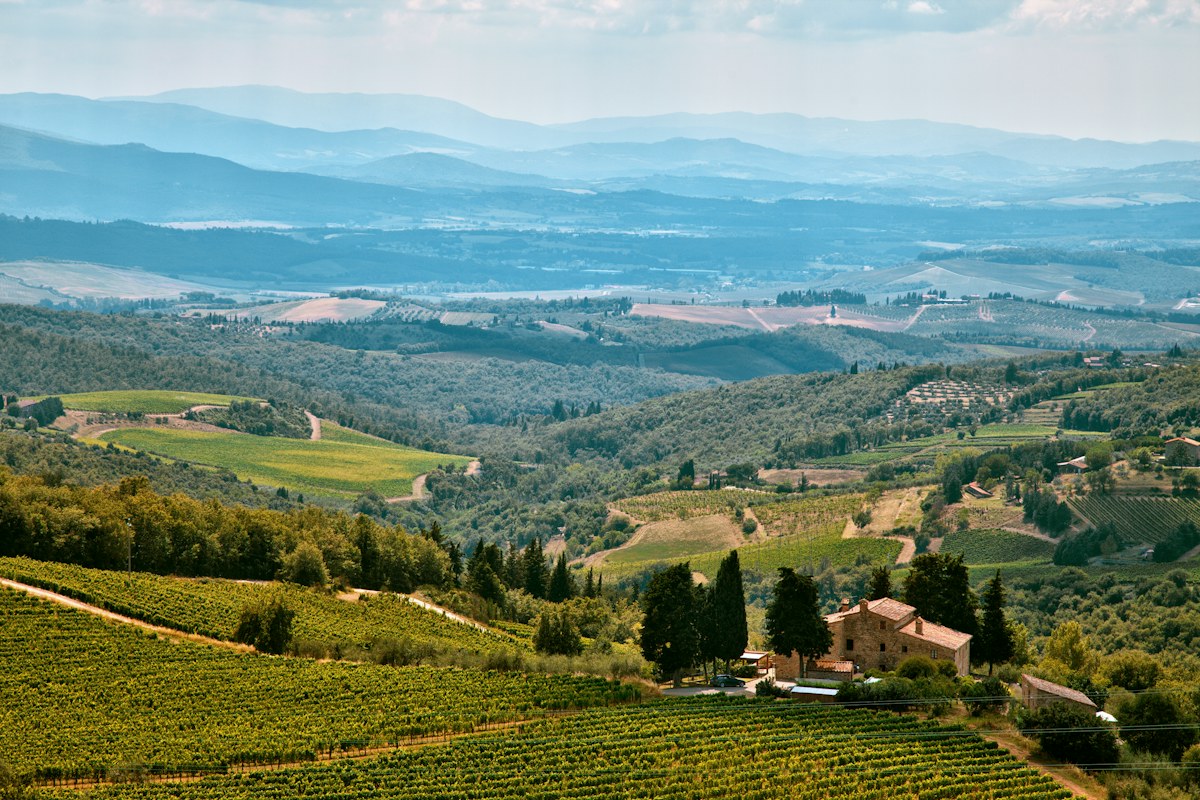
Tuscan wines are built on one grape above all, Sangiovese, and on a handful of places whose names you will see on every wine list: Chianti, Montalcino, Montepulciano and, on the coast, Bolgheri. This guide sorts them by area, explains what the labels mean, and shows how to taste them on a trip without driving after every glass.
The short answer: start with Chianti Classico between Florence and Siena, then go south for Brunello di Montalcino and Vino Nobile di Montepulciano, all three made mainly from Sangiovese. For a different style, the coast around Bolgheri is home to blends based on Cabernet and Merlot, and Vernaccia di San Gimignano is the region’s classic white. Tuscany has 11 DOCG wines, the top tier of Italian labels.
Last updated: September 25, 2026
Tuscan wines at a glance
| Wine | Where | Main grape | Style |
|---|---|---|---|
| Chianti Classico DOCG | Between Florence and Siena | Sangiovese, at least 80% | Medium-bodied red, bright acidity |
| Brunello di Montalcino DOCG | Montalcino, south of Siena | Sangiovese | Full-bodied red, long aging |
| Vino Nobile di Montepulciano DOCG | Montepulciano | Sangiovese, at least 70% | Structured red |
| Bolgheri DOC and Bolgheri Sassicaia DOC | Coast of Livorno province | Cabernet and Merlot blends | Rich red blends |
| Vernaccia di San Gimignano DOCG | San Gimignano | Vernaccia | Crisp, dry white |
| Morellino di Scansano DOCG | Maremma, Grosseto province | Sangiovese, at least 85% | Fruit-forward red |
Grape percentages from Visit Tuscany, the region’s official tourism site, checked September 2026.
What DOCG and DOC mean on a Tuscan label
Italian wine labels follow a ladder of rules. DOCG (controlled and guaranteed designation of origin) is the strictest tier: the area, grapes, yields and aging are fixed by the production rules and checked. DOC is the level below. According to Visit Tuscany, the region has 11 DOCG wines out of the 77 in Italy (checked September 2026).
You will also see IGT Toscana, a broader category. It is where many famous blends sit, because it lets winemakers use grapes and methods outside the stricter rules. In short, a DOCG tells you where and how a wine was made; it does not by itself tell you it is better than a good IGT.
Chianti and Chianti Classico
The hills between Florence and Siena are the heart of Tuscan wine. Chianti Classico comes from the historic core of this area and carries the black rooster (Gallo Nero) on the neck of the bottle. It must contain at least 80% Sangiovese. The wider Chianti DOCG covers a much larger area around it, with at least 75% Sangiovese.
The top tier, Gran Selezione, now requires at least 90% Sangiovese, with the rest only from native red grapes. The same reform created 11 additional geographic units (UGA), village names such as Panzano, Radda and Gaiole that can appear on the label, as reported by WineNews.
Chianti is the easiest wine area to visit from Florence. Compare the Chianti wine tour from Florence or, if you prefer to cycle between wineries, the Chianti e-bike tour.
Brunello di Montalcino
Montalcino, a hill town south of Siena, makes Brunello from Sangiovese alone, known locally as Brunello. The rules are among the strictest in Italy: according to the Brunello producers’ consortium, the wine spends at least two years in wood and at least four months in bottle, and it cannot be released before January 1 of the fifth year after the harvest. The Riserva waits one more year (checked September 2026).
Because of that long wait, producers also make Rosso di Montalcino, from the same grape but released from September 1 of the year after the harvest. It is the better value way to taste the area’s style. For a guided day, see the Montalcino Brunello wine tour.
Vino Nobile di Montepulciano
Montepulciano, east of Montalcino, gives its name to Vino Nobile. Do not confuse it with Montepulciano d’Abruzzo, which is a grape grown in another region. According to the Vino Nobile consortium, the wine uses at least 70% Sangiovese and ages at least two years, three for the Riserva. A newer category, Pieve, requires at least 85% Sangiovese and three years of aging (checked September 2026).
Montalcino and Montepulciano are close enough to combine in one day, together with the Val d’Orcia countryside between them. Our list of the best day trips from Florence shows how the south of Tuscany fits a Florence base.
The coast: Bolgheri and the Maremma
The Tuscan coast plays by different rules. Around Bolgheri, in the province of Livorno, winemakers grow Cabernet Sauvignon, Merlot and Cabernet Franc for rich blends. One of them has a denomination all of its own: according to Tenuta San Guido, Bolgheri Sassicaia became a DOC in 2013 and is the only Italian denomination reserved for a single wine from a single estate, with at least 80% Cabernet Sauvignon (checked September 2026).
Further south, in the Maremma, Morellino di Scansano is a softer, fruit-forward Sangiovese that is easy to drink young. The Maremma also produces Montecucco Sangiovese, with at least 90% of the grape.
White and sweet Tuscan wines
Tuscany is mostly red, but two wines are worth looking for. Vernaccia di San Gimignano, the white of the town of towers, has a long record: it was the first Italian wine to obtain DOC status, on March 3, 1966, and has been DOCG since 1993, as WineNews recalls.
At the end of a meal, Vin Santo is the classic sweet wine, made from grapes dried after the harvest and served with cantucci, the hard almond cookies. On the island of Elba, the red sweet Aleatico Passito dell’Elba is a DOCG made entirely from Aleatico grapes.
How to taste Tuscan wines on a trip
- Don’t drive after a tasting. Italy’s drink-driving limits are strict. A tour with transport, a driver or a stay at a winery solves the problem.
- Book ahead. Many wineries receive visitors by appointment only, especially on weekends.
- Go in the fall for the harvest. The vendemmia, the grape harvest, usually runs from September into October, and the hills are at their best.
- Pair wine with food. A bistecca alla fiorentina with Chianti Classico or Brunello is the classic match; our guide to the Tuscan menu explains the dishes.
For more choices, compare the options on our wine tours in Italy page, and read our guide to Italian wine brands before you shop.
Taste Tuscany in person. Reading about Tuscan wine is fine. Tasting it among the vines is unforgettable.
- Chianti wine tours: group, e-bike, Vespa or private, and how to choose.
- Montalcino wine tours: Brunello and the Val d’Orcia.
- Montepulciano wine tours: Vino Nobile and the historic cellars.
- where to stay in the Tuscan countryside: the best areas for wine lovers.
Want to sleep among the vineyards? Compare farm stays and places to stay below.
Affiliate links: if you book through them, Italy2Love earns a commission at no extra cost to you.
Tuscan wines: frequently asked questions
What are the most famous Tuscan wines?
Chianti Classico, Brunello di Montalcino and Vino Nobile di Montepulciano, all based on Sangiovese, plus the Bolgheri blends on the coast and Vernaccia di San Gimignano among the whites.
What grape is used in most Tuscan red wines?
Sangiovese. Brunello di Montalcino is made from Sangiovese alone, and Chianti Classico must contain at least 80%.
How many DOCG wines does Tuscany have?
Eleven, according to Visit Tuscany, out of 77 DOCG wines in Italy (checked September 2026).
What is the difference between Chianti and Chianti Classico?
Chianti Classico comes from the historic core between Florence and Siena, carries the black rooster seal and needs at least 80% Sangiovese. Chianti covers a wider area and needs at least 75%.
When is the best time to visit Tuscan wineries?
Fall, during and after the grape harvest, and spring. Book visits ahead, since many wineries work by appointment.
Plan the wine country
Taste Tuscany without driving
Compare wine tours from Florence, Siena and Montalcino, with prices and ratings read on Viator.
Book it: experiences for this trip
Matched to this article by place and interest, then ordered by Viator rating and number of reviews (checked October 2026). Prices and availability are shown live on Viator.
Keep exploring Italy