BLOG · Italy2Love Magazine Guide
Italian Cheese: The Most Famous Cheeses and Where They Come From (2026)
Italian cheese explained: Parmigiano Reggiano, Grana Padano, Pecorino Romano, buffalo mozzarella, burrata and Gorgonzola, where each is made, what DOP means and how to taste them, checked September 2026.
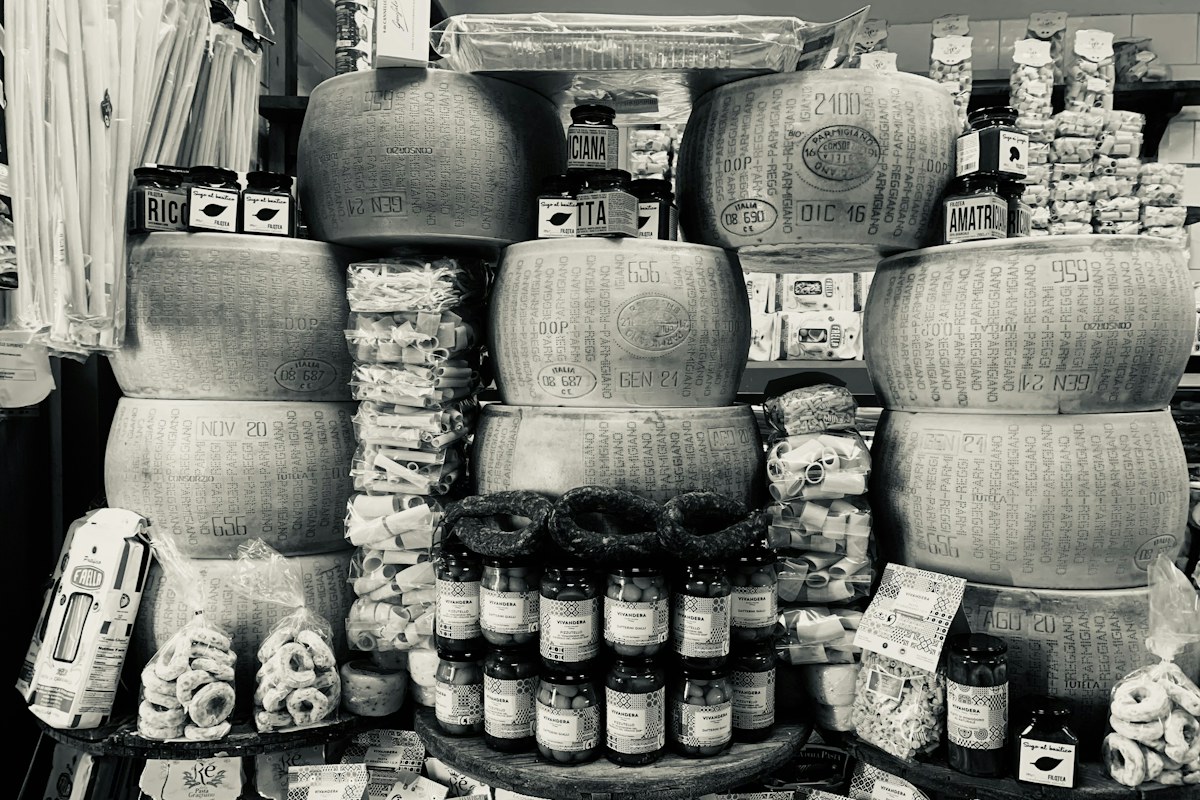
Italian cheese changes every few hundred miles: hard cow’s milk wheels in the Po Valley, sheep’s milk pecorino in Lazio and Sardinia, fresh buffalo mozzarella around Naples, and creamy burrata in Puglia. In short, this guide covers the cheeses you will meet most often, where each one comes from, what the protected labels mean, and how to taste them where they come from.
The short answer: the most famous Italian cheeses are Parmigiano Reggiano (Emilia-Romagna and Mantua), Grana Padano (the Po Valley), Pecorino Romano (Lazio, Sardinia and Grosseto), Mozzarella di Bufala Campana, Gorgonzola and burrata. In addition, a DOP label guarantees that the cheese comes from its area of origin and follows fixed rules; Parmigiano Reggiano, for example, ages at least 12 months.
Last updated: September 25, 2026
Italian cheese at a glance
| Cheese | Milk | Where it comes from | How to eat it |
|---|---|---|---|
| Parmigiano Reggiano | Cow | Parma, Reggio Emilia, Modena, Bologna and Mantua | In chunks, or grated on pasta and risotto |
| Grana Padano | Cow | The Po Valley in northern Italy | Grated, or as a table cheese |
| Pecorino Romano | Sheep | Lazio, Sardinia and the province of Grosseto | Grated on carbonara and amatriciana |
| Mozzarella di Bufala Campana | Water buffalo | Mainly Caserta and Salerno, with parts of Lazio, Molise and Puglia | Fresh, the same day if possible |
| Burrata | Cow | Puglia | Fresh, with tomatoes and olive oil |
| Gorgonzola | Cow | Piedmont and Lombardy | Blue cheese, soft or firm |
| Taleggio | Cow | Lombardy | Washed-rind, soft and aromatic |
| Fontina | Cow | Aosta Valley | Melted, as in fonduta |
What DOP means on an Italian cheese
Many Italian cheeses carry the DOP label (Denominazione di Origine Protetta, known in English as PDO). In practice, it means that the milk, the cheesemaking and the aging all take place in a defined area, under rules set by a producers’ consortium and checked by inspectors. As a result, no one outside that area can make a cheese called Parmigiano Reggiano, even though shops around the world sell generic “parmesan”.
Parmigiano Reggiano and Grana Padano
Producers make the king of Italian cheese in five provinces only: Parma, Reggio Emilia, Modena, Bologna west of the Reno river and Mantua south of the Po. According to the Parmigiano Reggiano consortium, milk production, cheesemaking, the minimum 12-month aging and packaging all happen inside that area (checked September 2026). By comparison, wheels aged 24 or 36 months are drier and more crystalline, with deeper flavor.
Grana Padano, from a wider area of the Po Valley, is a similar hard cheese with its own rules, usually milder and less expensive. Together, they are the classic grating cheeses of the north. For a visit to a dairy at dawn, when cheesemakers shape the wheels, see the Parma food tour with Parmigiano and prosciutto.
Pecorino: Italy’s sheep’s milk cheeses
Pecorino simply means sheep’s milk cheese, and almost every region in central and southern Italy makes one. Of these, the best known, Pecorino Romano, is salty and sharp; according to Wine and Travel Italy, producers can make it in all of Lazio and Sardinia and in the province of Grosseto in Tuscany. Above all, in Rome it is the cheese in carbonara, amatriciana and cacio e pepe.
Tuscany also makes softer pecorino, such as Pecorino Toscano and the pecorino of Pienza in the Val d’Orcia, while Sardinia has Pecorino Sardo and Fiore Sardo. For Roman dishes made with pecorino, see our list of the best food tours in Rome.
Mozzarella di bufala and burrata
Cheesemakers produce Mozzarella di Bufala Campana from the milk of water buffalo. The protected area covers the whole provinces of Caserta and Salerno, parts of Naples and Benevento, and small areas of Lazio, Molise and Puglia, as summarized by Wikipedia. In general, eat it fresh, at room temperature and within a day or two, and never straight from the fridge.
Burrata, from Puglia, is a pouch of cow’s milk mozzarella filled with stracciatella, shreds of curd soaked in cream. Then cut it open at the table and eat it with tomatoes, bread and olive oil. For the food of the south, compare the Naples street food tour and the Bari street food tour.
Blue, soft and mountain cheeses of the north
Gorgonzola, the blue cheese of Piedmont and Lombardy, comes in two styles: dolce, soft and creamy, and piccante, firmer and sharper. Meanwhile, Taleggio, from the valleys above Bergamo, has a washed rind, a strong smell and a mild, buttery taste. Finally, in the Alps, Fontina from the Aosta Valley and Asiago from the Veneto plateau are the cheeses of mountain huts, melted in fonduta or eaten with polenta.
How to eat Italian cheese like an Italian
- With honey or jam. Italians often serve aged pecorino and Parmigiano with honey, fruit mustard (mostarda) or a drop of aged balsamic vinegar.
- Not on everything. For example, Italians rarely put grated cheese on seafood pasta.
- At the right moment. Usually, a cheese board comes after the main course, before dessert.
- With local wine. For instance, pair Pecorino di Pienza with a Tuscan red, Parmigiano with Lambrusco, burrata with a white from Puglia.
For aged balsamic with your cheese, see the Modena balsamic vinegar tour. Similarly, for tastings across the country, compare our food tours in Italy.
Taste it at the source. Every great cheese has a home. Visiting it is the best way to understand it.
- Parma food tours: Parmigiano dairies, Parma ham and culatello.
- food tours in Bologna: city walks plus Parma and Modena producers.
- Italian bread: the perfect partner for every cheese.
- Tuscan food: the typical dishes to order, course by course.
Italian cheese: frequently asked questions
What is the most famous Italian cheese?
Parmigiano Reggiano, made in Parma, Reggio Emilia, Modena, Bologna and Mantua and aged at least 12 months.
What does DOP mean on Italian cheese?
It is the Protected Designation of Origin: producers must make the cheese in a defined area, following rules set and checked for that cheese.
What is the difference between Parmigiano Reggiano and Grana Padano?
Both are hard cow’s milk cheeses from northern Italy. Parmigiano Reggiano comes from a smaller area with stricter rules and ages at least 12 months; Grana Padano comes from a wider area of the Po Valley and is usually milder.
Where does burrata come from?
From Puglia, in southern Italy. It is a mozzarella pouch filled with stracciatella and cream.
Which cheese goes in carbonara?
Pecorino Romano, often mixed with Parmigiano Reggiano.
Taste Italy at the source
Find a food tour for your trip
Compare food tours, dairy visits and tastings across Italy, with prices and ratings read on Viator.
Book it: experiences for this trip
Matched to this article by place and interest, then ordered by Viator rating and number of reviews (checked September 2026). Prices and availability are shown live on Viator.
Keep exploring Italy