
BLOG · Italy2Love Magazine Guide
Valle d’Itria Travel Guide: Trulli, White Towns and Masserie
Plan Valle d'Itria in Puglia: Alberobello, Locorotondo, Cisternino, Martina Franca and Ostuni, with bases, transport and 2–4 day itineraries.
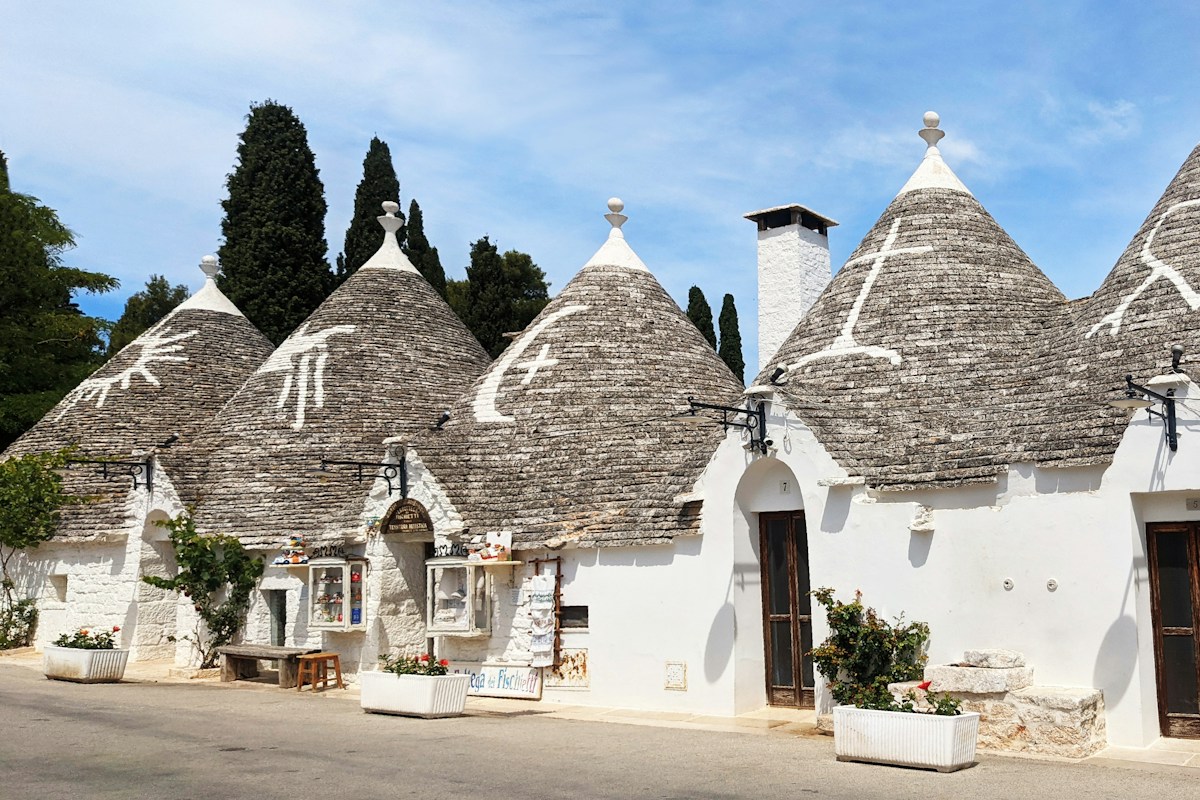
Valle d’Itria is the inland heart of central Puglia: a landscape of trulli, dry-stone walls, olive groves, vineyards and white towns spread between Bari, Brindisi and Taranto. Alberobello has the famous UNESCO trulli, but the valley becomes more rewarding when you stay long enough to include Locorotondo, Cisternino, Martina Franca, the countryside and Ostuni on its eastern edge.
The short answer: allow at least three nights. Stay in Locorotondo or Cisternino for white-town atmosphere, Martina Franca for architecture and restaurants, or a countryside masseria or trullo for a slower rural stay. Visit Alberobello early, then spend the rest of the trip beyond its busiest streets. A car is the practical choice for reaching country accommodation, olive farms and several towns in one itinerary.
Last reviewed: October 5, 2026
Valle d’Itria at a glance
| Best for | Ideal stay | Best base | Best time | Car? |
|---|---|---|---|---|
| Trulli, white towns, masserie, food and countryside | 3–4 nights | Locorotondo, Cisternino, Martina Franca or a masseria | April–June and September–October | Strongly recommended |
Where is Valle d’Itria?
Valle d’Itria lies in south-central Puglia, across territory belonging to the provinces of Bari, Brindisi and Taranto. It is not a sharply bounded administrative region, so maps and tourism sources do not always draw it in exactly the same way. The core usually means the countryside and towns around Alberobello, Locorotondo, Cisternino and Martina Franca. Ostuni and Fasano sit on its edges and naturally join many itineraries.
The official Puglia tourism portal describes it as the land between Bari, Brindisi and Taranto, characterized by scattered rural settlement, vineyards, olive groves, orchards, trulli and masserie. Bari and Brindisi airports are the main arrival points. Both can work, so choose according to flight price, car availability and the direction of the rest of your Puglia trip.
Why visit Valle d’Itria?
The valley combines several versions of Puglia in a compact area. Alberobello supplies the architectural headline. Locorotondo and Cisternino offer smaller historic centers. Martina Franca adds a grander Baroque character. The countryside connects everything through olive groves, farms, stone walls and thousands of trulli.
- Trulli: conical dry-stone buildings scattered through the countryside and concentrated in Alberobello.
- White towns: limewashed lanes, flowered balconies and views across the valley.
- Masserie: historic farm complexes, many now used for accommodation, food, olive oil and agricultural experiences.
- Food: grilled meat in Cisternino, capocollo from Martina Franca, local cheeses, vegetables, olive oil and regional wines.
- Slow travel: short drives, rural stays and experiences tied directly to the landscape.
- Coast access: the Adriatic is close enough for a beach or boat day without making the valley a seaside destination.
The best towns to visit in Valle d’Itria
Alberobello: the trulli landmark
Alberobello contains the valley’s greatest concentration of trulli. UNESCO identifies more than 1,500 structures in the Rione Monti and Aia Piccola quarters and related sites. The two districts feel different: Rione Monti has the most shops and visitors, while Aia Piccola retains a quieter residential character.
Arrive early in the morning or stay into the evening, when day-trip groups thin out. Visit both districts rather than stopping only on the commercial slope. The Trullo Sovrano and Casa d’Amore add context to the urban history. Alberobello deserves time, but it should not become a substitute for the wider valley.
Locorotondo: white lanes and valley views
Locorotondo occupies a rounded hilltop and looks across a countryside of vineyards, olive groves and trulli. Its historic center is known for whitewashed houses and cummerse, buildings with steeply pitched stone roofs. The panoramic terraces along the edge of town make its relationship with the valley visible.
The town is compact and works well for an afternoon or overnight stay. Walk the circular lanes, see the Church of San Giorgio and pause at the viewpoints rather than treating it as another photo stop. Locorotondo is one of the strongest bases for combining atmosphere with access to the countryside.
Cisternino: small streets and a meat tradition
Cisternino has an intimate historic center of arches, stairways and white houses. It is especially associated with fornelli pronti: butcher shops where customers choose meat that is cooked on site. Ask how ordering works, confirm prices before choosing and allow time for the meal—the experience is not fast food.
The town is lively in the evening and can be a good base for travelers who prioritize food and a walkable center. Parking is outside the oldest lanes, as in most towns here.
Martina Franca: Baroque architecture and local life
Martina Franca is larger and more urban than Locorotondo or Cisternino. Its historic center mixes white alleys with elaborate Baroque portals, balconies and churches. Palazzo Ducale and the Basilica of San Martino are the architectural anchors, but the town’s value also lies in shops, cafés and daily life beyond tourism.
It is a practical base with more services and restaurants, particularly outside the highest season. The town is also associated with capocollo di Martina Franca and hosts cultural events, including a summer opera and music festival whose program changes annually.
Ostuni: the White City on the valley’s edge
Ostuni rises above olive groves closer to the Adriatic coast. It is commonly included in Valle d’Itria trips even though it sits on the eastern edge rather than at the core. The historic center climbs around the cathedral through white lanes and stairways, with views toward the coastal plain.
Ostuni is busier and more polished than the smaller valley towns. It suits travelers who want restaurants, evening energy and quick access to the sea. Stay in the center for walking or in the surrounding countryside for a masseria experience; the two produce very different trips.
Ceglie Messapica: food and a quieter alternative
Ceglie Messapica lies southeast of the core towns and offers a less staged atmosphere. Its historic center, castle and strong food identity make it useful for repeat visitors or anyone who wants a base away from Alberobello’s circuit. Include it when gastronomy matters more than checking every headline sight.
Understanding the trulli
Trulli are dry-stone limestone buildings with corbelled conical roofs. UNESCO describes the construction as mortarless and notes that the buildings served as field shelters, storehouses and permanent dwellings. The stone came from fields and local excavation, connecting the architecture directly to the agricultural landscape.
Alberobello provides the most concentrated urban ensemble, but rural trulli are found throughout Valle d’Itria. A countryside stay can therefore reveal their original relationship with farms and fields more clearly than a short visit to the town. When booking a trullo, check whether the sleeping rooms, bathroom and outdoor space are inside original structures or modern additions; thick stone walls do not automatically guarantee strong ventilation or air conditioning in summer.
Should you stay in a masseria, trullo or town?
| Stay type | Best for | Check before booking |
|---|---|---|
| Masseria | Space, pool, food, olive groves and a rural experience | Whether dinner is served, minimum stays, road access |
| Trullo | Distinctive architecture and privacy | Air conditioning, room layout, bathroom and exact location |
| Town apartment or hotel | Restaurants, walking and evening atmosphere | Parking, stairs, luggage access and ZTL boundaries |
| Coastal base | Beach-first trips with inland day excursions | Driving time and summer traffic |
A masseria best expresses the Slowxury idea when it remains connected to agriculture, local food and the landscape rather than functioning as an isolated generic resort. Ask what is produced on site, whether meals use local ingredients and which experiences are actually available during your stay. Before booking, compare a masseria or trullo in Valle d’Itria by services, privacy, season and mobility.
The best things to do in Valle d’Itria
- Visit an olive farm or mill: learn how olives are grown and oil is tasted; harvest activities are seasonal.
- Take a cooking class: look for orecchiette, vegetables and recipes tied to the host’s town rather than a generic Italian menu.
- Cycle or walk between trulli: choose quiet country roads or a guided route and avoid the hottest part of summer days.
- Explore a weekly market: market days change, so confirm locally and go early.
- Spend a beach day: Torre Canne and the coastal area near the Dune Costiere park are natural extensions of an inland stay.
- Compare town architecture: Alberobello’s trulli, Locorotondo’s cummerse and Martina Franca’s Baroque center tell different parts of the same territory.
- Stay for dinner: the valley changes after day visitors leave, especially in Alberobello and Ostuni.
What to eat and drink
The area’s cooking is agricultural and direct: vegetables, legumes, bread, cheese, meat, pasta and olive oil. Look for orecchiette, fave e cicoria, baked pasta, bombette and other grilled meats, burrata and fresh cheeses, capocollo di Martina Franca, taralli and almond sweets.
Local wine includes whites from grapes such as Verdeca and Bianco d’Alessano, alongside rosé and red styles. Locorotondo DOC and Martina Franca DOC connect wine directly to the valley, but production is smaller and less internationally familiar than Puglia’s Primitivo story. A farm or winery visit is more useful than chasing labels without context.
The best time to visit Valle d’Itria
| Season | Why go | Watch out for |
|---|---|---|
| April–May | Green countryside, walking and lower demand | Changeable weather and some pools still closed |
| June | Long days, warm weather and easier beach combinations | Heat builds toward the end of the month |
| July–August | Events, beach weather and lively evenings | Heat, crowds, traffic and higher prices |
| September–October | Warm days, harvest atmosphere and food experiences | Shorter days and changing coastal services |
| November–March | Quiet towns and local life | Seasonal closures, cool weather and limited rural services |
Late spring and early fall produce the best balance for most travelers. August works only if nightlife and beach weather outweigh heat and crowds. In summer, start town visits early, rest in the middle of the day and return for evening walks. The broader Puglia travel guide helps place the valley within the region.
How many days do you need?
Two days: the highlights
- Day 1: Alberobello early, followed by Locorotondo and sunset in the countryside.
- Day 2: Martina Franca, lunch in Cisternino and evening in Ostuni.
Three days: the best first visit
- Day 1: Alberobello and Locorotondo.
- Day 2: Martina Franca, Cisternino and a long lunch.
- Day 3: olive oil or cooking experience, then Ostuni for late afternoon and dinner.
Four days: the Slowxury itinerary
Add a day with no checklist: stay at the masseria, cycle through the countryside, visit one producer or spend several hours on the coast. The purpose of the extra day is not another town. It is the time that allows the valley’s rural rhythm to emerge. For a complete day-by-day plan, compare our 3-, 5- and 7-day Valle d’Itria itinerary. That slower approach also fits our guide to Slowxury and slow travel in Italy.
Can you visit Valle d’Itria without a car?
Yes, but the trip needs more structure. Regional rail and bus services connect some towns, while rural masserie, trulli and farms may sit far from useful stops. Frequencies and routes can change by season, and a journey that looks short on a map may require a connection.
Without a car, choose a town base, confirm current timetables and book transfers or organized excursions for the countryside. Alberobello can be visited from Bari, and the Alberobello and Matera day trip from Bari solves transport for travelers who want both places in one long day. It is not a replacement for staying in the valley, but it is a practical option.
With a car, park outside historic centers and respect ZTL limited-traffic zones. Never assume accommodation in the old town includes nearby parking. Our guide to renting a car in Italy explains deposits, insurance and common fees.
The best day trips from Valle d’Itria
- Polignano a Mare and Monopoli: Adriatic towns north of the valley; add a Polignano a Mare boat tour in suitable weather.
- Matera: a major full-day trip across the regional border in Basilicata.
- Bari: old-town streets, focaccia and a useful arrival or departure night.
- Lecce: farther south and better as an onward base than a rushed return day.
- The Adriatic coast: beaches and protected dunes near Torre Canne work well during warm months.
For a larger route, use the Puglia itinerary for 5, 7 or 10 days. It keeps the valley distinct from Bari, the coast and Salento rather than presenting the entire region as a series of day trips.
Practical planning tips
- Visit Alberobello before the main day-trip arrivals or stay until evening.
- Choose one base for at least three nights instead of changing town daily.
- Confirm whether a masseria serves dinner; rural driving after a long meal is not ideal.
- Check air conditioning and pool opening dates when booking warm-season accommodation.
- Park outside the historic centers and never enter a ZTL unless authorized.
- Carry water and sun protection from late spring through early fall.
- Reserve popular restaurants and cooking experiences in summer.
- Do not overfill the itinerary: two towns plus lunch can be a complete day.
Where to stay
Planning to spend the night in Ostuni? Book a central base and you will lose less time in transit, especially if you start early. Not sure which area to pick? Our guide to where to stay in Ostuni compares the best areas.
Affiliate links: if you book through them, Italy2Love earns a commission at no extra cost to you.
Compare places to stay in Ostuni →Valle d’Itria: frequently asked questions
Which towns are in Valle d’Itria?
The core commonly includes Alberobello, Locorotondo, Cisternino and Martina Franca. Ostuni, Fasano and Ceglie Messapica are often included in wider travel itineraries around the valley.
Is Ostuni in Valle d’Itria?
Ostuni sits on the valley’s eastern edge and is commonly grouped with Valle d’Itria trips. It works naturally with the core towns, especially for travelers continuing to the Adriatic coast.
Where should you stay in Valle d’Itria?
Choose Locorotondo or Cisternino for white-town atmosphere, Martina Franca for services and architecture, Alberobello for the trulli experience, or a masseria for a rural stay.
How many days are enough?
Three nights are ideal for a first visit. Two days cover the main towns, while four nights allow time for a farm experience, coast day or slower countryside rhythm.
What is the best time to visit?
April to June and September to October offer the best balance of weather and manageable visitor numbers. July and August bring heat, crowds and higher prices.
Planning sources
Territorial and architectural information was checked against the Puglia tourism portal, its Locorotondo guide and the UNESCO World Heritage listing for the Trulli of Alberobello. Transport, opening times, events and individual hospitality services can change; verify them for your travel dates.
Plan the wider Puglia trip
Choose the right route and experience
Compare Puglia itineraries, tours and transport options before choosing your valley base.
Book it: experiences for this trip
Matched to this article by place and interest, then ordered by Viator rating and number of reviews (checked September 2026). Prices and availability are shown live on Viator.
Keep exploring Italy