
BLOG · Italy2Love Magazine Guide
Valle d’Itria Itinerary: 3, 5 or 7 Days
Plan a Valle d’Itria itinerary for 3, 5 or 7 days, with the best base, realistic daily routes, transport choices and pacing advice.
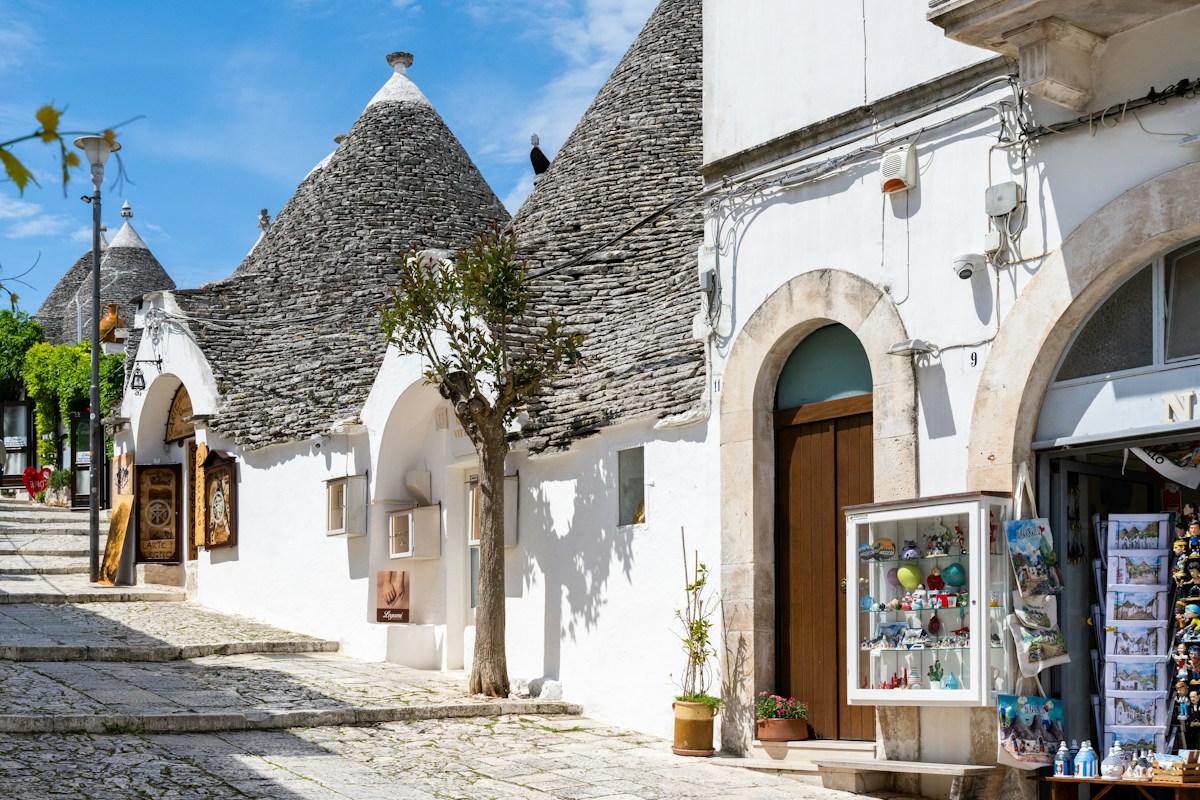
This Valle d’Itria itinerary helps you choose a realistic 3-, 5- or 7-day route through Alberobello, Locorotondo, Martina Franca, Cisternino, Ostuni and the surrounding Puglia countryside. The best plan is not to change hotels every night. Pick one central base, group nearby towns, visit Alberobello early and leave space for long meals, rural roads and an afternoon by the Adriatic.
The short answer: choose 3 days for the essential trulli and white towns, 5 days for a slower route plus Ostuni and the coast, or 7 days if you want a rural experience and an unhurried beach or cave day. For most first trips, 5 days is the sweet spot. A car is the most practical option; without one, stay in a town served by current rail or bus connections and reduce the number of stops.
Last reviewed: October 6, 2026.
Valle d’Itria itinerary at a glance
| Time available | Best route | Best for | Pace |
|---|---|---|---|
| 3 days | Alberobello + Locorotondo; Martina Franca + Cisternino; Ostuni or countryside | First-time highlights | Active but realistic |
| 5 days | The 3-day core + Ceglie Messapica + one coast day | Balanced first trip | Comfortable |
| 7 days | The 5-day route + rural experience + flexible cave, coast or rest day | Slow travel and families | Unhurried |
This is a planning article, not a general destination guide. If you still need to decide whether the area suits your trip, start with our Valle d’Itria travel guide. If you are deciding how the valley fits into a wider regional trip, use the Puglia itinerary. Return here once your nights are fixed.
Which itinerary should you choose?
Choose by the trip you actually want, not by how many names you can fit into a day. Valle d’Itria looks compact on a map, but parking, summer traffic, historic-center restrictions and long lunches make a checklist route less efficient than it appears.
- Choose 3 days if Valle d’Itria is one section of a longer Puglia trip. Keep one base and accept that one headline stop may be optional.
- Choose 5 days if this is your first visit and you want both inland towns and the Adriatic without rushing.
- Choose 7 days if your accommodation, food and countryside time matter as much as sightseeing. The extra days should create breathing room, not seven consecutive excursions.
Where should you base yourself?
| Base | Choose it for | Trade-off |
|---|---|---|
| Locorotondo | Central position, white-town atmosphere and views | Small center and limited parking near the oldest streets |
| Martina Franca | Restaurants, services, Baroque architecture and year-round life | More urban than a countryside stay |
| Cisternino | Compact evenings, food and access to the southern valley | Fewer services than a larger town |
| Country masseria or trullo | Space, quiet, landscape and slow mornings | A car is usually essential |
| Ostuni | Evening energy and easier access to the Adriatic | Less central for Alberobello and Martina Franca |
For a 3-day route, the Locorotondo–Martina Franca–Cisternino triangle minimizes backtracking. For 5 or 7 days, a countryside property can work beautifully if you are comfortable driving after dinner or eating on site. Compare the practical differences in our guide to choosing a masseria or trullo in Valle d’Itria.
The 3-day Valle d’Itria itinerary
Day 1: Alberobello early, Locorotondo late
Start in Alberobello before the busiest day-trip period. Walk both Rione Monti and Aia Piccola rather than treating the trulli as one commercial street. UNESCO recognizes the Trulli of Alberobello as an exceptional surviving example of mortarless dry-stone construction, so slow down long enough to understand the building method as well as photograph the roofs.
Leave the middle of the day flexible for lunch or a quiet pause at your accommodation. Continue to Locorotondo in the afternoon. Walk its circular historic center, notice the steep stone roofs known as cummerse, and reach the panoramic edge while there is still daylight. Stay for an aperitivo or dinner rather than adding a third town.
Day 2: Martina Franca and Cisternino
Give Martina Franca the morning and early afternoon. Its Baroque palaces, balconies and churches offer a real contrast to Alberobello. The historic center is larger than those of Locorotondo and Cisternino, so this is the day for a longer architectural walk, a market if one is operating, and an unhurried lunch.
Move to Cisternino later in the day. Explore the arches, stairways and white lanes, then stay into the evening if its butcher-shop grills are part of your plan. Do not reserve a distant dinner on the same night: the point of this pairing is to let the second town become the evening experience.
Day 3: choose Ostuni, the countryside or the coast
Your third day should match your priority:
- Architecture and atmosphere: spend the day in Ostuni, climbing through the White City and staying for the evening.
- Food and landscape: book an olive-oil, cooking or farm experience and leave the rest of the day free.
- Sea: head toward the Adriatic for a beach, coastal walk or boat excursion, then return to your inland base.
Do not attempt Ostuni, Polignano a Mare and Monopoli on the same final day unless you are comfortable seeing each place briefly. Three days rewards editing.
The 5-day Valle d’Itria itinerary
The 5-day version keeps the first three days but removes the Day 3 dilemma. It is the strongest first-trip plan because every core town gets a clear role and the coast no longer competes with the countryside.
Days 1–2: Alberobello, Locorotondo, Martina Franca and Cisternino
Follow the 3-day sequence above. Resist moving accommodation: the driving saved rarely compensates for packing, check-out and parking at a new property.
Day 3: Ostuni and its olive-grove landscape
Give Ostuni a full day rather than using it as a short photo stop. Walk the lanes around the cathedral, look across the coastal plain and choose either a long lunch or an olive-focused countryside visit. If you are staying near Ostuni, this is a natural evening for dinner in town; if your base is farther west, leave before fatigue turns the return drive into the hardest part of the day.
Day 4: Ceglie Messapica and a slow rural afternoon
Ceglie Messapica gives the itinerary a quieter, food-led day. Explore its compact historic center, then make the afternoon about the countryside: a masseria lunch, olive-oil tasting, cooking class or simply time at your accommodation. This is deliberately lighter than Days 1–3.
Day 5: Polignano a Mare and Monopoli, or one beach day
Use the final day for the Adriatic. Polignano a Mare is the dramatic-cliff choice; Monopoli offers a port, historic streets and a different urban rhythm. They can be paired if you start early, but a summer beach day is better kept simple. When conditions and seasonal operations suit your dates, compare a verified Polignano a Mare boat tour with independent time on shore.
Commercial disclosure: some Italy2Love experience pages contain clearly identified links to commercial partners. We may earn a commission if you book through them, at no extra cost to you. Availability changes; check the live supplier page before booking.
The 7-day Valle d’Itria itinerary
A week should feel slower than five days. Follow the 5-day route, then use the final two days to deepen the trip rather than extend it across half of southern Italy.
Day 6: choose one bookable rural experience
Choose one activity tied to the territory: olive oil, wine, cheese, orecchiette, cycling or a farm visit. Confirm what is genuinely produced or taught on site, whether transport is included and which language the host uses. Agricultural activities are seasonal, so a generic promise of “harvest” is not enough.
Keep the other half of the day empty. Use your pool, revisit the town you liked most, shop at a food market or have a long lunch. This free space is what makes the seven-day plan different from a packed Puglia road trip.
Day 7: caves, coast or complete rest
Finish according to weather and energy. The Grotte di Castellana can add a subterranean contrast to the white towns; a second coastal day works when the sea is the priority; a full day at a masseria or trullo works when the accommodation was a meaningful part of the booking. Check current opening hours, tour languages and reservation requirements directly before traveling.
Do you need a car for this itinerary?
A car is the practical choice for all three versions because it connects rural accommodation, farms, the coast and several towns without designing every day around a timetable. Read our guide to renting a car in Italy and review driving rules in Italy before the trip.
- Expect restricted-traffic zones around historic centers and park outside the oldest streets.
- Ask a rural host whether the final road is paved and whether arrival after dark is straightforward.
- Do not plan wine tastings around a driver who also intends to drink.
- In July and August, allow more flexibility for heat, parking and coastal traffic.
Valle d’Itria without a car
A car-free visit is possible, but it should not copy the driving itinerary. Stay in Martina Franca, Locorotondo or another town with useful current connections, then build each day around one or two stops. Rural trulli and masserie are poor choices unless the property confirms transfers and on-site meals.
Ferrovie del Sud Est operates rail and bus services in this part of Puglia, but routes, substitutions and seasonal services can change. Check the official FSE journey planner for your exact date rather than copying a timetable from an old article. The no-car version benefits most from five days: extra time compensates for less flexible connections.
How to adjust the route by season
| Season | Best adjustment | Main risk |
|---|---|---|
| April–May | Prioritize countryside walks and towns; keep an indoor backup | Variable weather and pools not yet open |
| June | Use long daylight for coast and evening town visits | Heat increases late in the month |
| July–August | Start early, rest at midday, visit towns in the evening | Heat, crowds, parking and coastal traffic |
| September–October | Favor food, wine and olive-linked experiences | Shorter days and changing coastal services |
| November–March | Base in a larger town and confirm every rural service | Seasonal closures and reduced transport |
What to book before you go
- Your base: confirm parking, exact map location, heating or air conditioning, pool dates and meal service.
- Rental car: compare the full insurance terms, transmission type and return conditions.
- One high-value experience: choose by host, language, group size, meeting point and cancellation terms.
- Time-sensitive attractions: verify current opening hours and ticket rules on the official site.
- Restaurants that matter to you: reserve only the places around which you are willing to shape the day.
Common planning mistakes
- Changing base too often: the valley is compact enough for day loops; repeated check-ins waste the slow part of the trip.
- Visiting Alberobello only: its trulli are essential, but they are one expression of the territory.
- Pairing too many towns: two well-matched stops usually make a better day than four hurried centers.
- Assuming every masseria is a working farm: ask what is produced and which activities actually operate.
- Trusting broad map estimates: parking and the final rural road can matter more than distance.
- Ignoring the evening: towns often become more enjoyable after day visitors leave.
Valle d’Itria itinerary: frequently asked questions
How many days do you need in Valle d’Itria?
Three days cover the essential towns; five days create the best balance of inland Puglia, countryside and coast; seven days suit slow travel, families and travelers who want experiences or rest days. If Valle d’Itria is the main destination, choose five days.
What is the best base for a Valle d’Itria itinerary?
Locorotondo, Martina Franca and Cisternino are the most practical central town bases. Choose a countryside masseria or trullo for atmosphere and privacy, or Ostuni when evening life and coast access matter more than being central to every inland stop.
Can you visit Alberobello, Locorotondo and Ostuni in one day?
You can, but the day becomes a transfer between photo stops. A better plan pairs Alberobello with Locorotondo and gives Ostuni its own half or full day, especially in summer.
Is three days enough without a car?
Three days can work if you choose a well-connected town base and limit each day to one or two places. Five days is more forgiving because current rail and bus schedules, transfers and seasonal changes reduce flexibility.
Should a 7-day Valle d’Itria itinerary include Matera?
Only if Matera is a major priority. It is in Basilicata, not Valle d’Itria, and it deserves more than a rushed detour. For a valley-focused week, use the extra day for the coast, caves, a rural experience or rest. Include Matera in a wider southern Italy route instead.
Sources and planning freshness
The route structure was checked against the official Italian tourism portal’s Valle d’Itria itinerary through villages and trulli. Architectural context for Alberobello comes from the UNESCO World Heritage listing. Town context was checked against the official Puglia tourism pages for Locorotondo and Cisternino. Transport information should always be rechecked on the official FSE planner for the date of travel.
Your next planning decision
Choose the number of days first, then the base, then one or two experiences worth protecting. Use the Puglia travel guide for the regional picture, compare a masseria with a trullo for accommodation, and keep this Valle d’Itria itinerary as the day-by-day framework.
Keep exploring Italy