
BLOG · Italy2Love Magazine Guide
Gelato in Italy: How to Order, Spot the Real Thing and What to Try (2026)
Gelato in Italy explained: gelato vs. ice cream, how to spot artisanal gelato, how to order and pay, a flavor glossary and regional specialties, checked September 2026.
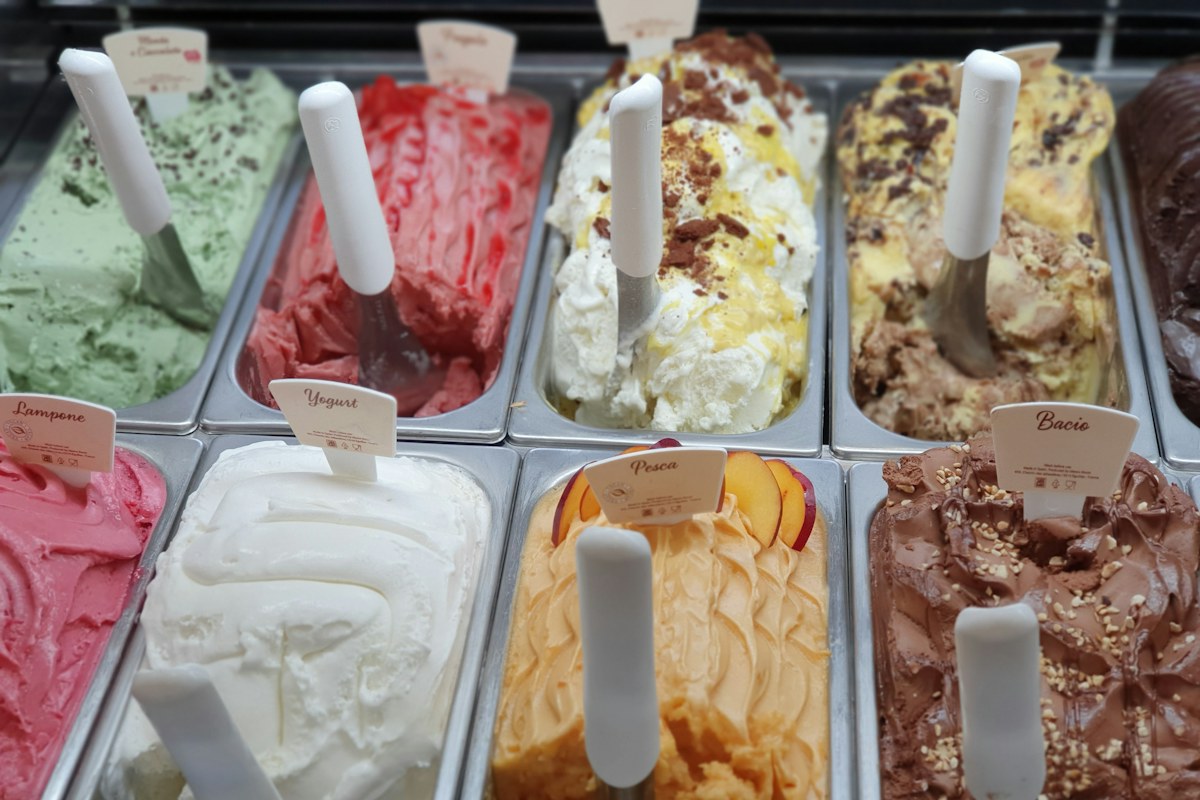
Gelato in Italy is a daily ritual, not just a dessert, and a little know-how turns a random scoop into a great one. Italians eat it on the evening walk, after lunch in summer and sometimes for breakfast in Sicily. This guide explains what gelato is, how to spot a good shop, how to order and pay, and which flavors and regional specialties to look for.
The short answer: gelato is Italy’s own style of frozen dessert. Compared with American ice cream, it usually has less fat and less air, and it is served slightly warmer, so it tastes dense and intense. To order, choose a cone (cono) or a cup (coppetta) and its size, which sets how many flavors you get. In many shops you pay first at the till, the cassa. Finally, look for natural colors and seasonal fruit flavors, which are common signs of a careful maker.
Last updated: September 26, 2026
Gelato in Italy at a glance
| What to know | In practice |
|---|---|
| Where to buy it | A gelateria, a shop that makes and sells gelato |
| Cone or cup | Cono (cone) or coppetta (cup), in several sizes |
| How many flavors | Set by the size you choose, usually two or three in a small or medium |
| How to pay | Often at the cassa first, then order at the counter with the receipt |
| Whipped cream | Ask for panna on top; some shops include it, others charge |
| Classic flavors | Fior di latte, stracciatella, pistachio, hazelnut, chocolate, lemon |
| Regional specialties | Granita with brioche in Sicily, affogato, semifreddo, spumone |
Gelato vs. ice cream: what is the difference?
The word gelato simply means “frozen” in Italian, and in Italy it covers the whole family of scooped frozen desserts. Still, Italian gelato has a recognizable style, and three differences explain most of it.
- Less fat. Gelato is typically made with more milk and less cream than American ice cream. As a result, the flavor of the pistachio or the fruit comes through more clearly.
- Less air. Gelato is churned more slowly, so it holds less air. That is why a small scoop feels dense and silky rather than fluffy.
- Warmer serving temperature. Gelato is kept a little warmer than hard ice cream. For this reason it is soft enough to shape with a flat spatula, and it does not numb your tongue.
Sorbet has a place in the case too. A sorbetto contains no milk, so fruit sorbets are usually a good choice for anyone avoiding dairy. However, recipes vary from shop to shop, so always ask before you order if you have an allergy.
How to spot artisanal gelato
Most towns have several gelaterie, and the quality of gelato in Italy varies a lot. There is no official seal that guarantees a handmade product. Even so, a few signs are widely used as a rule of thumb.
- Covered tins. Some traditional shops keep gelato in deep steel tins called pozzetti, closed with lids. You cannot see the gelato, but it stays at a steady temperature.
- Natural colors. Pistachio should look olive or brownish green, not bright green. Similarly, banana should look grayish cream, not yellow.
- Flat, modest tubs. Gelato piled into tall, glossy mountains often contains extra stabilizers to hold the shape. By contrast, a flat surface in the tray is a more reassuring sign.
- Seasonal fruit. A short list that changes with the season, such as fig in late summer or chestnut in the fall, suggests fresh ingredients.
- A focused menu. A shop with a dozen well-made flavors is often more careful than one with sixty.
None of these signs is proof on its own, so treat them as clues and trust your first taste.
How to order gelato in Italy, step by step
Ordering gelato in Italy follows the same logic as coffee at a bar. If you already know how to order an espresso, read our guide to coffee in Italy and the routine will feel familiar.
- Check for a cassa. In busy shops, pay first at the till. Say “un cono piccolo” or “una coppetta media”, for example, and keep the receipt. In small shops, by contrast, you order first and pay afterward.
- Choose the size. The price depends on the size, not the number of flavors. Each size allows a set number of flavors, which the menu board usually shows.
- Pick your flavors. Hand over the receipt and name your flavors, one by one. Many servers will offer a small taste if you ask “posso assaggiare?”, which means “can I taste?”.
- Say yes or no to panna. The server may ask “panna?” at the end. It means a swirl of whipped cream on top.
- Step aside. Gelato is usually eaten standing or walking. Sitting at a table, where there is one, may cost more.
For other useful words, see our list of basic Italian phrases.
Classic gelato flavors: a glossary
Menus are written in Italian, and some names are not obvious. Here are the classics you will find in most shops.
| Flavor | What it is |
|---|---|
| Fior di latte | Sweet cream: milk and sugar with no added flavor, the base of many others |
| Stracciatella | Fior di latte with fine shards of dark chocolate |
| Crema | Egg custard, similar to a rich vanilla |
| Pistacchio | Pistachio; the best-known versions use nuts from Bronte in Sicily |
| Nocciola | Hazelnut; Piedmont hazelnuts are especially prized |
| Cioccolato / fondente | Chocolate / dark chocolate, sometimes dairy-free |
| Gianduia | Chocolate and hazelnut, a Turin classic |
| Bacio | Chocolate with hazelnut pieces |
| Zabaione | Egg yolk, sugar and Marsala wine |
| Amarena | Cream gelato rippled with sour cherries in syrup |
| Limone / fragola | Lemon / strawberry, often made as sorbet |
Stracciatella: a Bergamo invention
Stracciatella has a known birthplace. According to the Bergamo tourism board, Enrico Panattoni invented it in 1961 at the Marianna pastry shop in Colle Aperto, in the upper town (checked September 2026). The name refers to the “little shreds” of chocolate. If you are heading to Lombardy, see our guide to visiting Bergamo.
Pistachio from Bronte and hazelnuts from Piedmont
Two nut flavors carry protected names. The Pistacchio Verde di Bronte is a DOP product. According to its official production rules, it comes from the municipalities of Bronte, Adrano and Biancavilla, on the slopes of Mount Etna in the province of Catania (checked September 2026). Meanwhile, the Nocciola Piemonte IGP consortium says its hazelnuts come from the Tonda Gentile Trilobata variety, grown mainly in the Langhe, Roero and Monferrato hills (checked September 2026). Note that a menu mentioning Bronte or Piedmont is a claim, so a shop may or may not use the certified product.
Regional gelato in Italy and related treats
Sicily: granita and brioche
In Sicily, a granita is a semi-frozen ice with a grainy texture, made with fruit, almond, pistachio or coffee. People eat it with a soft, round brioche bun for dipping, often for breakfast in summer. In addition, Sicilians fill a brioche with gelato and eat it like a sandwich. For more, read our guide to Palermo street food.
Affogato
An affogato, which means “drowned”, is a scoop of gelato, usually fior di latte or crema, topped with a shot of hot espresso. Some places add a splash of liqueur. If that idea appeals, see our guide to Italian liqueurs.
Semifreddo and spumone
A semifreddo, or “half-cold”, is a frozen mousse made with cream and eggs and served in slices, often in restaurants rather than gelaterie. Similarly, spumone is a molded frozen dessert with layers of different flavors, a tradition linked to Naples and the south. Both show up on dessert menus, so look for them after dinner. For baked sweets, see our list of Italian pastries.
The Carpigiani Gelato Museum near Bologna
If you want to understand how gelato is made, the Carpigiani Gelato Museum is the obvious stop. According to its official site, it is at Via Emilia 45 in Anzola dell’Emilia, and it offers guided museum tours combined with tastings and gelato classes (checked September 2026). The Bologna Welcome tourism office adds that it is about 20 km from the center of Bologna. It also says the museum opens only by reservation, Tuesday to Saturday, 9 a.m. to 6 p.m. (checked September 2026). As a result, you cannot simply walk in, so book ahead and check the experience that fits you.
The museum pairs well with a food day in Emilia-Romagna. For example, combine it with a cooking class in Bologna, then read our guide to the best food tours in Bologna.
Gelato festivals: Sherbeth in Palermo
For fans of gelato in Italy, Palermo hosts Sherbeth, a festival of artisan gelato. According to the official Sherbeth site, the 2026 edition runs from November 13 to 16 in Piazza Verdi, in front of the Teatro Massimo (checked September 2026). If your fall trip includes Sicily, it is worth checking the program before you travel.
Gelato with kids and on food tours
Gelato in Italy is also the easiest reward on a family trip. In Rome, a gelato stop fits between sights, and our guide to Rome with kids has more ideas. A food tour, meanwhile, often includes a gelato tasting and teaches you the local ordering routine. For example, look at the Trastevere food tour in Rome or the Florence food tour. Then browse all food tours in Italy to compare cities.
Gelato in Italy: frequently asked questions
What is the difference between gelato and ice cream?
Italian gelato usually has less fat and less air than American ice cream, and it is served slightly warmer. As a result, it tastes denser and the flavors feel more intense.
How do you order gelato in Italy?
Choose a cone (cono) or a cup (coppetta) and a size, which sets how many flavors you get. In busy shops, pay first at the cassa and then name your flavors at the counter.
How can I tell if gelato is artisanal?
There is no single test, but natural colors, flat tubs, seasonal fruit flavors and a short menu are common signs. Some traditional shops also keep gelato in covered steel tins called pozzetti.
Where was stracciatella gelato invented?
In Bergamo. According to the Bergamo tourism board, Enrico Panattoni created it in 1961 at the Marianna pastry shop in the upper town.
Can I visit the Carpigiani Gelato Museum without booking?
No. According to the Bologna tourism office, the museum near Bologna opens only by reservation, Tuesday to Saturday.
Taste Italy one scoop at a time
Find a food tour for your trip
Compare food tours and tastings in Rome, Florence, Bologna and beyond, with prices and ratings read on Viator.
Book it: experiences for this trip
Matched to this article by place and interest, then ordered by Viator rating and number of reviews (checked September 2026). Prices and availability are shown live on Viator.
Keep exploring Italy