BLOG · Italy2Love Magazine Guide
Coffee in Italy: How to Order, What to Drink and Regional Habits (2026)
Coffee in Italy explained: how to order and pay at the bar, a glossary of drinks, the cappuccino rule, and regional twists from Naples to Trieste, checked September 2026.
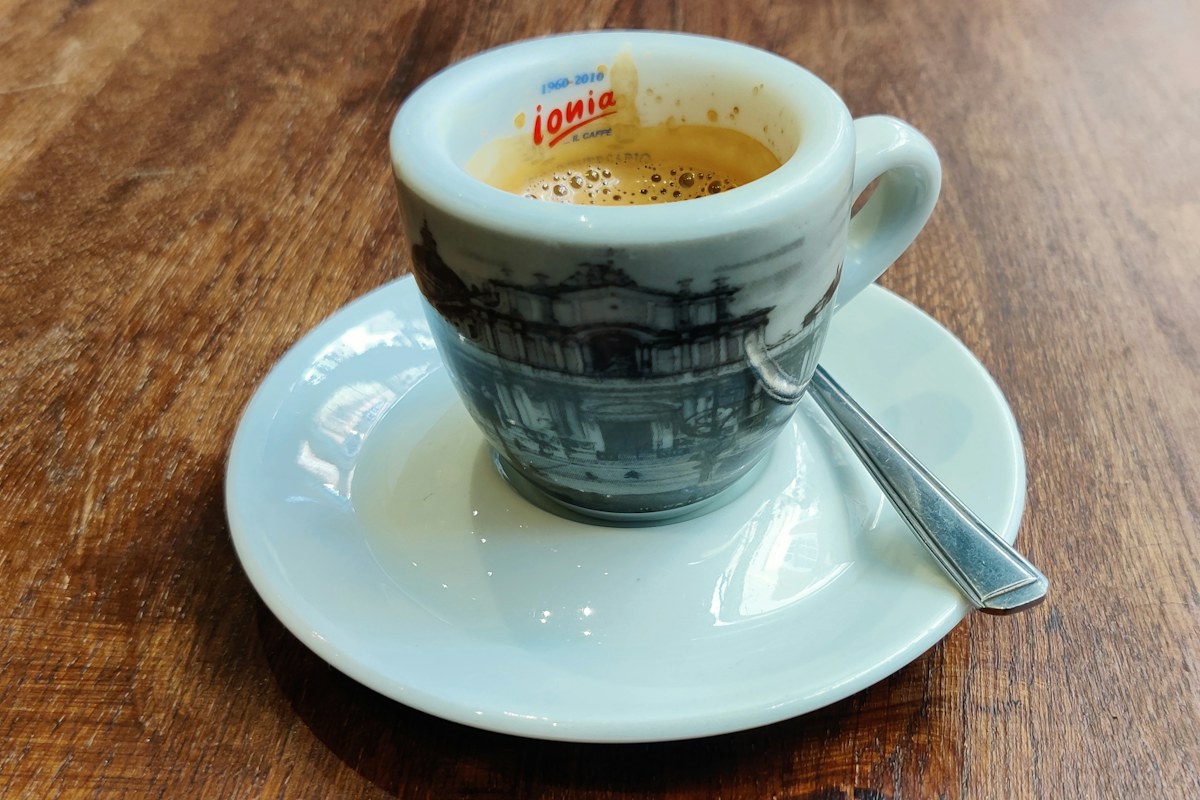
Coffee in Italy works differently from coffee at home, and knowing the rules saves you money and confusion. The bar is a quick stop, the drinks are small, and the names do not always mean what you expect. This guide explains how to order and pay and what each drink is. It also covers when Italians drink what, and how habits change from Naples to Trieste.
The short answer: in Italy, “un caffè” means a single espresso, drunk standing at the bar in a minute or two. In many busy bars you pay first at the till, the cassa, then show the receipt to the barista. Standing at the counter usually costs less than sitting at a table. Milky drinks such as cappuccino are a morning habit. Finally, learn a few local names, because Trieste and Naples have their own coffee vocabulary.
Last updated: September 26, 2026
Coffee in Italy at a glance
| What to know | In practice |
|---|---|
| What “caffè” means | A single espresso, unless you ask for something else |
| Where to drink it | At the bar, which in Italy is a café |
| How to pay | Often at the cassa first in busy bars; at the end in small ones |
| Standing or sitting | Standing at the counter is usually cheaper than table service |
| Milk | Cappuccino and caffè latte are mostly morning drinks |
| After a meal | An espresso, never a cappuccino, by local custom |
| Regional twists | Granita in Sicily, caffè sospeso in Naples, bicerin in Turin, a separate vocabulary in Trieste |
How to order coffee at an Italian bar, step by step
An Italian bar serves coffee, pastries, juice and sandwiches from early morning. Alcohol is on the shelf too, but most customers come for a quick espresso. Here is the usual sequence in a city bar.
- Look for the cassa. If there is a till near the door and a crowd at the counter, pay there first. Say what you want, for example “un caffè e un cornetto”, and keep the receipt.
- Go to the counter. Put the receipt on the bar and repeat your order to the barista. In a small neighborhood bar, by contrast, you simply order and pay on your way out.
- Drink it standing. An espresso takes a minute. In fact, standing al banco, at the counter, is the normal way to drink it.
- Sit only if you want table service. In many bars a table costs more, and the difference is largest in famous squares. So if the menu shows two price columns, the higher one is for the table.
- Leave a coin if you like. A small tip on the counter is appreciated but not expected. See our guide to tipping in Italy for the details.
For polite phrases such as “per favore” and “grazie”, see our list of basic Italian phrases.
Italian coffee drinks: a glossary
Most bars know all of these names, although regional variations exist. As a rule, the drink is small unless its name says otherwise.
| Ask for | What you get |
|---|---|
| Caffè or espresso | A single shot of espresso in a small cup |
| Ristretto | A shorter, more concentrated espresso |
| Lungo | An espresso pulled with more water, so larger and milder |
| Doppio | A double espresso |
| Caffè macchiato | Espresso “stained” with a spot of milk foam |
| Latte macchiato | A glass of hot milk “stained” with a shot of espresso |
| Cappuccino | Espresso topped with steamed, foamed milk, in a cup |
| Caffè latte | Mostly hot milk with coffee, usually in a glass or large cup |
| Latte | Just milk; this is the most common ordering mistake |
| Caffè americano | Espresso diluted with hot water, the closest thing to filter coffee |
| Caffè corretto | Espresso “corrected” with a splash of grappa, sambuca or brandy |
| Marocchino | Espresso with cocoa and milk foam, often in a small glass |
| Espressino | A small espresso with milk foam and cocoa, similar to a marocchino |
| Caffè shakerato | Espresso shaken with ice and sugar, served cold in a stemmed glass |
| Caffè decaffeinato | Decaf espresso, often shortened to “deca” or “dek” |
Two tips make ordering easier. First, for a large, American-style coffee, ask for a caffè americano or a caffè lungo. Even so, expect it to be smaller than at home. Second, many bars now offer lactose-free or plant-based milk, but not all of them, so ask before you order.
The cappuccino rule and other habits
The best-known custom of coffee in Italy is simple: cappuccino is for the morning. Italians drink milky coffee at breakfast, often with a pastry, and switch to espresso from late morning onward. Above all, they almost never order a cappuccino after lunch or dinner. To them, a milky drink on a full stomach feels wrong.
However, this is a custom, not a law. No barista will refuse to make you a cappuccino in the afternoon, and in tourist areas nobody will notice. Similarly, coffee after dinner is an espresso, perhaps a caffè corretto in the north. It comes after dessert, not with it.
Other habits help too. For example, Italians rarely take coffee to go. The bar is a two-minute pause, not a place to linger for an hour. In addition, sugar is set on the counter, and many people stir some into every espresso. For the morning routine, read the guide to the Italian breakfast and the list of Italian pastries.
Regional coffee in Italy: what changes city to city
Naples: strong coffee and the caffè sospeso
Naples takes its espresso seriously. The coffee is typically dark and intense, and it often comes in a hot cup. The city is also known for the caffè sospeso, or “suspended coffee”. A customer pays for two coffees, drinks one and leaves the other for someone who cannot afford it. Today the tradition is more symbolic than common, but some bars still keep it alive. For a guided tasting, see the best food tours in Naples and the Naples street food tour.
Trieste: a vocabulary of its own
Trieste was a major coffee port, and its bars use their own names. According to the Friuli Venezia Giulia tourism board (checked September 2026), a nero is an espresso. A capo is an espresso with a drop of hot milk. A capo in b is the same drink served in a small glass, from bicchiere. Meanwhile, a caffelatte in Trieste is roughly what the rest of Italy calls a cappuccino. As a result, ordering “un cappuccino” there may surprise you. For the rest of the city, see our guide to what to see in Trieste.
Turin: the bicerin
Turin’s signature drink is the bicerin, layered coffee, chocolate and milk served in a small glass. According to Caffè Al Bicerin, the café opened in 1763 facing the Sanctuary of the Consolata (checked September 2026). The drink takes its name from the small glasses, without handles, it was served in. To taste it with local chocolate and other specialties, look at the Turin food tour.
Sicily: granita with brioche
In Sicily, especially in summer, coffee also comes frozen. A granita di caffè is semi-frozen coffee ice, often topped with whipped cream. People eat it with a soft brioche bun for dipping, sometimes for breakfast. For more Sicilian snacks, read our guide to Palermo street food or look at the Palermo street food tour.
Historic cafés worth a visit
Some Italian cafés are destinations in themselves. The most famous is Caffè Florian in Venice. According to the official Florian site, it opened on December 29, 1720, under the arcades of St. Mark’s Square, and it first carried the name “Alla Venezia Trionfante” (checked September 2026). Expect to pay for the setting, however. In a historic café on a famous square, a seat at a table costs far more than a quick coffee at a neighborhood counter.
So treat one historic café as an experience. Then drink your everyday coffee standing at ordinary bars. For Venice beyond the piazza, see the guide to cicchetti in Venice and the Venice cicchetti food and wine tour.
Is Italian espresso UNESCO heritage?
Not as a separate element. In 2022, a candidacy for Italian espresso went before Italy’s national UNESCO commission, according to the Ministry of Agriculture. It focused on coffee communities from Venice to Naples. By contrast, the element UNESCO did inscribe, in 2025, was Italian cooking as a whole (both checked September 2026). So describe espresso as a proposed candidate, not a listed heritage.
Coffee in Italy with a guide: food tours
A food tour is an easy way to learn the ordering routine on day one. For example, compare the Trastevere food tour in Rome and the Florence food tour. Then browse all food tours in Italy, and read our Italy travel tips before you go.
After coffee often comes a digestivo. Our guide to Italian liqueurs explains amaro, limoncello and other regional bottles, and when Italians drink them.
After a long dinner, many Italians close the meal with a coffee or a small glass of grappa, the grape-based spirit.
Coffee in Italy: frequently asked questions
What do I say to order a coffee in Italy?
Say “un caffè, per favore” and you will get a single espresso. For a larger, milder coffee, ask for a caffè americano or a caffè lungo.
Do you pay before or after coffee in Italy?
It depends on the bar. In many busy city bars you pay first at the cassa and show the receipt at the counter, while in small bars you usually pay when you leave.
Is it cheaper to drink coffee standing at the bar?
Usually, yes. Drinking at the counter costs less than sitting at a table with service, and the difference is largest in famous squares.
Can I order a cappuccino in the afternoon?
Yes. Italians drink cappuccino mainly in the morning and avoid it after meals, but this is a custom and any bar will serve you one.
What is a capo in b in Trieste?
In Trieste, a capo is an espresso with a drop of hot milk, and a capo in b is the same drink served in a small glass, according to the regional tourism board.
Taste Italy one cup at a time
Find a food tour for your trip
Compare food tours and tastings in Rome, Naples, Turin and beyond, with prices and ratings read on Viator.
Book it: experiences for this trip
Matched to this article by place and interest, then ordered by Viator rating and number of reviews (checked September 2026). Prices and availability are shown live on Viator.
Keep exploring Italy