
BLOG · Italy2Love Magazine Guide
Dark Tourism in Italy: Crypts, Catacombs and Memorials You Can Visit (2026)
Dark tourism in Italy, done respectfully: Rome’s Capuchin Crypt and catacombs, the Fontanelle in Naples, Palermo’s Capuchin Catacombs, Pompeii, Vajont, Trieste and the truth about Poveglia.
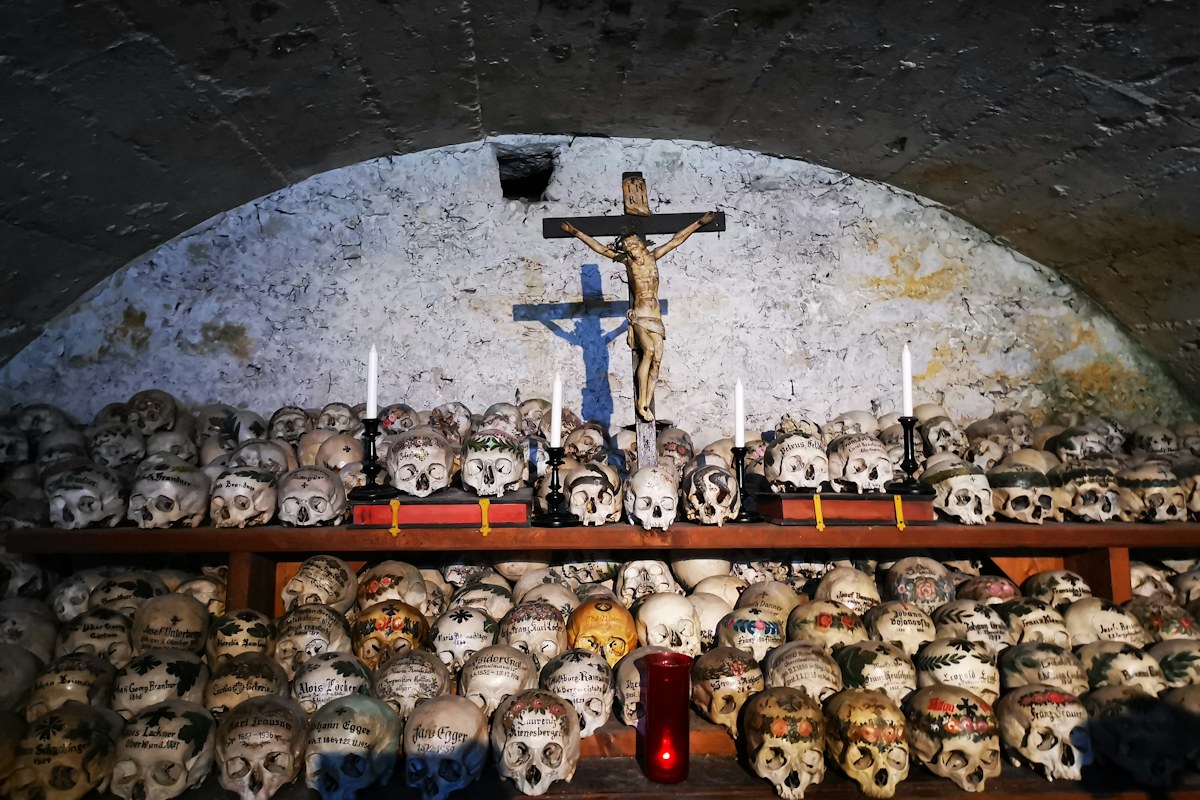
Dark tourism in Italy means visiting places linked to death, disaster and war: bone chapels, catacombs, abandoned towns and memorials. However, many of these sites are also places of prayer or mourning, so they call for a quiet, respectful visit. Below, this guide explains what you can see, what is open, and which famous “haunted” places you cannot actually visit.
The short answer: start with the Capuchin Crypt and the catacombs of Rome. Then add the Cimitero delle Fontanelle in Naples, the Capuchin Catacombs of Palermo and the casts of Pompeii. For recent history, visit the Vajont Dam and the Risiera di San Sabba in Trieste. However, Poveglia, the “haunted island” near Venice, is not a regular visitor site, and its derelict hospital is off-limits.
Last updated: September 30, 2026
Dark tourism in Italy at a glance
| Site | Where | What it is | Can you visit? |
|---|---|---|---|
| Capuchin Crypt | Rome | Chapels decorated with friars’ bones | Yes |
| Catacombs of San Callisto | Rome, Appian Way | Early Christian cemetery | Guided visits, booking required |
| Cimitero delle Fontanelle | Naples | Ossuary in a tuff cave | Yes, booking required |
| Capuchin Catacombs | Palermo | Mummified bodies in corridors | Yes |
| Pompeii | Campania | Plaster casts of victims of 79 AD | Yes |
| Vajont Dam | Friuli / Veneto border | Site of the 1963 disaster | Guided visits to the crest |
| Risiera di San Sabba | Trieste | Former Nazi camp, now a museum | Yes, free |
| Craco | Basilicata | Abandoned hill town | Only with local arrangements |
| Poveglia | Venice lagoon | Former quarantine island | Not a regular visitor site |
Bone chapels and catacombs
To begin with, Rome has two very different underground worlds. First, the Capuchin Crypt lies under the church of Santa Maria della Concezione on Via Veneto. There, the bones of thousands of Capuchin friars decorate small chapels. In fact, the message is a reminder of mortality, not a horror show. Second, the catacombs along the Appian Way were early Christian cemeteries. According to the Catacombs of San Callisto, about half a million Christians, including 16 popes, lie there. Also, visits run only with a guide and an online booking. For context, this catacombs and Appian Way tour combines the road and the tombs.
In Palermo, meanwhile, the Capuchin Catacombs hold rows of mummified bodies, still dressed in their clothes. For centuries, burial there was a privilege. Above all, visitors remember Rosalia Lombardo, a little girl who died in 1920. Because photography is a sensitive issue there, follow the signs at the entrance. See our guide to things to do in Sicily for the rest of the island. In Rome, our guide to the catacombs of Rome covers tickets, closing days and the bus.
Naples: the Fontanelle and the city underground
Next, the Cimitero delle Fontanelle is a vast ossuary in a tuff quarry in the Sanità district. For centuries, Neapolitans “adopted” the anonymous skulls and prayed for their souls, a devotion that the Church later discouraged. According to Napoli da Vivere, it reopened on April 18, 2026, and now requires a booking (checked September 2026). Also, it closes on Wednesdays. In addition, the city hides kilometers of tunnels and cisterns; explore them on a Naples underground tour. Our Naples travel guide covers the rest.
Disaster sites: Pompeii, Vajont and Craco
Pompeii is the most visited example of dark tourism in Italy, even if few people call it that. Above all, the plaster casts show the victims of the eruption of 79 AD in the positions in which they died. As a result, many visitors find them the most moving part of the site. Read Pompeii from Rome or Naples to plan the trip.
By contrast, the Vajont Dam, on the border between Friuli and the Veneto, is a place of recent grief. On October 9, 1963, a huge landslide fell into the reservoir, and the wave destroyed Longarone and nearby villages. According to Wikipedia, official records list 1,917 victims (checked September 2026). Then, in 2002, the dam partially opened to the public, with guided tours along the crest. Strangely, the dam itself still stands, which makes the scale of the disaster easier to grasp.
Craco, in Basilicata, is a hill town that people began to leave in 1963 because of landslides. Since then, its empty houses have appeared in films such as The Passion of the Christ. However, the old center is unstable, so do not wander in alone; ask locally about organized visits. Also, it pairs well with a trip to Matera.
War memory: Trieste and Rome
The Risiera di San Sabba in Trieste was a rice-husking plant. During the war, however, the Nazis turned it into a detention and extermination camp. It was the only camp in Italy with a crematorium, and today it is a national monument and museum. According to its official site, entry is free and it opens daily (checked September 2026). Similarly, in Rome, the Fosse Ardeatine memorial marks the massacre of 335 civilians and prisoners in March 1944. Therefore, both are places for silence, not photos.
Poveglia: myth and reality
Online, people call Poveglia the most haunted island in the world. In fact, it served as a quarantine station for ships from the late 18th century. Later, it housed a care home that closed in 1968. Since then, however, the buildings have decayed. Then, in 2025, the state granted the citizens’ association Poveglia per tutti a six-year concession for the northern part, to create a lagoon park. That is according to the Agenzia del Demanio (checked September 2026). Still, there is no public boat service, and the derelict hospital remains off-limits and unsafe. So, instead, see the lagoon islands with a Murano and Burano tour.
After dark, a Venice ghost tour tells the city’s legends of murders and curses on public streets.
Ghost tours and true-crime walks
If you want the stories rather than the sites, a guided night walk is the legal way to go ghost-hunting. It stays on public streets, so you never enter a closed or unsafe building. Our guide to ghost tours in Italy ranks the best-rated walks in Rome, Venice and Turin.
Each page below compares two tours side by side. We read the ratings, prices, meeting points and cancellation terms on Viator in September 2026.
How to visit respectfully
- Dress as for church. Crypts and catacombs are often consecrated places, so cover shoulders and knees.
- Keep your voice down and follow photo rules; some sites ban photos entirely.
- Book ahead. For example, the Rome catacombs and the Fontanelle now require reservations.
- Skip the ghost-hunting. After all, trespassing on closed sites is illegal and dangerous.
For more on the cities themselves, see our Rome travel guide and Venice travel guide.
Where to stay
Planning to spend the night in Rome? Book a central base and you will lose less time in transit, especially if you start early. Not sure which area to pick? Our guide to where to stay in Rome compares the best areas.
Affiliate links: if you book through them, Italy2Love earns a commission at no extra cost to you.
Compare places to stay in Rome →Dark tourism in Italy: frequently asked questions
What is dark tourism in Italy?
Visiting places tied to death, disaster or war, such as bone chapels, catacombs, Pompeii, the Vajont Dam and wartime memorials.
Can you visit Poveglia island?
Not as a regular tourist. There is no public boat service, and the derelict hospital remains off-limits. However, a citizens’ association now holds a concession for part of the island.
Is the Fontanelle Cemetery in Naples open?
Yes. It reopened on April 18, 2026, and visits now require a booking. It closes on Wednesdays.
Do I need a guide for the Rome catacombs?
Yes. At the Catacombs of San Callisto, for example, you can enter only on a guided tour booked online.
Is it respectful to take photos at these sites?
Follow the rules at each site. Many ban photos, and memorials such as the Risiera di San Sabba call for quiet behavior.
Are there ghost tours in Italy?
Yes. Rome, Venice and Turin all have guided ghost, crime and mystery walks after dark, bookable on Viator. Our guide to ghost tours in Italy compares the best-rated ones.
Go beneath the surface
Underground Italy, with a guide
Compare catacomb, underground and history tours across Italy, with prices and ratings read on Viator.
Book it: experiences for this trip
Matched to this article by place and interest, then ordered by Viator rating and number of reviews (checked September 2026). Prices and availability are shown live on Viator.
Keep exploring Italy