
BLOG · Italy2Love Magazine Guide
Aperitivo in Italy: Drinks, Regional Styles and Etiquette (2026)
Aperitivo in Italy explained: what it is and when, the classic drinks from spritz to Negroni, Milan, Venice and Turin styles, food and etiquette, checked September 2026.
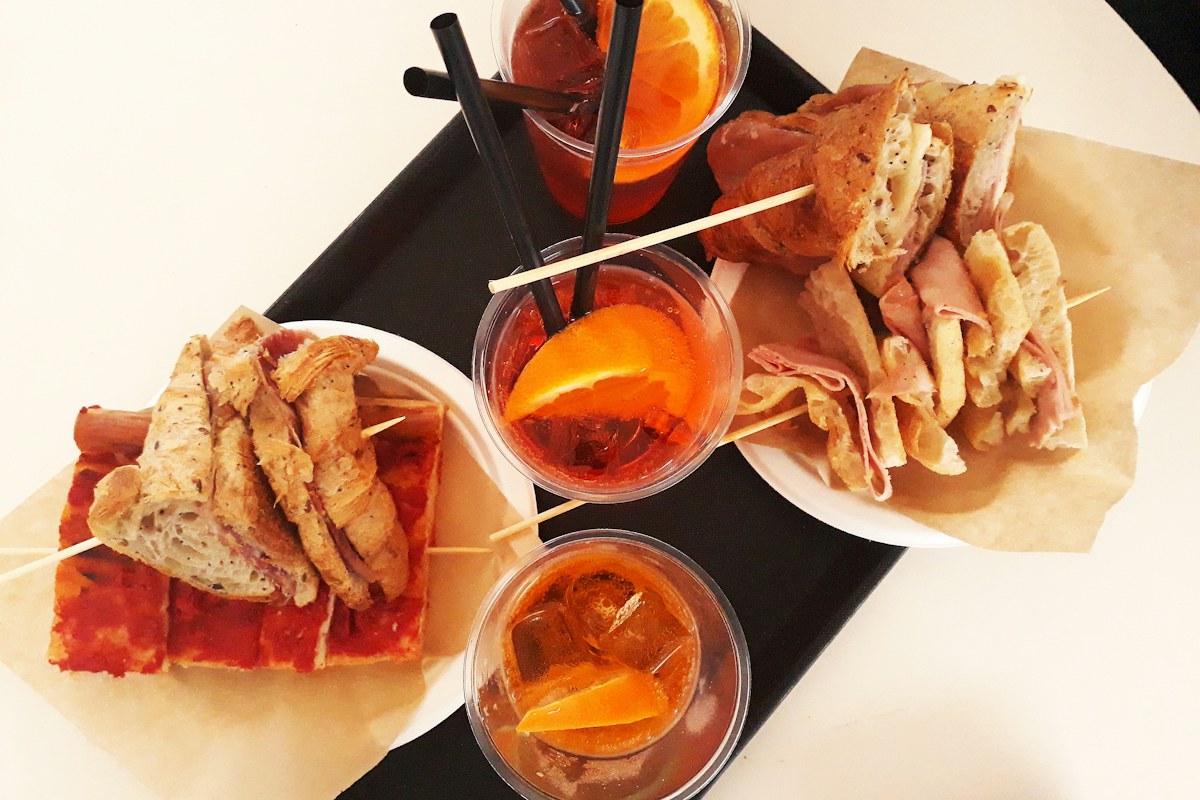
Aperitivo in Italy is the early evening pause between work and dinner, built around a light drink and a few salty bites. It is social, unhurried and open to everyone, from students to grandparents. This guide explains how the ritual works, which drinks to order, how it changes from Milan to Venice to Turin, and what etiquette to follow at the bar.
The short answer: an aperitivo is a pre-dinner drink meant to “open” the appetite, served with small snacks. Most bars do it in the early evening, roughly from 6 to 8 p.m., although hours vary by city and season. Classic orders include a spritz, a Negroni, an Americano or a glass of Prosecco, and every bar has non-alcoholic options too. In most places, one drink comes with some snacks. However, a full buffet, the apericena, is a specific offer, not a rule.
Last updated: September 26, 2026
Aperitivo in Italy at a glance
| What to know | In practice |
|---|---|
| What it is | A light pre-dinner drink with snacks, meant to whet the appetite |
| When | Early evening, commonly about 6 to 8 p.m.; later in summer and in the south |
| Classic drinks | Spritz, Negroni, Americano, Prosecco, vermouth, a Bellini in Venice |
| Without alcohol | Ask for an analcolico: bitter sodas, juices, alcohol-free spritzes |
| Food | Chips, olives and nuts at minimum; small bites or a buffet in some bars |
| Regional styles | Milan apericena, Venice bàcaro and cicchetti, Turin vermouth |
| Etiquette | Snacks go with your drink; do not treat them as dinner unless the bar says so |
What aperitivo means and how it works
The word comes from the Latin aperire, “to open”. In other words, the drink is supposed to open your stomach before a meal. That is why aperitivo drinks tend to be bitter, dry or lightly sparkling, rather than sweet or heavy.
The ritual is simple. People meet friends after work, order one drink, often two, and talk for an hour or so. Then they head home or on to dinner, which in Italy usually starts later than in the US. As a result, the aperitivo fills the gap between the end of the working day and an 8 or 9 p.m. meal.
It is also not a drinking session. Italians generally drink slowly at aperitivo, and getting drunk in public is frowned upon. Think of it as the evening version of the morning coffee at the bar, which our guide to coffee in Italy explains step by step.
The classic aperitivo drinks to order
You do not need to know cocktails to order well. Most bars serve the same short list of classics, and the bartender will happily suggest one.
Spritz: Aperol, Campari or Select
The spritz is the signature drink of aperitivo in Italy, above all in the northeast. It mixes Prosecco, a bitter liqueur and a splash of soda water, served over ice with a slice of orange. The bitter decides the style. Aperol is the lightest and sweetest, while Campari is redder and more bitter. By contrast, Select is the Venetian choice, often served with a green olive.
Select has a documented Venetian birthplace. According to the official Select site, the brothers Mario and Vittorio Pilla founded their company in the Castello district of Venice, and Select was born and registered as a trademark on May 29, 1920 (checked September 2026). In Venice, you can simply ask for a “spritz Select”. For the history of Aperol, Campari and other bitters, see our guide to Italian liqueurs.
Negroni and Americano
The Americano mixes Campari, red vermouth and soda water. It is lighter than most cocktails, which makes it a good first order. The Negroni, meanwhile, swaps the soda for gin, so it is much stronger.
The Negroni has a famous origin story, although it comes from the brand itself. According to Campari’s Negroni history page, Count Camillo Negroni asked Fosco Scarselli, his favorite bartender at Caffè Casoni in Florence, to add gin instead of soda to his usual drink in 1919 (checked September 2026). Cocktail historians still debate the details, so treat it as the traditional account rather than settled fact.
Bellini, Prosecco and wine
Sparkling wine is always a safe choice. A glass of Prosecco, or a local white, works in every region. In Venice, you will also see the Bellini on menus. According to Cipriani, Giuseppe Cipriani created it at Harry’s Bar in Venice in 1948, blending puréed white peaches with Prosecco and naming it after the Renaissance painter Giovanni Bellini (checked September 2026).
Analcolico: aperitivo without alcohol
Aperitivo is for non-drinkers too. Simply ask for an analcolico, a non-alcoholic aperitif. For example, many bars stock small bottles of bitter red or orange soda, fresh juices and, increasingly, alcohol-free spritzes. In addition, a spremuta, freshly squeezed orange juice, is common. You still get the same snacks and the same seat.
Regional styles of aperitivo in Italy
The idea is national, but the style changes as you travel. Three cities show the range well.
Milan: the home of apericena
Milan takes aperitivo seriously, and it is best known for the apericena, a mix of aperitivo and cena (dinner). In this format, one drink comes with access to a buffet of pasta salads, focaccia, cured meats and vegetables. Some people treat it as a light dinner. However, not every bar does it, and quality varies a lot, so look for the word “apericena” on the board. The Navigli canals and the Brera district are popular areas; for more ideas, see our list of things to do in Milan.
Venice: bàcari, cicchetti and an ombra
Venice does aperitivo standing up. A bàcaro is a small, traditional wine bar, and cicchetti are the small bites on its counter, such as salt cod on bread or fried meatballs. Venetians often order an ombra, a small glass of house wine, or a spritz. Here, you usually pay for each cicchetto separately. Our guide to cicchetti in Venice explains how to order, and a cicchetti and wine tour in Venice covers several bàcari in one evening.
Turin: the city of vermouth
Turin claims vermouth as its own, and the claim is protected. According to the Vermouth di Torino consortium, aromatized wines with wormwood were recorded in Turin in 1736, and wormwood remains the “must-have” ingredient of Vermouth di Torino. The consortium also says the name has been an EU geographical indication since 1991 (checked September 2026). Order a vermouth neat or on ice, or try a Mi-To, short for Milano-Torino, which pairs Campari from Milan with vermouth from Turin. To taste the city’s food alongside it, see the Turin food tour.
What food comes with an aperitivo
Food is part of the deal, but the amount varies widely. As a rule of thumb, expect one of three levels:
- The basics. A small bowl of chips, olives, peanuts or taralli, a crunchy ring-shaped cracker. This is the most common setup in ordinary bars.
- Small plates. A board of bites brought to your table, such as bruschetta, cheese, cured meats or small pizzas. Some bars include it with the drink, while others charge extra.
- The buffet. The full apericena, most common in Milan and in bars aimed at students and young professionals.
Prices vary by city, area and format, so check the menu or the board before you order. In general, the drink price covers the standard snacks, and the table service may cost a little more than standing at the counter.
Aperitivo etiquette: how to do it right
A few habits will help you blend in and avoid awkward moments.
- Do not assume “all you can eat”. Snacks accompany your drink. Unless the bar advertises a buffet, filling a plate again and again is considered rude.
- One drink, one round of snacks. If you order a second drink, the bartender may bring a fresh bowl. Asking for refills without ordering is unusual.
- Sip slowly. An aperitivo lasts an hour or so. There is no rush to finish or reorder.
- Go early for dinner plans. Most restaurants open for dinner around 7:30 p.m. or later, so aperitivo fits neatly before a booking.
- Tipping is optional. Leaving small change is kind, but it is not expected. For details, read our guide to tipping in Italy.
Aperitivo on food tours and evening tours
If you are unsure where to start, a guided evening can teach you the routine in one go. In Rome, a Trastevere food tour walks through one of the city’s liveliest evening neighborhoods. Our guide to the best food tours in Rome compares the main options, and our page on Rome night tours covers after-dark walks that pair well with a drink. Finally, browse all food tours in Italy to compare cities.
In Milan, where aperitivo is a daily ritual, the Milan food tour page compares Eating Europe’s Navigli walk, which starts with aperitivo, with Secret Food Tours’ risotto route.
Aperitivo in Italy: frequently asked questions
What time is aperitivo in Italy?
Most bars serve aperitivo in the early evening, commonly from about 6 to 8 p.m. Hours vary by city and season, and it often runs later in summer and in the south.
Is food free with aperitivo?
In most bars, one drink comes with some snacks, such as chips, olives or small bites. A full buffet, called apericena, is a specific offer, so check before you treat it as dinner.
What is the most popular aperitivo drink?
The spritz, made with Prosecco, a bitter liqueur such as Aperol, Campari or Select, and soda water. The Negroni, the Americano and a glass of Prosecco are also classic orders.
Can I have aperitivo without alcohol?
Yes. Ask for an analcolico, a non-alcoholic aperitif. Many bars offer bitter sodas, fresh juices and alcohol-free spritzes.
Where was the Negroni invented?
According to Campari, Count Camillo Negroni had it made at Caffè Casoni in Florence in 1919, by adding gin instead of soda to his usual drink. Historians still debate some details.
Raise a glass the Italian way
Find a food tour for your evening
Compare food and wine tours in Venice, Rome, Turin and beyond, with prices and ratings read on Viator.
Book it: experiences for this trip
Matched to this article by place and interest, then ordered by Viator rating and number of reviews (checked September 2026). Prices and availability are shown live on Viator.
Keep exploring Italy