
BLOG · Italy2Love Magazine Guide
Art Workshops in Italy: Ceramics, Leather and Traditional Crafts
How to choose authentic art workshops in Italy, from ceramics and leather to mosaics, glass, masks and paper—by craft, destination and traveler.
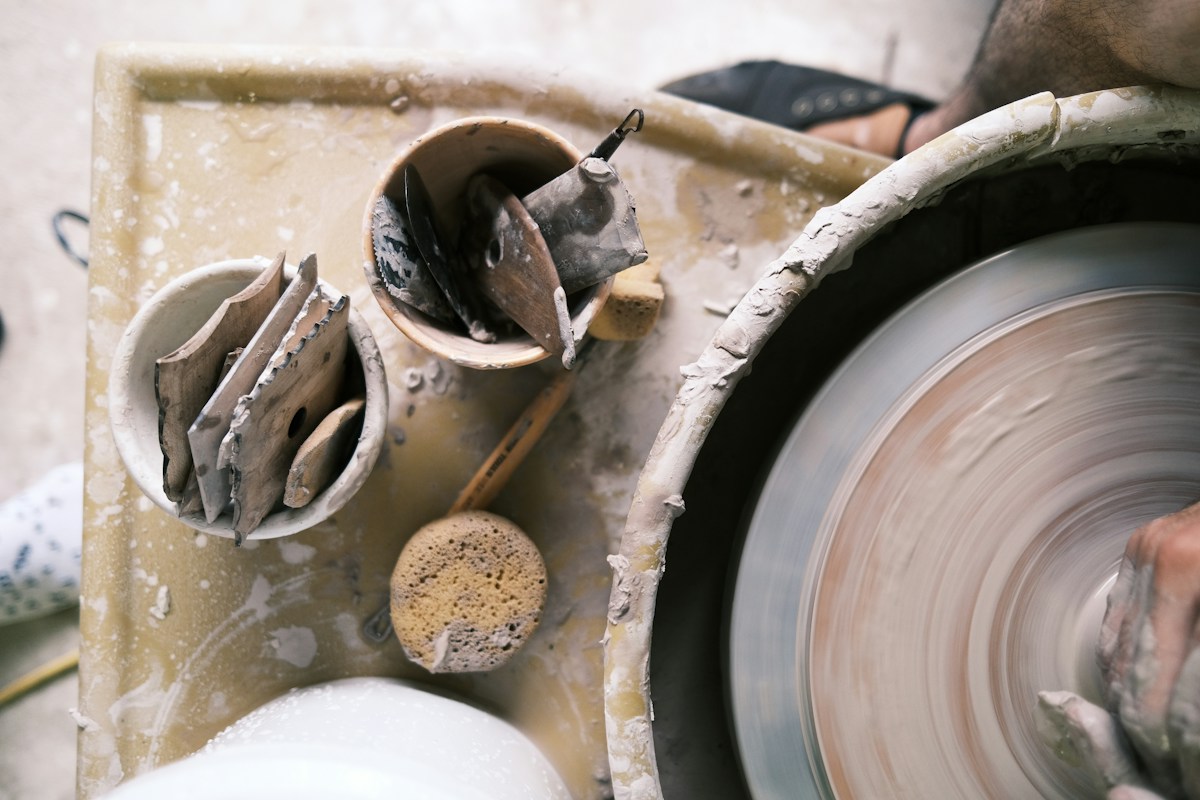
The best art workshops in Italy are working sessions, not staged demonstrations: you handle a material, learn one defined process from a practicing maker and leave understanding why the craft belongs to that place. For a first trip, choose Florence for leather and paper, Deruta or Faenza for ceramics, Ravenna for mosaic, Venice and Murano for masks and glass, or Fabriano for paper. Before booking, confirm exactly what you will make, how much of the process is hands-on, the group size, language, age limits and whether firing or shipping is required.
This national guide helps you choose an art workshop in Italy by craft, destination, format and traveler profile. It is deliberately different from a list of souvenir shops: the focus is participation, informed observation and realistic booking decisions. For the broader travel philosophy behind it, start with our Slowxury guide to Italy.
Which art workshop in Italy should you choose?
| Craft | Best-known destinations | Realistic visitor format | Best for | Verify before booking |
|---|---|---|---|---|
| Ceramics | Deruta, Faenza, Vietri sul Mare, Caltagirone | Painting a pre-fired piece, hand-building, wheel introduction or a longer course | Families, beginners, repeat visitors | Firing time, collection or shipping, clothing and minimum age |
| Leather | Florence, especially Santa Croce and Oltrarno | Small accessory, bookbinding, tooling or structured short course | Adults who want technique rather than shopping | Who teaches, which steps you perform and whether materials are included |
| Mosaic | Ravenna; also Florence for pietre dure | Short class using tesserae, studio visit or multi-day technique course | Detail-oriented travelers and art lovers | Traditional versus contemporary method, tools, accessibility and take-home piece |
| Glass | Murano | Master demonstration, bead or mosaic activity, or specialist class | Visual learners; older children when permitted | Whether it is truly hands-on, furnace safety and age limits |
| Masks | Venice | Decorating a prepared mask or a longer papier-mâché session | Families, Carnival travelers, first-time makers | Decoration versus construction, drying time and materials |
| Paper and books | Florence and Fabriano | Marbling, bookbinding, printing or paper-making demonstration | Design lovers and travelers with limited time | Whether the workshop makes paper, decorates it or only demonstrates |
Fast decision: choose ceramics for the most approachable hands-on format; leather or bookbinding for a compact adult workshop; Ravenna for a technique closely tied to local monuments; and Murano when seeing a master at work matters as much as making. A “factory tour” or “artisan visit” is not automatically a workshop.
What makes an artisan workshop authentic?
Authenticity is not rustic décor, an old family photograph or a claim that a technique is “unchanged for centuries.” Craft traditions evolve. A credible workshop is specific about the maker, material, process and limits of what a beginner can do. It connects the activity to a local production history without pretending every object is unique or entirely handmade.
- The teacher practices the craft. The listing identifies the artisan, school, museum educator or studio rather than only a tour operator.
- The task is defined. “Decorate one bisque-fired tile” is more useful than “become an Italian ceramic artist.”
- Observation and participation are separated. You know which stages the professional performs and which you will try.
- Material constraints are explained. Clay needs drying and firing; hot glass requires safety controls; leather projects need prepared components when time is short.
- The sales element is transparent. A shop can support a working studio, but the class should not be a disguised showroom stop.
- The place makes sense. The activity is geographically coherent with the destination, even if contemporary makers adapt traditional methods.
If your goal is buying rather than making, use our separate guide to shopping for Italian leather and our explanation of what “Made in Italy” actually guarantees. Those are product-origin questions; this page owns the experience-planning intent.
Ceramics workshops: Deruta, Faenza, Vietri and Caltagirone
Ceramics offers the widest range of beginner-friendly art workshops in Italy. The destination changes the visual language: Deruta is closely associated with Umbrian maiolica; Faenza has an international ceramics museum and an active educational program; Vietri sul Mare is known for Campanian ceramic production; and Caltagirone anchors a major Sicilian tradition.
For context before choosing a private studio, the Regional Museum of Ceramics in Deruta explains the town’s production history and techniques. In Faenza, the International Museum of Ceramics publishes current educational activities and courses. Museum programs may target schools, families, teachers or experienced learners, so check the audience and date rather than assuming every listing is a drop-in tourist class.
Choose the ceramic format, not just the town
- Painting a prepared piece: easiest to fit into a city break; the studio may need to fire and ship the work later.
- Hand-building: more tactile and usually more realistic for beginners than producing a finished wheel-thrown vessel in a short session.
- Wheel introduction: rewarding, but ask how much time is instruction, practice and finishing.
- Multi-day course: the best fit if technique matters more than bringing home an instant souvenir.
Never assume your object can travel the same day. Ask whether firing is included, how long it takes, whether international shipping is offered and who carries the risk of breakage. Families should also confirm age limits, non-toxic materials and whether adults must participate with children.
Leather workshops in Florence
Florence is the strongest base for travelers who want a leather workshop, but the word “workshop” covers very different products. It can mean watching artisans in a school, assembling a small accessory from prepared pieces, learning decorative tooling, making a notebook, or committing to a serious course. Decide which result you want before choosing a listing.
Scuola del Cuoio’s official workshop page describes short-term courses as introductory experiences with a master leather craftsman, available on request for participants over 18. That is a useful benchmark for a skills-led session: the provider states the audience, teaching model and booking process rather than promising an effortless masterpiece.
Look for a workshop near Santa Croce or in Oltrarno if it fits your itinerary, but judge it by the actual lesson rather than the neighborhood alone. A compact Florence stay can pair the session with the Florence destination guide and our area-by-area advice on where to stay in Florence.
Mosaic workshops in Ravenna
Ravenna is the clearest destination in Italy for connecting a studio activity with art in place. First see how mosaics function in the city’s monuments; then a practical session makes choices about tesserae, color, cut and setting easier to understand. The official Ravenna tourism page on mosaic schools explains that the city’s schools and workshops offer seminars, practical sessions, studio visits and courses.
The city’s dedicated mosaic events calendar is the place to check current workshops. As of October 6, 2026, it lists short classes and longer programs extending into early 2027, but availability still depends on the individual studio. Build the day with our Ravenna day-trip plan; if your priority is monument interpretation rather than making, compare the Ravenna mosaics tour.
Venice: glass, masks and the difference between making and watching
Venice is where wording matters most. Many Murano products combine transport, a furnace demonstration and showroom time. That can be a worthwhile visit, but it is not the same as blowing glass yourself. Some hands-on add-ons use beads or mosaic pieces while the master alone works at the furnace. Read the “what you will do” section, not only the title.
The official Murano Glass Museum provides the historical foundation, while its current educational pages distinguish museum visits, glassworks observation and specialist classes. The official Venezia Unica craft guide is a better starting point for studios than generic “authentic Venice” claims.
Mask experiences also split into two formats: decorating a prepared mask and constructing one from papier-mâché. The second normally needs more time and may involve drying stages. Confirm whether the class covers design, construction or decoration, and whether children can use all materials. For island logistics and museum planning, see what to do in Murano. If you prefer a guided island overview rather than a class, compare our Murano and Burano tour options.
Paper, bookbinding and textiles
Paper crafts work well for travelers who want a precise activity without kiln or furnace logistics. Florence studios may offer marbling, printing or bookbinding, while Fabriano connects the material to a city known for paper production. The official Visit Fabriano site is the right place to check museums and current programs; do not assume a museum visit includes a public workshop.
Textile experiences are more variable. Weaving, embroidery, lace and silk can be excellent studio visits, but short visitor workshops are less consistently scheduled than ceramics or masks. Ask whether the listing is a demonstration, a private appointment or a class. For a serious learner, a half-day or multi-day format is more credible than a rushed stop that promises several techniques.
Choose by experience format
| Format | What you actually get | Main trade-off |
|---|---|---|
| Demonstration or studio visit | Access to a working environment and explanation of a process | You may not touch the tools or material |
| Short decorative workshop | A manageable object and an introduction to design or finishing | Core production steps may already be completed |
| Half-day making session | Enough time for one technique and individual guidance | Finished work may still need firing, drying or shipping |
| Full-day or multi-day course | More process, repetition and correction | Requires itinerary commitment and advance booking |
| Private studio appointment | Direct conversation and flexible depth | Not always hands-on; expectations must be agreed in writing |
A short class is not inferior if it describes its scope honestly. Decorating a mask or ceramic tile can be a satisfying cultural activity. The problem is a listing that markets decoration as full production, or a sales visit as instruction.
Match the workshop to the traveler
- Families: prioritize age-appropriate tools, washable materials, toilets, seating and a finished object that does not require complex shipping.
- Couples and friends: a private or very small session can make conversation with the maker easier; confirm whether each participant makes an item.
- Collectors and design travelers: choose studio visits that explain sourcing, authorship and process, even if participation is limited.
- Serious learners: favor schools, museums or named practitioners offering a syllabus, prerequisites and multiple sessions.
- Travelers with limited mobility: ask about stairs, standing time, workbench height, accessible restrooms and transport from the station.
- Cruise and day-trip visitors: build in a large return buffer and avoid any workshop dependent on same-day firing or collection.
Seasonality, opening patterns and transport
Indoor craft workshops can run year-round, but that does not mean daily availability. Many are small businesses that schedule classes around production work. Sundays, public holidays and parts of August can bring closures; winter may reduce public sessions but make private requests easier. Festival periods such as Venice Carnival can increase both demand and the number of short-format activities.
Florence, Venice, Ravenna and Faenza are practical without a car. Deruta and smaller ceramic towns require more careful bus, taxi or driver planning. If a class ends after the last convenient connection, the cheapest listing may create the most expensive logistics. Confirm the exact address before paying: the marketing destination and the actual studio can be different municipalities.
Eight quality signals
- The maker or instructor is named and their role is clear.
- The description separates demonstration, practice and shopping time.
- The maximum group size is stated and compatible with the tools available.
- The language of instruction is confirmed, not merely the language of the booking page.
- Safety, age and accessibility limits are disclosed before payment.
- The material, object and completion process are specific.
- Firing, drying, pickup and shipping terms are written down when relevant.
- The cancellation policy covers artisan illness, insufficient enrollment and transport disruption.
Art workshop booking checklist
- What will I personally make or do?
- Is this a class, demonstration, guided studio visit or retail stop?
- Who teaches, and are they a practicing artisan or museum educator?
- How many participants share one instructor and one set of tools?
- What language is spoken during the practical instruction?
- Are materials, protective equipment and packaging included?
- Will the object be ready immediately? If not, how are firing and shipping handled?
- Are there age, pregnancy, allergy, mobility or clothing restrictions?
- Is the studio address reachable by public transportation at the scheduled time?
- What happens if the artisan cancels or the minimum group is not reached?
- Does the booking platform name the actual studio?
- Is optional shopping clearly separate from the paid learning time?
Where to base your craft-focused trip
For the broadest first-time choice, base yourself in Florence and add one focused leather, paper or bookbinding session. Venice works when glass and masks are part of a wider lagoon stay. Ravenna deserves at least a full day if you want both monuments and a mosaic class. Deruta and Faenza suit travelers willing to plan the trip around ceramics rather than inserting a workshop between unrelated sights.
Affiliate disclosure: Italy2Love may earn a commission if you book through the Expedia links below, at no extra cost to you. Availability and terms are set by Expedia and should be checked for your dates.
We have not added a rental-car CTA because the strongest workshop bases in this guide are train-friendly; a car is useful only for a rural or multi-town ceramics route. Browse the full Italy2Love Experiences collection for other verified activities, but do not substitute a sightseeing tour for a workshop unless that is the experience you want.
How this national guide connects to future regional guides
This page compares crafts and destinations at national level. Future spoke guides can answer narrower booking questions without competing with it: art workshops in Florence; pottery workshops in Deruta and Faenza; mosaic workshops in Ravenna; Murano glass classes versus demonstrations; Venice mask-making workshops; and paper-making experiences in Fabriano. Those pages should own local schedules, providers and transport details, while this guide remains the decision hub.
Frequently asked questions
What are the best art workshops in Italy for beginners?
Ceramic painting, mask decoration, paper marbling and introductory mosaic sessions are usually the most accessible. They offer a defined task without requiring prior technique. A beginner leather course can also work when the components and steps are clearly explained.
Can children join artisan workshops in Italy?
Some can, especially museum education, pottery painting, masks and simple mosaics, but age rules vary. Furnace work, sharp tools, solvents and professional machinery may exclude children. Confirm the minimum age with the actual studio.
Do I take my finished object home the same day?
Not always. Paper, masks and some mosaics may be ready immediately. Ceramics often require drying and firing; glass may need annealing. Ask about collection, packaging and international shipping before booking.
Is a Murano glass factory tour hands-on?
Usually not by default. Many tours include a master glassblower demonstration and showroom. A hands-on component may involve beads, mosaic or a separate specialist class. The product description should state exactly which tools and materials participants use.
Should I book directly with the artisan?
Direct booking can make it easier to confirm details, but a reputable platform may offer clearer cancellation terms and payment protection. In either case, verify the studio name, address, instructor, format and refund conditions in writing.
How far ahead should I book?
Book small studios and private sessions as soon as your itinerary is stable, especially for spring, early fall and festival periods. Museums and schools may publish calendars later. Never rely on a walk-in unless the official page explicitly offers it.
The right workshop leaves you with context, not just an object
A well-chosen art workshop changes how you see the destination afterward. You notice the cut of a Ravenna tessera, the stages hidden inside a Florentine leather object, the difference between decorating clay and making it, or why a Murano furnace demonstration cannot be casually reproduced by a visitor. Choose one craft, give it enough time and book the process that is actually described.
Book it: experiences for this trip
Matched to this article by place and interest, then ordered by Viator rating and number of reviews (checked September 2026). Prices and availability are shown live on Viator.
Keep exploring Italy