
BLOG · Italy2Love Magazine Guide
Italian Riviera Travel Guide: Cinque Terre, Portofino, Camogli and Where to Stay (2026)
The Italian Riviera explained: Levante and Ponente, the Cinque Terre, Portofino and Camogli, where to stay, how to get around without a car and when to go.
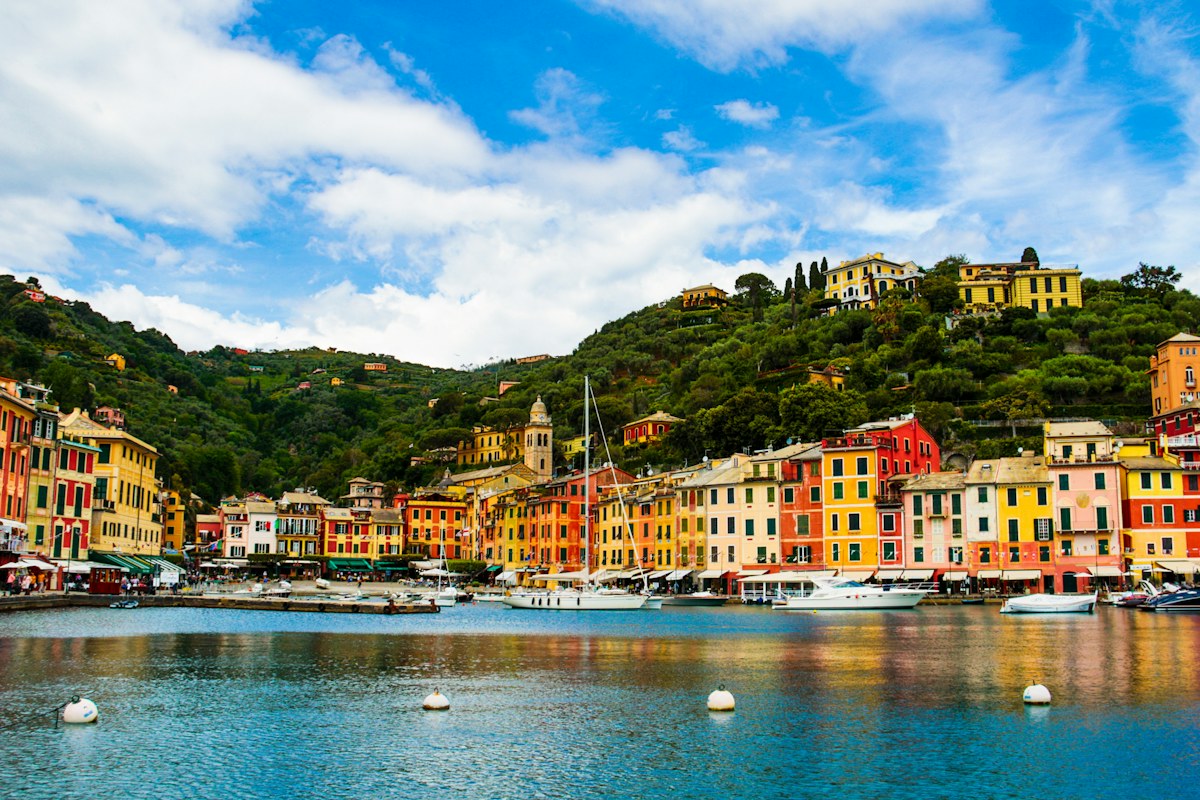
The Italian Riviera is the coast of Liguria, a thin arc of land between the mountains and the sea. It runs, in fact, from the French border to Tuscany. It also holds some of the most photographed villages in Italy, from the Cinque Terre to Portofino and Camogli. Below, we explain how the coast splits, which towns suit which traveler and how to get around without a car.
The short answer: for a first trip, focus on the eastern half of the Italian Riviera, the Riviera di Levante. Base yourself in a town with a train station, such as Santa Margherita Ligure, Camogli, Sestri Levante or Levanto. Then visit the Cinque Terre by train and boat, and reach Portofino by bus, boat or a coastal walk. Spring and fall are the best seasons, with milder heat and fewer crowds than in summer.
Last updated: September 25, 2026
The Italian Riviera at a glance
| Area | Highlights | Best for |
|---|---|---|
| Cinque Terre | Five cliffside villages and a national park | Hiking, views, first-time visitors |
| Portofino | A tiny harbor lined with colored houses | A day trip and a boat ride |
| Camogli | A working fishing town with tall painted facades | A quieter base |
| Santa Margherita Ligure | A seafront town with a train station | A practical base for Portofino |
| Genoa | The regional capital and a major port | History, food and museums |
| Riviera di Ponente | Sanremo, Finale Ligure, Alassio | Beaches and a slower pace |
Riviera di Levante and Riviera di Ponente
Genoa splits the Italian Riviera in two. East of the city lies the Riviera di Levante, “the coast of the rising sun”, with steep cliffs, small coves and the famous villages. West of Genoa, by contrast, the Riviera di Ponente, “the coast of the setting sun”, has longer sandy beaches and a more relaxed, family-friendly feel.
However, most international visitors focus on the Levante. However, the Ponente rewards a second trip, especially for beach time and hilltop villages such as Dolceacqua.
The Cinque Terre
The Cinque Terre are five villages built on the cliffs: Monterosso al Mare, Vernazza, Corniglia, Manarola and Riomaggiore. Together with Portovenere and the islands of Palmaria, Tino and Tinetto, they form a UNESCO World Heritage Site inscribed in 1997. According to UNESCO (checked September 2026), the listing honors the terraced landscape of vines and olives that people shaped over the past millennium.
In addition, a coastal railway and hiking trails link the villages. The best-known path, the Sentiero Azzurro, needs a paid Cinque Terre Card, sold by the national park. In addition, landslides close sections of the trails from time to time. For this reason, check card options, prices and trail status on the Cinque Terre National Park website before you set out.
If you prefer the sea, a Cinque Terre boat tour shows the villages from the water. Also, if you are based in Tuscany, a Cinque Terre day trip from Florence handles the logistics for you.
Portofino and the Portofino promontory
Over time, Portofino has turned from a small fishing village into a byword for glamour. Its harbor, lined with ocher and red houses, sits at the tip of a green promontory. Today, a regional park protects the whole headland. However, the village has no train station. Instead, most visitors take the bus or a ferry from Santa Margherita Ligure, or walk the coastal path from there.
From the harbor, climb to the church of San Giorgio and Castello Brown for the view. Then consider a Portofino boat tour to see the promontory from the sea. Nearby, the abbey of San Fruttuoso sits in a cove reachable only by boat or on foot.
Camogli, Santa Margherita and Sestri Levante
Camogli
A working fishing town, Camogli has tall, brightly painted houses facing a pebble beach. It feels less polished than Portofino; in fact, many travelers prefer it as a base. Boats leave from its harbor for San Fruttuoso and Punta Chiappa.
Santa Margherita Ligure
By comparison, Santa Margherita is a larger seafront town with hotels, restaurants and a train station. As a result, it is the most practical base for Portofino.
Sestri Levante
Farther east, Sestri Levante sits on a narrow isthmus between two bays, the Bay of Fables and the Bay of Silence. It also has a sandy beach and good train links toward the Cinque Terre.
How to get around the Italian Riviera
The coastal railway is the backbone of the Italian Riviera. For example, trains run along the coast from Genoa to La Spezia. On the way, they stop at Camogli, Santa Margherita Ligure, Sestri Levante, Levanto and the Cinque Terre. Meanwhile, ferries link many harbors in the warmer months.
In short, a car is more trouble than help on this coast. By contrast, roads are narrow, parking is scarce and the Cinque Terre villages are largely closed to traffic. If you drive in from elsewhere, read our tips on driving in Italy and leave the car at your hotel.
When to visit the Italian Riviera
First, summer is hot, busy and expensive, especially in July and August. By contrast, April to June and September to October bring milder weather and thinner crowds. In fall, the sea often stays warm enough for a swim in September. Meanwhile, the grape harvest takes place on the terraces. For more, see our guide to the best time to visit Italy.
Food on the Italian Riviera
Above all, Liguria is the home of pesto alla genovese, made with basil, pine nuts, garlic, cheese and olive oil. Look also for focaccia, trofie pasta and farinata, a thin chickpea flatbread baked in a wood oven. In Genoa, a Genoa food tour is a good way to taste them all. Then our guide to Genoa covers the city itself. Before you eat, read our guide to what to eat in Genoa, from focaccia to farinata.
Heading to the five villages? Read where to stay in the Cinque Terre before you book.
Where to stay
Planning to spend the night in Monterosso in the Cinque Terre? Book a central base and you will lose less time in transit, especially if you start early. Not sure which area to pick? Our guide to where to stay in the Cinque Terre compares the best areas.
Affiliate links: if you book through them, Italy2Love earns a commission at no extra cost to you.
Compare places to stay in Monterosso in the Cinque Terre →Italian Riviera: frequently asked questions
Where is the Italian Riviera?
It is the coast of Liguria in north-west Italy, from the French border to the edge of Tuscany. Genoa divides it into the Riviera di Ponente to the west and the Riviera di Levante to the east.
Where should I stay on the Italian Riviera?
Pick a town with a train station, such as Santa Margherita Ligure, Camogli, Sestri Levante or Levanto. From there, trains and boats reach the main sights.
Do you need a ticket to hike in the Cinque Terre?
The main coastal path, the Sentiero Azzurro, requires a paid Cinque Terre Card from the national park. Also check the park website for current prices and trail closures.
How do you get to Portofino?
Portofino has no train station. Instead, take the bus or a ferry from Santa Margherita Ligure, or walk the coastal path.
Do you need a car on the Italian Riviera?
No. The coastal railway and ferries cover the main towns, while roads are narrow and parking is scarce.
Plan your time on the coast
See the Riviera from the water
Compare boat tours and day trips to the Cinque Terre and Portofino, with prices and ratings read on Viator.
Book it: experiences for this trip
Matched to this article by place and interest, then ordered by Viator rating and number of reviews (checked October 2026). Prices and availability are shown live on Viator.
Keep exploring Italy