
BLOG · Italy2Love Magazine Guide
Things to Do in Trieste: Piazza Unità, Miramare Castle and the Giant Cave (2026)
The best things to do in Trieste: Piazza Unità d’Italia, historic cafés, San Giusto, Miramare Castle, the Grotta Gigante and the Barcolana, checked September 2026.
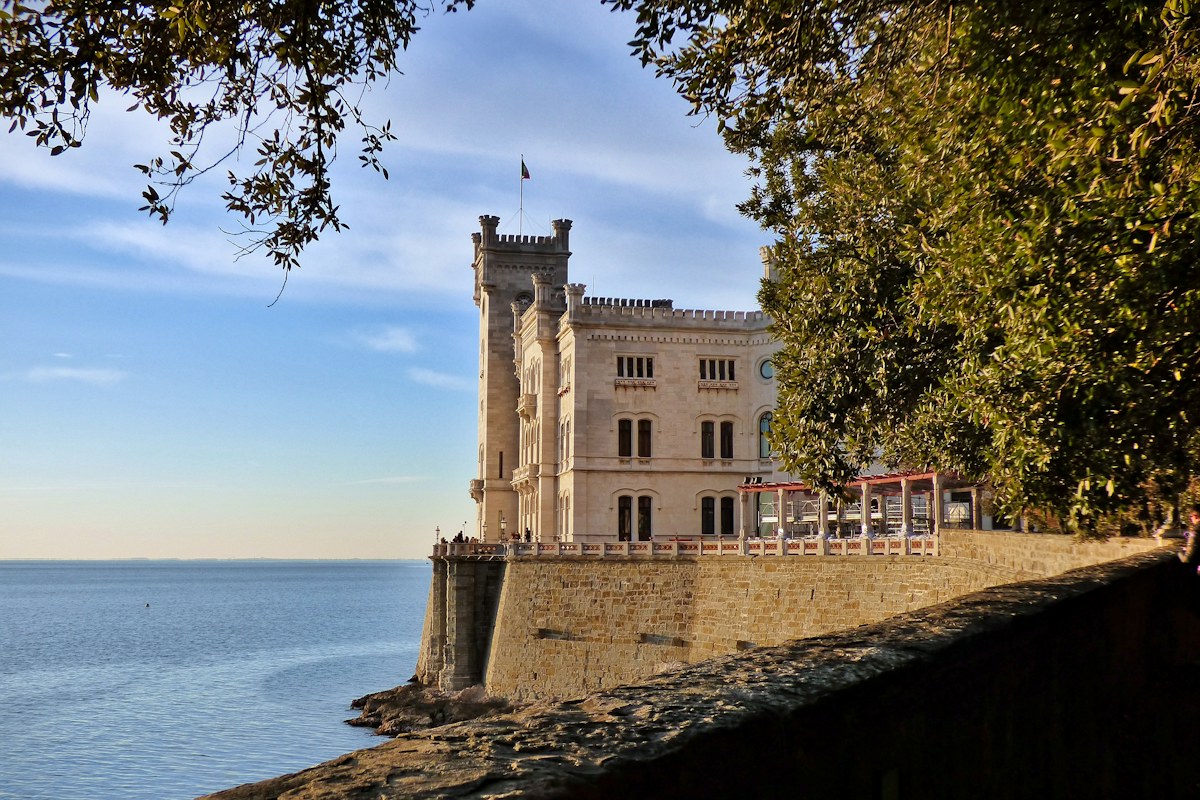
The best things to do in Trieste reflect a city unlike any other in Italy. For centuries, it was the main seaport of the Habsburg Empire, and it still looks more Viennese than Italian. Today, it is a relaxed city of grand cafés and a square open to the sea. Behind it rises the Karst, a wild limestone plateau.
The short answer: start in Piazza Unità d’Italia, facing the Adriatic, and walk out along the Molo Audace pier. Then have coffee in a historic café and climb to San Giusto for the cathedral and castle. Next, take a half day for Miramare Castle, the seaside home of Archduke Maximilian of Habsburg. Finally, go underground in the Grotta Gigante, a huge show cave on the Karst.
Last updated: September 25, 2026
Things to do in Trieste at a glance
| Sight | Where | Good to know |
|---|---|---|
| Piazza Unità d’Italia | City center, on the sea | Free; best at sunset |
| Molo Audace | Next to the piazza | A pier for a walk over the water |
| Historic cafés | Around the center | Trieste has its own coffee vocabulary |
| San Giusto | Hill above the old town | Cathedral, castle and views |
| Miramare Castle | Grignano, on the coast north of the center | Castle open daily; park free |
| Grotta Gigante | Sgonico, on the Karst plateau | Guided tours only; booking required |
Piazza Unità d’Italia and the waterfront
Trieste’s great square opens straight onto the sea. According to Discover Trieste, the city’s tourism site (checked September 2026), it is the largest square facing the sea in Europe. Grand buildings frame the other three sides, including the city hall and the headquarters of the Assicurazioni Generali insurance company.
Look down at night, too. A line of blue lights in the paving marks where the water of the old harbor once reached. Then walk out along the Molo Audace, a long stone pier where locals stroll at sunset. On a windy day, you will also meet the bora, the fierce northeast wind of the city.
Coffee in the historic cafés
Among the many things to do in Trieste, coffee comes first. In short, this is a coffee city. Its port has long handled coffee imports, and several roasters still work here. In addition, the old literary cafés survive. For example, Caffè San Marco has a Viennese interior. Caffè Tommaseo, near the waterfront, is another classic.
Order carefully, however, because Trieste has its own words. A nero is an espresso, a capo is a small macchiato, and a capo in b comes in a glass. In other words, the menu you know from Rome does not quite apply here.
San Giusto hill, the Roman theater and the Canal Grande
Climb the hill of San Giusto for the city’s oldest layers. At the top, the cathedral joins two earlier churches into one, with medieval mosaics inside. Next to it, the castle offers wide views over the roofs and the gulf.
On the way down, you pass the Roman theater, set into the hillside. Afterwards, walk to the Canal Grande, a short canal lined with neoclassical buildings and cafés. Nearby, a bronze statue of James Joyce recalls the years the Irish writer spent in Trieste.
Miramare Castle and its park
On a rocky point north of the city stands Miramare Castle, a white fairy-tale residence above the sea. According to the official museum site (checked September 2026), Archduke Maximilian of Habsburg laid the foundation stone on March 1, 1856. He and his wife, Charlotte of Belgium, moved in on Christmas Eve 1860. Later, Maximilian left to become emperor of Mexico, where he died in 1867.
Inside, the rooms keep their original furnishings. Outside, a park of 22 hectares runs down to the water. According to the museum’s visitor page, the castle opens daily from 9 am to 7 pm. The park is free all year. Allow at least half a day for both.
The Grotta Gigante: a giant cave on the Karst
Just above the city, the Karst plateau hides one of Europe’s most impressive show caves. According to PromoTurismoFVG, the regional tourism board (checked September 2026), the main chamber of the Grotta Gigante is almost 100 meters high. Its volume reaches 365,000 cubic meters. In 1995, it entered the Guinness World Records as the largest single-chamber tourist cave.
Every visit has a guide, and the official cave site asks visitors to book in advance. Expect about 500 steps down and 500 back up, at a steady 11°C all year. As a result, bring a jacket even in summer, and wear good shoes. The route is not suitable for wheelchairs.
Events, food and day trips around Trieste
In October, the Barcolana fills the gulf with sails. According to the official Barcolana site, the 2026 festival runs from October 2 to 11 (checked September 2026). The main regatta starts on Sunday, October 11. For more fall ideas, see our guides to Italy in October and to Ein Prosit in Udine, a regional food festival.
On the Karst, look for an osmiza, a farm that opens for a few days to sell its own wine, cheese and cured meats. A leafy branch at the gate shows it is open. Also, the village of Prosecco, on the plateau above the city, gave its name to the famous sparkling wine. Our guide to Italian Prosecco tells the story. Then compare options on our Prosecco hills wine tour page.
How to plan your visit to Trieste
- How long: two days cover the city, Miramare and the Grotta Gigante; add a third for the Karst villages.
- Getting there: trains link Trieste with Venice, and the city fits well at the end of a northeastern route.
- When to go: spring and fall are mild. Winter brings the strongest bora, while October brings the Barcolana crowds.
To combine Trieste with Venice, see our northern Italy itinerary and our list of the best day trips from Venice. For other regions, browse the regions of Italy.
If you would rather go with a guide, our Trieste tour comparison covers a private walk with port pickup and a food tour, with prices and ratings read on Viator.
Trieste has one of the lowest city taxes in Italy; compare it in our Italy tourist tax guide.
For wine, the Trieste wine tour page compares a small-group tasting in Prosecco, the village above the city that gave the wine its name, with a Karst day trip that includes a stop in Slovenia.
Staying overnight in Trieste? Compare places to stay below before you book.
Affiliate links: if you book through them, Italy2Love earns a commission at no extra cost to you.
Where to stay: for a base nearby, see our independent hotel profile of Hotel Città di Parenzo, with location, parking and access details checked in October 2026.
Things to do in Trieste: frequently asked questions
Is Trieste worth visiting?
Yes. It combines a Habsburg-era center, historic cafés, Miramare Castle and the Karst plateau. It is also much quieter than Venice.
How many days do you need in Trieste?
Two days cover the center, Miramare Castle and the Grotta Gigante. A third day lets you explore the Karst villages.
Who built Miramare Castle?
Archduke Maximilian of Habsburg. According to the official museum site, work began in 1856, and he moved in with Charlotte of Belgium in 1860.
Do you need to book the Grotta Gigante?
Yes. Every visit has a guide, and the official site asks visitors to book in advance. The cave stays at about 11°C all year.
When is the Barcolana regatta in 2026?
The festival runs from October 2 to 11, 2026, and the main regatta starts on Sunday, October 11.
Keep planning: Barcolana 2026 in Trieste.
Plan northeastern Italy
From Trieste to the Prosecco hills
Compare wine tours and day trips across the northeast, with prices and ratings read on Viator.
Book it: experiences for this trip
Matched to this article by place and interest, then ordered by Viator rating and number of reviews (checked September 2026). Prices and availability are shown live on Viator.
Keep exploring Italy