
BLOG · Italy2Love Magazine Guide
Italian Breakfast: What Italians Eat in the Morning and How to Order (2026)
The Italian breakfast explained: cappuccino and cornetto at the bar, how to order and pay, breakfast at home, regional treats like granita and maritozzo, and what hotels serve.
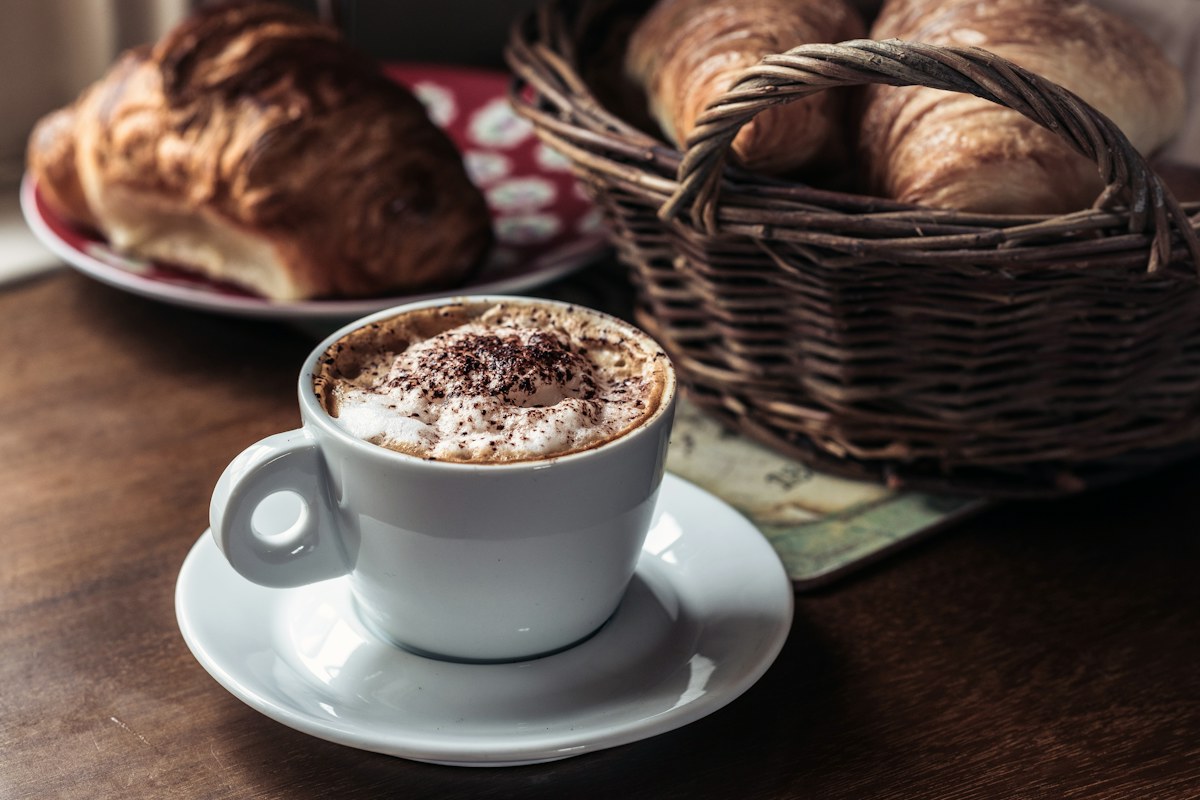
An Italian breakfast is small, sweet and quick: a coffee and a pastry, often standing at the counter of a bar on the way to work. In other words, there are no eggs and bacon, and savory breakfasts are rare outside hotels. Below, this guide explains what Italians eat in the morning, how to order at the bar, the regional variations and what to expect from a hotel breakfast.
The short answer: the classic Italian breakfast is a cappuccino and a cornetto, the Italian croissant, eaten at the bar. At home, however, people have coffee with milk and cookies or rusks. In Sicily, summer breakfast is a granita with a soft brioche; in Rome, a cream-filled maritozzo; in Lecce, a warm custard pasticciotto. Above all, Italians drink milky coffee only in the morning.
Last updated: September 25, 2026
An Italian breakfast at a glance
| What | What it is | Where |
|---|---|---|
| Cornetto | A soft, slightly sweet croissant, plain or filled with cream, jam or chocolate | Everywhere; called brioche in much of the north |
| Cappuccino | Espresso with steamed, foamed milk | Everywhere, in the morning |
| Caffè latte | Mostly hot milk with coffee; ask for “latte” alone and you get plain milk | Everywhere |
| Fette biscottate | Crisp rusks spread with jam or honey | At home |
| Granita and brioche | Shaved ice with a soft brioche bun | Sicily, in summer |
| Maritozzo | Sweet bun filled with whipped cream | Rome |
| Pasticciotto | Shortcrust pastry with warm custard | Lecce and the Salento |
The bar breakfast: coffee and a cornetto
For many Italians, breakfast happens at the bar, which in Italy is a café, not a place for cocktails. Typically, you walk in, order at the counter, and drink your coffee standing up in a few minutes. As for the pastry, it is usually a cornetto: softer and sweeter than a French croissant, and sold vuoto (plain) or filled with custard, apricot jam or chocolate. In the north, moreover, people often call it a brioche.
The drink is a cappuccino, a caffè (an espresso) or a caffè macchiato, an espresso with a spot of milk foam. In addition, many bars sell fresh orange juice, spremuta d’arancia, squeezed to order.
How to order at an Italian bar
- Check whether to pay first. In busy city bars you pay at the till, then give the receipt to the barista. In smaller bars you pay when you leave.
- Standing costs less. Drinking at the counter, al banco, is usually cheaper than sitting at a table with service, especially in tourist squares.
- Ask for “un caffè”. In Italy, coffee means espresso. For a longer coffee, ask for a caffè americano.
- Say “latte” carefully. A latte in Italy is a glass of milk; order a caffè latte for the milky coffee.
- Keep milk for the morning. Italians drink cappuccino at breakfast, rarely after late morning and almost never after a meal. Nobody will refuse to serve you one, though.
Our list of common words and polite phrases is in the guide to basic Italian phrases, and our Italy travel tips cover tipping and paying.
Breakfast at home
At home, the Italian breakfast is simple. Adults drink coffee from a stovetop moka pot, often with warm milk; children have milk with cocoa. Alongside, there are biscotti, plain breakfast cookies dipped in the cup, or fette biscottate, crisp rusks spread with butter, jam or honey. Today, yogurt, fruit and cereal have become common too, but a savory plate is still unusual.
Regional breakfasts worth trying
Breakfast is where regional pastry traditions show best. In Sicily, summer mornings start with a granita, almond, coffee or lemon, eaten with a soft, round brioche for dipping. Similarly, in Rome, the maritozzo, a bun split and filled with whipped cream, is the local treat. Likewise, in Naples, a warm sfogliatella with an espresso is hard to beat, and in Lecce the custard-filled pasticciotto is sold in every café.
For the full list, read our region-by-region guide to Italian pastries. Alternatively, to taste them with a local guide, compare the Palermo street food tour, the Naples street food tour and our pick of Rome street food tours.
What to expect from a hotel breakfast
Hotels that cater to international guests usually offer a buffet with both sides of the table: pastries, cakes, bread, jam and yogurt, plus eggs, cheese and cured meats such as prosciutto. On the other hand, small family-run guesthouses and B&Bs may serve only the sweet Italian version. If breakfast matters to you, check what is included before you book, and do not be surprised if the hotel suggests the bar around the corner instead.
For the drink that goes with it, our guide to coffee in Italy explains how to order at the bar, the cappuccino rule and regional habits.
Italian breakfast: frequently asked questions
What is a typical Italian breakfast?
A cappuccino or an espresso with a cornetto, the Italian croissant, often eaten standing at a bar. At home, coffee with milk and cookies or rusks.
Do Italians eat eggs for breakfast?
Rarely. The Italian breakfast is usually sweet; eggs and savory dishes are found mainly in hotel buffets.
Is it true Italians do not drink cappuccino after breakfast?
Mostly, yes. Italians drink milky coffee in the morning and switch to espresso later in the day, especially after meals. Bars will still serve you a cappuccino.
What is the difference between a cornetto and a croissant?
A cornetto is softer and sweeter than a French croissant, with less butter, and it is often filled with custard, jam or chocolate.
Is it cheaper to have breakfast standing at the bar?
Usually, yes. Drinking at the counter costs less than sitting at a table with service.
Taste Italy’s food culture
Eat like a local on your trip
Compare food tours and cooking classes across Italy, with prices and ratings read on Viator.
Book it: experiences for this trip
Matched to this article by place and interest, then ordered by Viator rating and number of reviews (checked September 2026). Prices and availability are shown live on Viator.
Keep exploring Italy