
BLOG · Italy2Love Magazine Guide
1 Euro Homes in Italy: Real Costs, Rules and How to Buy
Are €1 houses in Italy real? Learn how one-euro home schemes work, the true renovation costs, requirements for foreign buyers, risks and due-diligence steps.
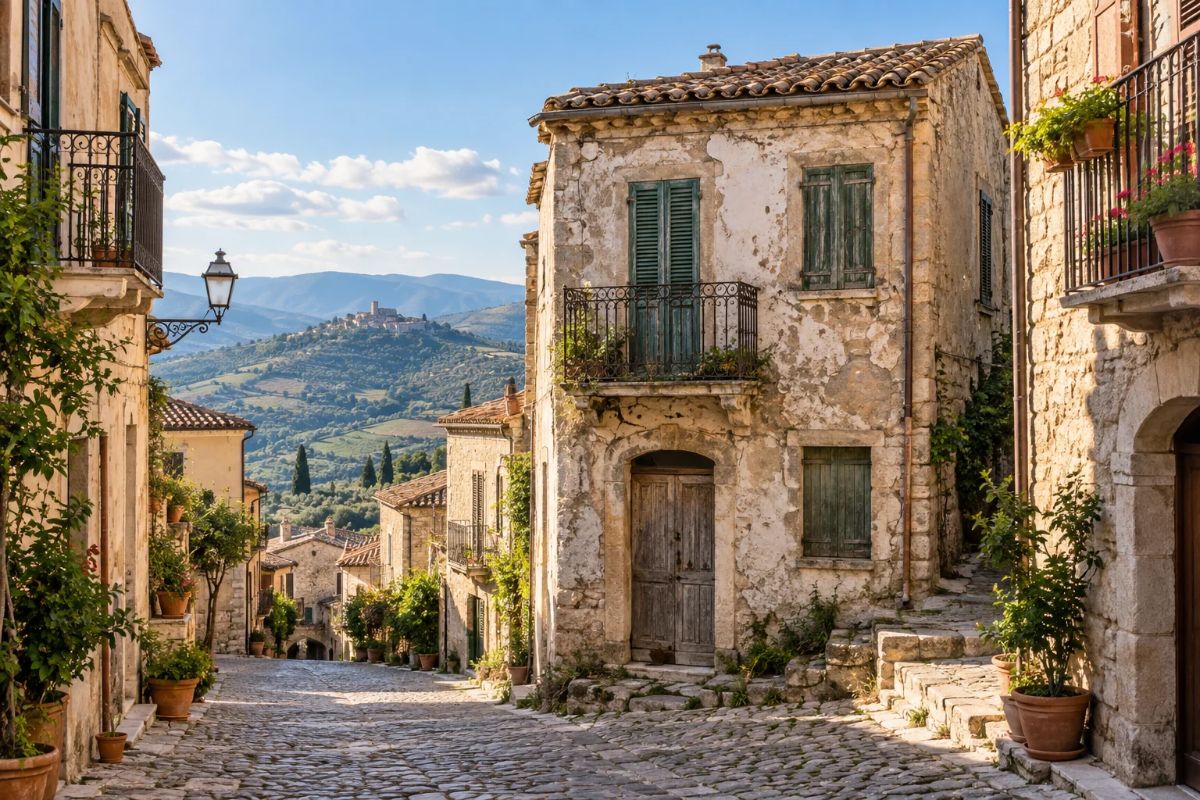
One-euro homes in Italy are real, but the final cost is never €1. Municipalities use these schemes to bring residents and investment back to depopulated towns. Buyers typically accept renovation deadlines, financial guarantees and substantial professional and building costs. This guide explains how the programs work, who can apply, what you may really spend and how to decide whether a €1 house is right for you.
Last updated: September 2026. Property rules differ by municipality and can change. Always read the current public notice and obtain independent legal, technical and tax advice before making an offer.
Are €1 houses in Italy real?
Yes. A number of Italian municipalities have offered abandoned or severely neglected properties for a symbolic price, often €1, as part of local regeneration programs. The low figure usually covers only the purchase price. It does not include taxes, notary fees, surveys, professional advice, permits, utilities or renovation work.
The properties are generally privately owned homes whose owners have agreed to transfer them, or buildings managed through a municipality-led initiative. Availability is not permanent: each town decides whether to launch a program, which buildings are included and how applications are assessed.
How does the €1 house scheme work?
- A municipality publishes a notice. The notice identifies available properties, eligibility rules, deadlines and selection criteria.
- Interested buyers inspect the property. An independent architect, engineer or surveyor should assess structure, planning compliance and realistic renovation costs.
- The buyer submits an application. Some towns ask for a renovation proposal, timetable, budget and evidence of financial capacity.
- The municipality or owner selects a buyer. A complete, credible regeneration plan may matter more than being first.
- The deed is completed before an Italian notary. The buyer pays the related taxes and professional costs.
- Renovation must begin and finish on schedule. Deadlines vary, and permits must be obtained before work starts.
There is no single national “Italy €1 home program” and no universal application form. Every project has its own municipal rules. That is why lists circulating online can quickly become outdated.
What are the requirements to buy a 1 euro house in Italy?
Exact requirements depend on the municipality, but buyers may be asked to:
- submit a detailed renovation plan within a stated period;
- start and complete works within contractual deadlines;
- provide a bank guarantee or refundable deposit;
- pay notary, registration, technical and administrative costs;
- use qualified professionals and comply with Italian building, seismic and heritage rules;
- maintain the property and, in some programs, support residential or local economic activity.
Do not assume that every scheme requires permanent residence or opening a business. Some do; many do not. The public notice and sale contract are the controlling documents.
How much does a 1 euro house in Italy really cost?
The realistic budget is the purchase price plus acquisition, compliance and renovation costs. Before applying, build a project budget rather than focusing on the symbolic price.
| Cost category | What it may include |
|---|---|
| Purchase and deed | Symbolic price, registration taxes, notary and administrative charges |
| Due diligence | Independent lawyer, surveyor, architect or engineer, title and planning checks |
| Guarantee | Deposit or bank guarantee required by the municipality, where applicable |
| Renovation | Structure, roof, damp treatment, seismic work, plumbing, wiring, windows and finishes |
| Permits and design | Technical drawings, municipal filings, heritage approvals and site supervision |
| Utilities and access | Connections, meters, road access, waste systems and internet availability |
| Ongoing ownership | Property tax where applicable, waste tax, insurance, maintenance and condominium charges |
A structurally compromised home can require tens of thousands of euros—or considerably more—before it is safe and habitable. The only defensible estimate comes from an on-site technical inspection and itemized quotes. Add a contingency for hidden defects and price changes.
Can foreigners buy €1 houses in Italy?
Foreigners can buy property in Italy, but the legal basis may depend on nationality and residency status. EU and EEA citizens generally face no nationality-based restriction. For some non-EU citizens, Italy’s reciprocity rules may need to be checked for the specific transaction. An Italian notary or independent property lawyer can confirm eligibility before you commit.
International buyers usually need an Italian tax code (codice fiscale), identification documents and a traceable method of payment. Translated or legalized documents may also be required. Read our guide to buying property in Italy before choosing an agent.
Does buying a house in Italy give you residency or citizenship?
No. Buying property in Italy does not automatically grant a visa, residence permit or Italian citizenship. Property ownership and immigration status are separate legal matters. Non-EU buyers who want to live in Italy long term must qualify through an appropriate immigration route and comply with its conditions.
This distinction matters because some €1 projects impose renovation deadlines that can be difficult to manage from abroad. Plan how often you can visit, who will supervise the site and how decisions will be documented.
Where can you find 1 euro homes in Italy?
Programs have appeared mainly in smaller towns affected by depopulation, including municipalities in Sicily, Sardinia and parts of southern and central Italy. Availability changes frequently. Instead of relying on an old “complete list,” use this verification process:
- Search the official municipality website for case a 1 euro, immobili a un euro, bando or avviso pubblico.
- Confirm that the notice is open and note its deadline.
- Download the official notice, application form and property schedule.
- Contact the municipal office listed in the notice, not an unverified social account.
- Visit shortlisted properties with an independent local technician.
If your priority is lifestyle rather than the lowest purchase price, compare the town’s transport, healthcare, shops, schools, climate and year-round population. Italy’s hidden villages and towns can help you understand the kind of setting these projects often occupy.
The biggest pitfalls of buying a €1 property
Renovation costs exceed the purchase price
The €1 headline can obscure the real financial commitment. Roof failure, structural movement, damp, asbestos, outdated utilities and seismic upgrades can transform a cheap acquisition into a major restoration project.
Planning or cadastral discrepancies
The physical building, municipal planning records and cadastral plan should be checked for consistency. Never assume a visible extension, terrace or internal layout is legally authorized.
Heritage and building restrictions
Historic centers may restrict changes to façades, roofs, windows, materials and colors. These rules protect local character but can add time and cost.
Contractual deadlines and guarantees
Missing a deadline may put a deposit or guarantee at risk. Ask a lawyer to explain every obligation, extension clause and penalty before signing.
Buying in a place that does not fit your life
A beautiful hill town may have limited public transport, fewer winter services and long journeys to hospitals or airports. Spend time there outside peak season before committing.
Due-diligence checklist for international buyers
- Read the complete municipal notice and sale conditions.
- Confirm ownership, liens, mortgages, rights of way and inheritance issues.
- Compare cadastral and planning records with the building as it exists.
- Commission a structural and systems inspection.
- Check seismic, flood, landslide and heritage constraints.
- Obtain written renovation estimates and a realistic schedule.
- Verify contractor registration, insurance and tax documentation.
- Calculate notary, legal, technical, agency, tax and annual ownership costs.
- Clarify utility connections and internet access.
- Keep legal advice independent from the seller, agent and contractor.
Understanding local property language also helps when comparing listings. See our overview of types of houses in Italy, from apartments and palazzi to farmhouses and villas.
Is a low-cost home a better option than a €1 house?
Often, yes. A conventional property priced at €20,000–€60,000 may already have a clearer title, functioning utilities, fewer deadlines and a more predictable renovation scope. The purchase price is higher, but the total project can be less risky.
A real alternative in Molise
One international couple considered the €1 route but ultimately bought a 290-square-meter farmhouse with land in Sant’Elia a Pianisi, Molise, for €29,000. Their experience illustrates the value of comparing symbolic-price properties with ordinary low-cost listings. Explore the region in our Molise travel guide.
The lesson is not that every €1 home should be avoided. It is that the best decision comes from comparing total cost, deadlines, location, condition and personal capacity—not the headline price alone.
Who should consider a 1 euro home?
A €1 home may suit you if you have sufficient capital beyond the purchase price, tolerance for bureaucracy, access to trusted local professionals and the time to supervise a complex restoration. It is less suitable if your budget is fixed, you need immediate occupancy, you cannot visit regularly or you are relying on the purchase to secure residency.
Seen La Dolce Villa? Its plot turns on a one-euro house, so we explain whether Montezara is a real place.
Frequently asked questions
Can Americans buy 1 euro homes in Italy?
Americans may be able to buy property in Italy, including a €1 home, subject to the transaction’s legal requirements and the municipality’s rules. Obtain confirmation from an Italian notary or independent lawyer before applying.
Do you have to renovate a €1 home?
Usually yes. Renovation is the central purpose of most schemes, and the municipal notice normally sets deadlines and standards.
Do you have to live in the house?
Not in every program. Some municipalities prioritize permanent residents or impose specific uses, while others accept second-home projects. Check the current notice.
Can you rent out a 1 euro house in Italy?
Possibly, after lawful renovation and subject to local planning, hospitality, registration and tax rules. The municipal contract may also restrict use, so verify before building a rental-income plan.
Are 1 euro houses a scam?
Official municipality-run schemes are genuine, but misleading ads and outdated third-party lists exist. Verify the offer on the municipality’s official website and never send money before legal checks.
Is it worth buying a 1 euro house in Italy?
It can be worthwhile for a well-funded buyer who wants a restoration project and genuinely values the location. It is not a shortcut to a turnkey Italian home. Compare the all-in cost with ordinary low-priced properties before deciding.
Final verdict: buy the project, not the price tag
One-euro homes can support remarkable towns and give neglected buildings a future. Their value, however, lies in the restoration opportunity—not in getting a habitable house for one euro. Start with the official notice, inspect the property, calculate the total budget and use independent professionals. If the project still works after those checks, the dream may be realistic.
Continue exploring Living in Italy for practical guides on property, relocation and the Italian lifestyle.
Keep exploring Italy