
PLACES · Italy2Love Magazine Guide
Padua itinerary: two days of frescoes, markets and gardens
This Padua itinerary brings together Giotto, the market squares, Palazzo Bo and the botanical garden over two days, with practical booking advice and a choice of bases for your stay.
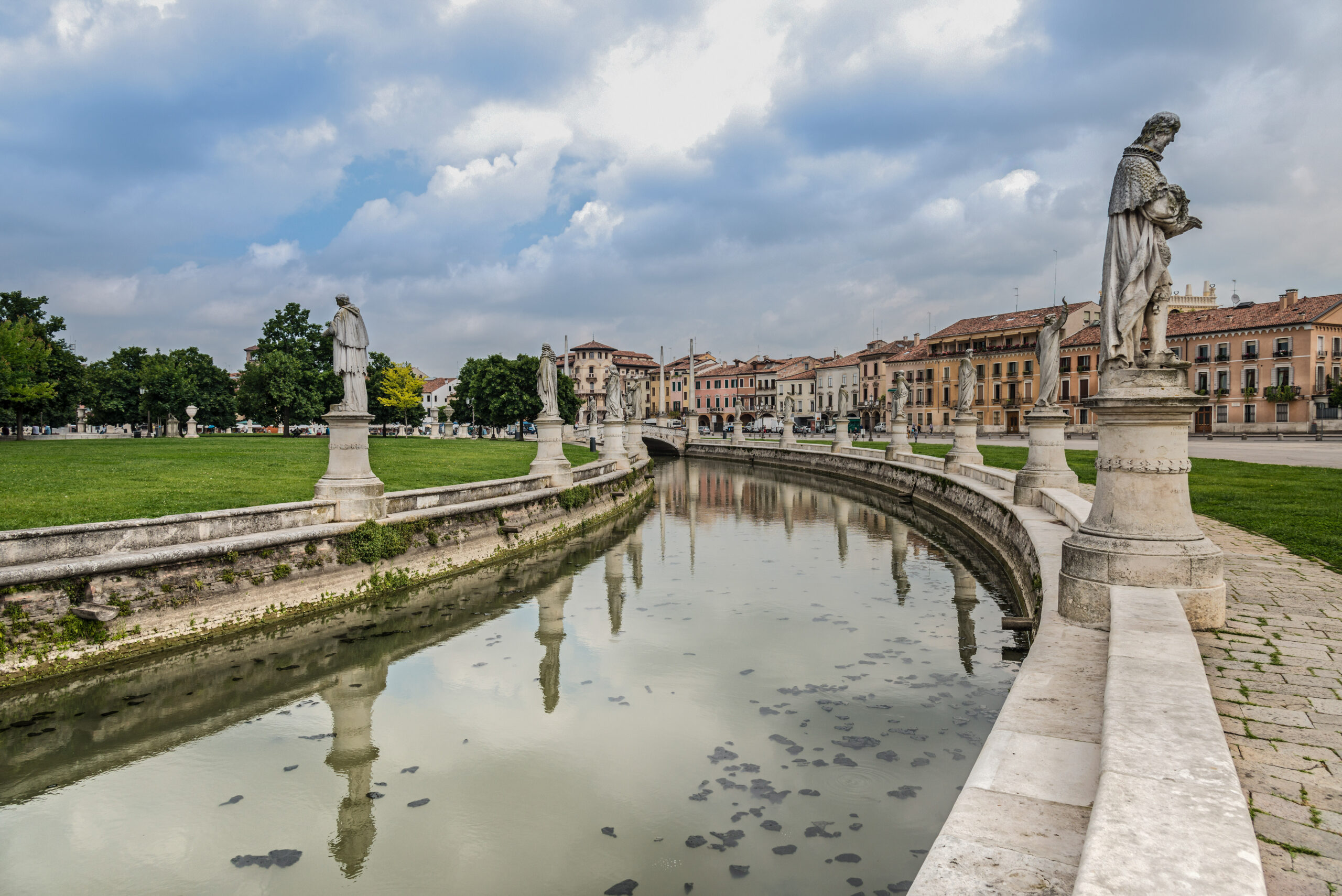
The canal around Prato della Valle curves past rows of statues, while a few streets north the market squares fill the space beneath a medieval courtroom. This Padua itinerary connects those two sides of the city over two days: Giotto and the university, food shops and cafés, then a garden and an evening you do not have to interrupt for a train.
Padua, called Padova on Italian station boards, is an inland city in Veneto, west of Venice. It deserves a stay of its own if you enjoy art and urban wandering. You can see a headline attraction on a day trip, but an overnight visit gives you room to follow a museum visit with lunch, rather than another queue.
At a glance: best for independent culture lovers; allow two full sightseeing days and preferably two nights; walk between the main sights, using the tram or a taxi for luggage if needed. Spring and autumn are comfortable choices for the walking route; winter works well for an art break, with shorter garden hours. A car adds little to these two city days.
Visiting in November 2026? The Scrovegni Chapel announces annual inspections from 16 to 27 November. Its latest Italian notice adds partial access on 21–22 November, with inspection equipment inside. If Giotto is your main reason for travelling, check the official closure and booking notice before choosing your dates.
Your Padua itinerary: how to arrange two days
Build the trip around the Scrovegni Chapel reservation. That fixed appointment matters more than the order of the other stops. The route below assumes a morning chapel slot on day one and a Palazzo Bo visit on day two. If the available times reverse that order, swap the two days; there is no reason to buy an inconvenient train simply to follow an itinerary literally.
The city has three useful anchors. The railway station and the Eremitani complex sit toward the northern end of the central sightseeing area. The market squares and university occupy the middle. The Basilica of Saint Anthony, botanical garden and Prato della Valle form the southern group. Keeping each group together reduces backtracking, especially if you return to your hotel before dinner.
| Part of the trip | Suggested plan | Time to allow | Decision that matters |
|---|---|---|---|
| Day one, morning | Scrovegni Chapel and a selective visit to the Eremitani museums | About 2–3 hours for the combined outing; the standard chapel visit itself is 15 minutes | Reserve the chapel first and include the required arrival procedures |
| Day one, afternoon | Market squares, lunch and Palazzo della Ragione | About 3 hours, including lunch and browsing | Avoid placing the Palazzo visit on an ordinary Monday |
| Day two, morning | Palazzo Bo and a café stop | About 1½–2 hours including the tour and a break | Choose the correct weekday or weekend visit format |
| Day two, afternoon | The Santo, botanical garden and Prato della Valle | About 3–4 hours with walking and pauses | Give the garden daylight; move the basilica earlier if services affect visiting |
These are suggested sightseeing allowances, not opening hours or timed admission promises. Two full days also means something different from arriving at lunchtime on Saturday and leaving at lunchtime on Sunday. For that shorter visit, keep the chapel, squares and southern walk, then choose either Palazzo Bo or the garden. A second hotel night often makes the difference between seeing buildings and having time to enjoy being here.
Day one: Giotto, the market squares and an unhurried evening
Start with the Scrovegni Chapel
Inside the chapel, painted scenes unfold across the walls beneath a blue vault. Faces, gestures and the spaces between people reward attention as much as the colour. Rather than trying to identify every scene, spend part of your short visit following a single sequence, then step back and take in the relationship between the walls and ceiling.
Giotto’s cycle belongs to the wider UNESCO-listed fourteenth-century fresco cycles of Padua. The designation brings together religious and secular settings across the city; it is not a label for this chapel alone. That makes Padua particularly satisfying if you want to understand how painting changes with its setting, from a private devotional space to a public civic hall.
Use the official reservation instructions. Online booking is required in advance and is not available for the same day. Standard visits inside last 15 minutes. Allow additional time for ticket collection, the waiting procedure and belongings; follow the arrival time on your confirmation. Large luggage is unsuitable for this stop, and suitcases are not permitted inside the museum. Leave bags at your accommodation before visiting.
The Eremitani museums are next to the chapel. Decide how much attention you want to give them before you fill the rest of the morning. A selective visit is a reasonable choice on a two-day stay; a dedicated museum enthusiast can spend longer and move the market-square lunch later. Keep a little space after Giotto instead of treating the next room as another task to complete.
Lunch around Piazza delle Erbe and Piazza della Frutta
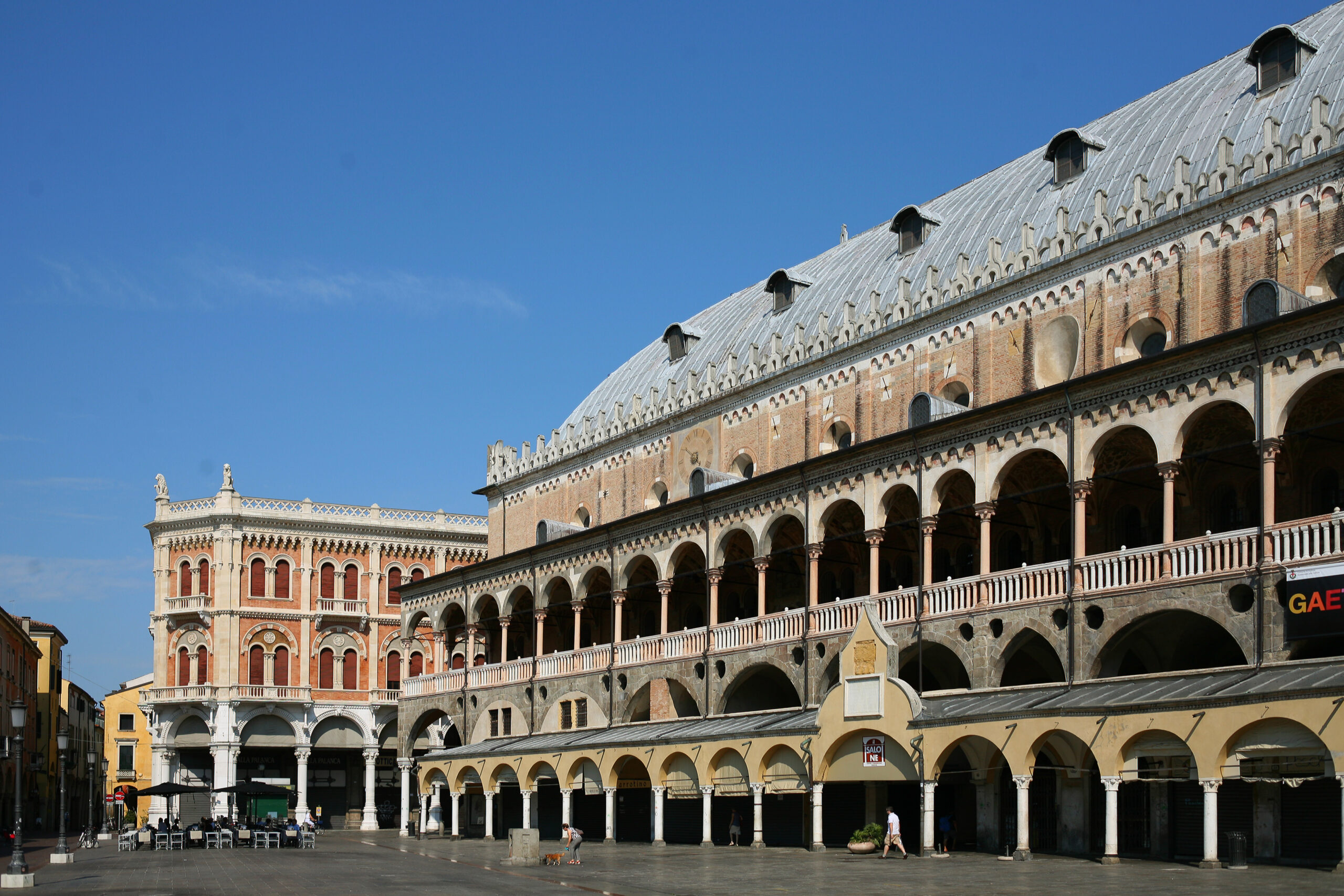
Continue into the central piazze, where Palazzo della Ragione separates Piazza delle Erbe from Piazza della Frutta. Under its arcades, food shops give this monumental building an everyday purpose. Upstairs is a vast civic room; below are counters, groceries and places to pause. The contrast is one of Padua’s most memorable pleasures.
Come to the squares before lunch if seeing the stalls matters to you. Market activity varies by day, and a late-afternoon arrival is a different experience from a morning browse. The municipal market information is the place to check the current operating pattern. Walk through both squares before choosing where to eat, rather than sitting at the first table you pass.
At a food counter, ask what is ready to eat and whether there is seating before ordering. A shop selling cheese or cured meat is not necessarily a restaurant. For a proper lunch, check the menu outside and whether the kitchen is still serving. This small distinction helps you choose between a quick market purchase, a bar snack and a meal worth giving an hour.
Go upstairs into Palazzo della Ragione
The Palazzo della Ragione, known locally as Il Salone, once housed the city’s courts. Its enormous hall has a roof shaped like an overturned boat and walls crowded with astrological imagery. The paintings visible today are not an untouched Giotto cycle: the earlier decoration was destroyed by fire in 1420 and repainted.
Look for the relationship between the building’s scale and its civic role. This was a space for the business of a city, not simply a room designed to display paintings. The wooden horse adds another unexpected change of scale. Give yourself around 45–60 minutes as a planning allowance, longer if you want to study the imagery closely. The published regular schedule is Tuesday to Sunday; ordinary Mondays and certain holidays are closures.
Let the evening belong to the city
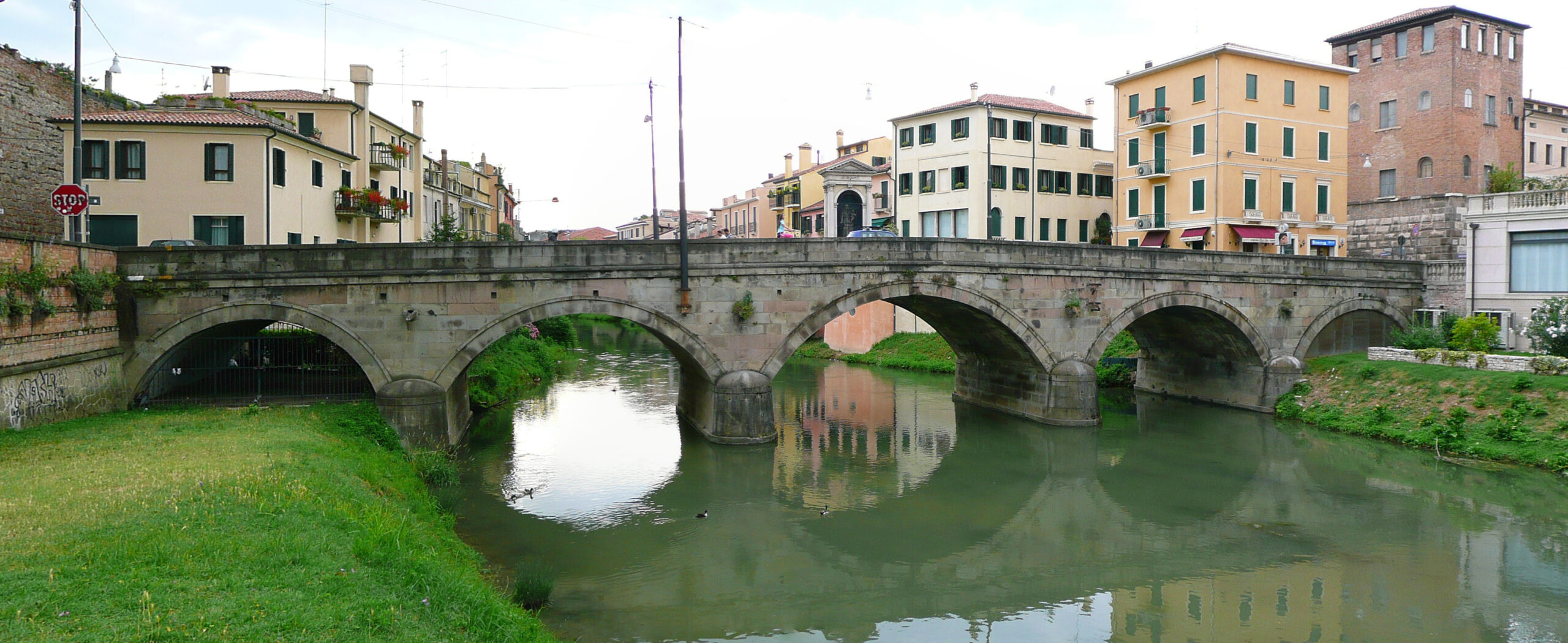
After the hall, wander toward Piazza dei Signori, then choose between a longer café stop and a short detour north toward Ponte Molino. The bridge and water offer a different view from the dense central squares. You do not need to turn this into another formal tour: it is a good section of the day for looking, stopping and deciding where you would like to return after dark.
Staying overnight changes the rhythm of this part of the trip. You can go back to your room, leave purchases behind and come out for dinner without checking the next departure. If Padua is one stop in a longer journey, our Northern Italy itinerary by train helps put the stay into a wider route.
Day two: a university city, the Santo and a living garden
Visit Palazzo Bo on the right kind of ticket
Palazzo Bo makes the university tangible through courtyards, teaching spaces and the anatomical theatre. It is a useful counterpoint to the frescoes: another way of understanding a city shaped by the movement of ideas. The university dates its foundation to 1222, and the historic premises remain part of a working institution rather than a building with a completely unrestricted tourist timetable.
Check the university’s Palazzo Bo visit options. The weekday historic route is guided, with an approximately 45-minute duration. Weekend and public-holiday arrangements include a different route and self-guided options. Institutional events can affect access. Do not assume that a weekend ticket includes precisely the same rooms or experience as a weekday tour.
For visitors with limited stamina, there is another practical detail: the university says the visit is undertaken standing, and the historic seating is not available for resting. Access to the anatomical theatre’s tiers is also restricted. Read the route details before booking if stairs, standing time or access to a particular room determines whether the visit suits you.
Pause at Caffè Pedrocchi
Near the university, Caffè Pedrocchi gives the morning a natural break. Its monumental rooms belong to a different era of the city’s social life. You can appreciate the building without turning the stop into a long restaurant meal, or make it a deliberate pause with a drink and something from the pastry counter.
The characteristic order is mint coffee; the café’s own menu also describes a summer version with cold espresso, mint cream and cocoa. Look at the current menu and service prices before sitting down, particularly if you are choosing between a quick coffee and table service. The point is to enjoy the setting at a pace and price that suit your day.
Walk south to the Basilica of Saint Anthony
Follow the central streets toward the Basilica of Saint Anthony, usually called Il Santo. The cluster of domes gives this part of Padua a distinct skyline, while inside, the movement of pilgrims makes clear that the building is an active place of worship. Allow your visit to follow that reality: pause when a service is taking place and keep conversation low.
The basilica’s visitor information confirms free entry during opening hours, appropriate church dress and a prohibition on photography inside. Keep shoulders and knees covered and put the camera away. Paid museum areas or a booked guided visit are separate decisions from entering the church. Around 45–60 minutes is a useful allowance for a first visit, but services and your interests may change it.
Choose the garden for the afternoon
The university’s botanical garden lies between the basilica and Prato della Valle. Founded in 1545 and recognised by UNESCO, it connects the study of plants with the history of medicine. The historic garden and the modern biodiversity spaces make different demands on your attention: the first invites close observation, while the greenhouses widen the geographical scale.
Give the garden around 90 minutes to two hours if plants interest you. That is a suggested visit length, not an admission condition. Check the garden’s current opening calendar before committing the late afternoon. Seasonal hours and holiday exceptions matter. Check the date-specific booking calendar, especially for a Christmas or New Year visit, before arranging the afternoon around a particular closing time.
If you prefer another art visit, shorten the garden plan or omit it; do not squeeze it between two fixed appointments. The broader fresco circuit can absorb considerably more than a weekend. A focused trip often benefits from leaving one substantial attraction for another visit, especially if your train leaves that afternoon.
Finish at Prato della Valle
Prato della Valle is a broad square arranged around Isola Memmia, an island enclosed by a canal and rows of statues. After the enclosed rooms of the previous two days, the open space gives the walk a different scale. Cross one of the bridges, make a circuit that suits your energy, then look back toward the buildings around the perimeter.
This is a pause rather than a final appointment. In winter, arrive while there is still daylight. In hot weather, avoid making the exposed square the longest walk of the afternoon. From here, your next decision should be straightforward: return to a nearby hotel, use local transport toward the station, or settle into dinner if you have another night.
What to eat between the sights
Padua’s food is closely connected to its surrounding countryside. Look for bigoli, thick strands of pasta, and ask about the sauce rather than assuming every version is vegetarian. The city’s tourism information presents them among the foods of the wider territory. A plate of pasta at lunch leaves the evening free for a longer meal or a few smaller orders.
Another local name to recognise is gallina padovana, the distinctive crested chicken supported by a Slow Food presidium. Its presence on a menu is a reason to ask how it is prepared and where it comes from. It is not a dish guaranteed at every restaurant, nor should any chicken dish automatically be described as that particular breed.
Keep meals close to the part of town you are already exploring. The central squares work naturally on day one, while the Santo and Prato area suit day two. Book a dinner table if you have a specific place in mind. If you prefer to decide spontaneously, leave enough flexibility to choose another restaurant instead of building the evening around a single unreserved table.
Arriving in Padua and getting around without a car
Search rail journeys using Padova. For Venice, distinguish Venezia Santa Lucia, on the historic island, from Venezia Mestre, on the mainland. A headline journey time to “Venice” can obscure that distinction. Choose the station you actually need and read the duration of your selected service; train time does not include the walk from your accommodation or onward travel across Venice.
The local tourism office’s rail guidance places the centre within roughly 20 minutes’ walk of the station and points to bus and tram alternatives. That is an orientation, not a promise for every hotel. A property beside the Santo is farther south than the first central streets. With a suitcase, consider a tram or taxi instead of making your first impression a long luggage walk.
Our guide to trains in Italy explains the difference between regional and high-speed travel and the ticket details to check. If you are travelling between major cities, investigate whether your chosen service stops at Padova before buying a ticket all the way to Venice and backtracking. For the city itself, the route works on foot, with local transport as an option rather than a requirement at every stop.
Drivers need to understand ZTL: a restricted traffic zone, often camera controlled. A central hotel address does not automatically grant permission to drive down every approach street. Obtain directions from the property before arrival, including where to unload, where to park and whether any registration is possible. Do not simply follow a navigation app to the front door.
Where to stay: choose the evening you want
For this trip, the location of your room affects more than the morning walk. It determines how easily you can take a break between museums and dinner, and whether returning late feels like a short stroll or another transport journey. Compare the actual street address with the sights you plan to visit; “central Padua” covers several useful but different positions.
| Base | Best reason to choose it | Trade-off to check |
|---|---|---|
| Market squares and university area | A central position for food, cafés and the first day’s civic sights | Ask about evening noise, room orientation and the final pedestrian approach |
| Basilica of Saint Anthony and Prato della Valle | A practical base for the southern sights and a walk back after the garden | Allow a longer station transfer; check the exact route with luggage |
| Near the railway station | Simpler early departures and frequent onward rail journeys | Compare the evening walk with how much time you will spend around the central squares |
Hotel Donatello: a base beside the Santo
Hotel Donatello faces the Basilica of Saint Anthony. Expedia lists the property in Padova, including a Double or Twin Room and a separate Panoramic Double or Twin Room, City View. Choose the exact room description rather than assuming every room has a view. The listing includes Wi-Fi and breakfast information; verify what your selected rate covers and its cancellation conditions.
The location suits travellers who want the basilica, botanical garden and Prato della Valle close to their base. The practical compromises deserve attention: the hotel says it has no on-site car parking, cannot issue ZTL transit permits, and directs arrivals via Via Cesarotti rather than Via del Santo. Its main building has a lift but some corridor steps; the annex is stairs-only. Confirm the precise room and access route directly if step-free access is essential.
Check Hotel Donatello’s rooms and availability on Expedia for your dates, then compare the room location and conditions with your needs. A listed property is not a guarantee of availability on a particular night.
For a longer regional trip, the Veneto accommodation guide compares other bases across the region. Keep a Padua stay focused on Padua unless repeated onward journeys are central to your plans. Include any locally payable charges in your budget; our Italy tourist tax guide explains what to check in a booking breakdown.
When to go, what to reserve and how to shorten the trip
Spring and autumn let you balance outdoor walking with time inside museums. Pack for rain rather than relying on porticoes to cover the entire route. Summer calls for more breaks and a garden or square visit timed around the heat. Winter is a good fit when art is the priority, provided you check maintenance closures and place the outdoor southern walk before dusk.
The most useful booking order is the chapel, your accommodation, then Palazzo Bo and transport. Check ordinary Monday closures before settling on a Sunday–Monday break: a room may be available while an important part of your intended itinerary is closed. Reordering can solve some conflicts, but a different pair of days may be the better choice if museums are the main purpose.
With only one day, use the guide to day trips from Venice to compare the excursion with other options, then keep your Padua plan selective. Reserve the chapel, walk through the market squares and choose one substantial southern stop. With a third day, you can stay in the city for more frescoes or investigate a separate thermal break: our guide to Italian thermal baths introduces Abano and Montegrotto in the wider area. Treat that as an additional outing, not an extra squeezed into the garden afternoon.
Start your Padua itinerary by finding a chapel slot on a day you can travel, then choose a room near the part of the city where you want to spend your evenings. Two days work best when the bookings support the walk and leave room for the café, the market counter and the view across the water that persuade you to stop.
Featured photograph: Prato della Valle brings water, statues and open space into the southern part of the walk. Photo: Didier Descouens; levels adjusted by Ptyx / CC BY-SA 4.0. Resized proportionally.
Keep exploring Italy