
BLOG · Italy2Love Magazine Guide
Ostia Antica: What to See, Tickets, Hours and the Train from Rome (2026)
How to visit Ostia Antica from Rome: what to see in the ancient port, official ticket price, hours and free days, the Metromare train, and how it compares with Pompeii.
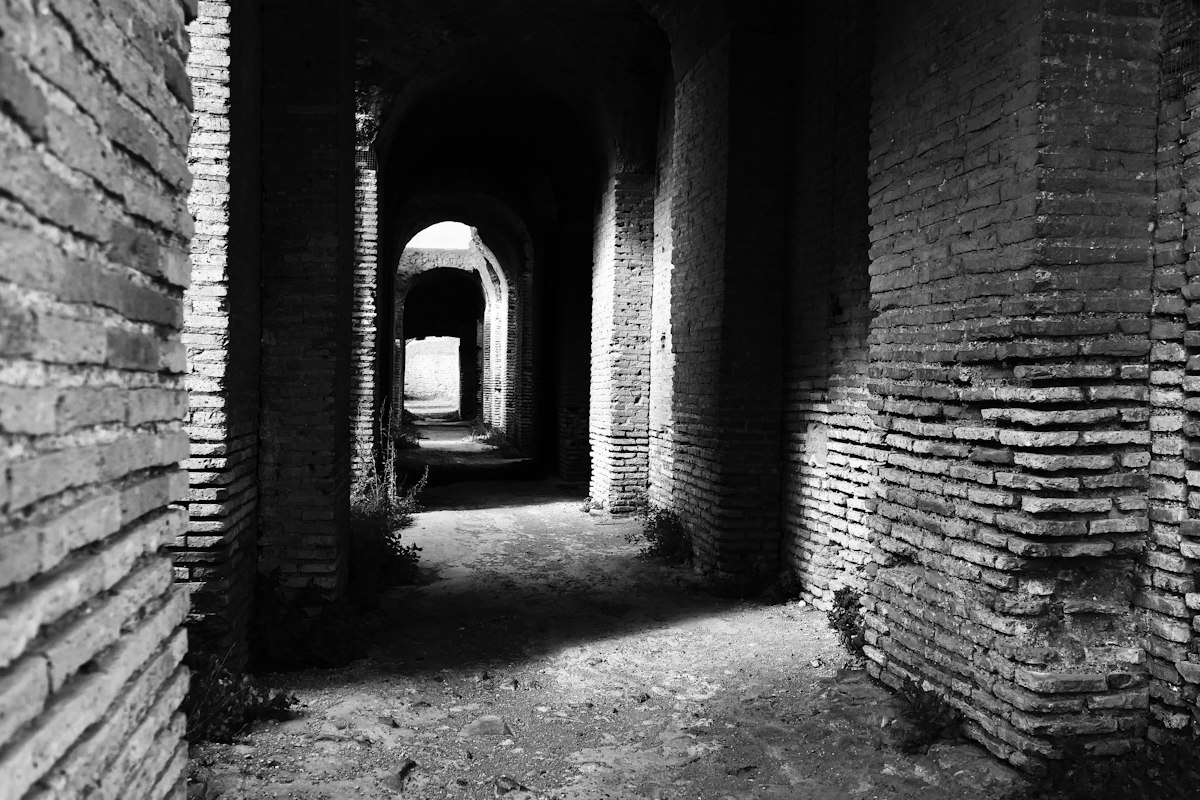
Ostia Antica was the harbor town of ancient Rome, and today it is a vast excavated Roman city you can walk through. It lies about 25 km (15 miles) southwest of central Rome, so a local train gets you there easily. This guide covers what to see, tickets and hours, the train, and how the site compares with Pompeii.
The short answer: take the Metromare train from Porta San Paolo, next to Piramide metro, to the Ostia Antica stop. Then walk to the gate and give the ruins three to four hours. The site closes on Mondays, and a full ticket costs about €18 (checked September 2026). As a result, Ostia Antica makes an easy half-day from Rome, and a calmer one than Pompeii.
Prefer a guide and no logistics? Our page on an Ostia Antica tour from Rome compares guided options.
Last updated: September 28, 2026
Ostia Antica at a glance
| What | Details |
|---|---|
| What it is | The ancient port city of Rome, excavated over a large area |
| Distance from Rome | About 25 km (15 miles) southwest of the center |
| Getting there | Metromare train from Porta San Paolo (Piramide) to Ostia Antica |
| Train fare | A standard BIT ticket, about €1.50 (Cotral, checked September 2026) |
| Site ticket | About €18 full, valid 8 days at all park sites (checked September 2026) |
| Opening | Tuesday to Sunday from 8:30 a.m.; closed Mondays |
| Time needed | Three to four hours for the main sights |
| Free entry | First Sunday of every month, plus April 25, June 2 and November 4 |
Why Rome’s ancient port is worth a half day
First, a little history. According to the Archaeological Park of Ostia Antica, tradition says King Ancus Marcius founded Ostia in 620 BC (checked September 2026). The aim was to control the salt pans at the mouth of the Tiber. However, the oldest remains found so far belong to a Roman military camp of the 4th century BC.
The town then grew into Rome’s gateway to the sea. For example, grain, oil and wine from across the empire passed through its warehouses. In fact, the park notes that the city peaked in the 2nd century AD with an estimated 50,000 inhabitants. Later, the river silted up, the coast moved, and Ostia slowly emptied.
In fact, that decline is the reason to go today. Because nobody rebuilt on top of it, Ostia Antica keeps whole streets of shops, apartment blocks, baths, taverns and temples. So you see how ordinary Romans lived, not only emperors. Also, umbrella pines give the site a quiet, green feel.
What to see in Ostia Antica
The ruins stretch along one main street, so the layout is easy to follow. Here are the highlights, in the order you meet them from the main gate.
Decumanus Maximus and the tombs outside the gate
You enter near the Porta Romana, where the road from Rome reached the town. Tombs line the approach, since Roman law kept burials outside the walls. Then the Decumanus Maximus, the main avenue, runs straight through the city for more than a kilometer. Also, its original paving stones are still in place.
Baths of Neptune
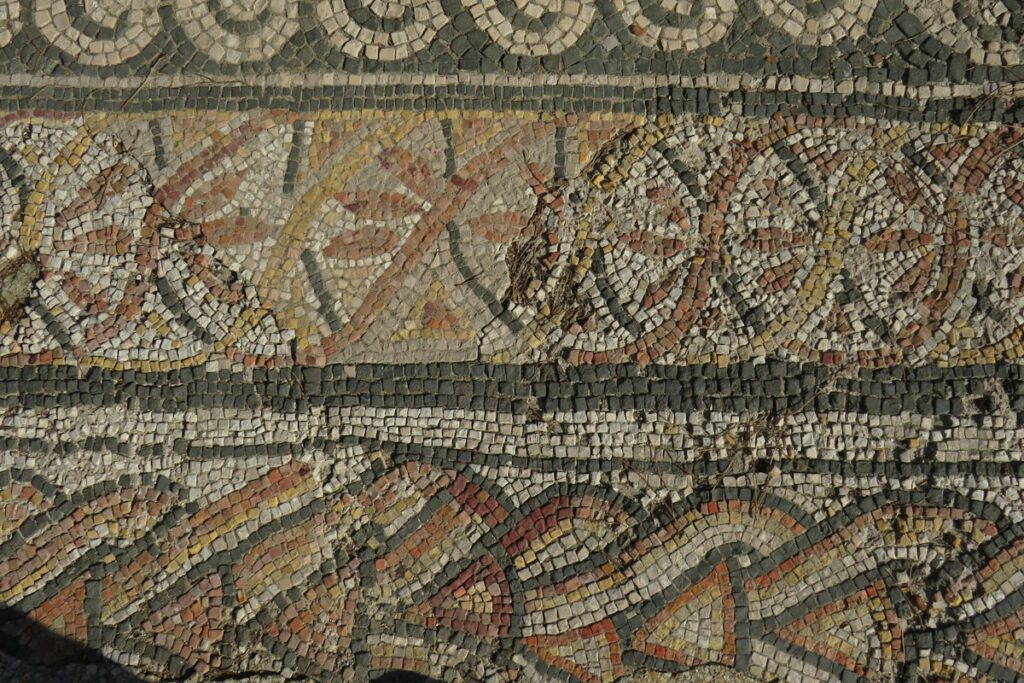
On your right, a raised platform looks down on the large black-and-white mosaic of Neptune driving four sea horses. As a result, it is one of the most photographed floors on the site.
The theater and the Piazzale delle Corporazioni
Next comes the theater, first built under Augustus and later enlarged. Then climb to the top rows for a view over the site. Behind the stage lies the Piazzale delle Corporazioni, the Square of the Guilds. Around it, the offices of shippers and traders had mosaics at their doors showing ships, lighthouses and the ports they came from. Together, they show how global the Roman grain trade was.
The Capitolium and the Forum
Farther along, the Capitolium rises over the Forum on a high brick podium. It was the town’s main temple and, like the Capitol in Rome, honored Jupiter, Juno and Minerva. By contrast, the Forum around it was the civic heart, with the basilica and the town council nearby.
The thermopolium and the House of Diana
Just off the Forum, on Via di Diana, a Roman bar still keeps its counter and shelves. Italians call this kind of place a thermopolium, a snack bar serving hot food and drinks. Next door, the House of Diana is an insula, an apartment block that once rose several floors.
The Ostiense Museum
Finally, the small site museum shows statues, portraits and reliefs found in the excavations. However, check its hours first. The park’s visitor information says it opens at 9:30 a.m. and closes earlier than the ruins (checked September 2026). It also closes on the first Sunday of every month.
Ostia Antica tickets, hours and free days
The official visitor page lists a full ticket of about €18 (checked September 2026). In addition, it stays valid for eight consecutive days at all the park’s sites and museums. EU citizens aged 18 to 25 pay a reduced fee of about €2. Other free and reduced categories follow national rules, so check the park page if you may qualify.
- Where to buy: at the ticket office, or online through CoopCulture, the official ticket seller, which lists the same full price (checked September 2026). The park also points to the Musei Italiani app.
- Opening days: Tuesday to Sunday and public holidays. However, the site closes on Mondays, December 25 and January 1.
- Opening time: 8:30 a.m. all year. Closing time changes with the season: 7:00 p.m. from April 1 to September 30, 6:30 p.m. from October 1 to 24, 4:30 p.m. from October 25 to the end of February, and 5:15 p.m. in March.
- Last entry: one hour before closing, according to the same page.
- Free days: the first Sunday of every month at all park sites, plus April 25, June 2 and November 4. Expect more visitors then, and remember that the museum is closed on first Sundays.
Note that the park has no left-luggage service, and picnics are not allowed inside the area. For how free Sundays work across Italy, see our guide to free museum days in Italy. Our Italy museum ticket prices table also puts Ostia in context with other major sites.
How to get to Ostia Antica from Rome by train
First, the simplest route is the Metromare, the suburban railway once called the Roma–Lido line. The Lazio Region says its companies Cotral and Astral took over the line in July 2022 (checked September 2026).
- Reach Porta San Paolo: take metro line B to Piramide. The Metromare terminus at Porta San Paolo stands right next to it, beside the Pyramid of Cestius.
- Buy and validate a ticket: Cotral says the standard BIT ticket, about €1.50 and good for 100 minutes, also works on the Metromare (checked September 2026). So buy a second one for the return.
- Ride to Ostia Antica: get off at the Ostia Antica stop, not at the Lido stations farther on. From there, follow the signs for the short walk to the site entrance.
- Plan the return: check live departures on the Astral Metromare timetable before you set off.
The same line continues to the beaches of Lido di Ostia, so in warm months you can add a swim. Also, the site lies between Fiumicino airport and Rome; our Fiumicino to Rome guide covers airport transfers.
By car or taxi
Alternatively, driving is possible along Via del Mare or Via Ostiense, and the park lists its address as Viale dei Romagnoli 717. However, parking rules near the entrance change, so follow the local signs.
Beyond the main site: the castle and Isola Sacra
The same park ticket also covers smaller sites that most visitors skip. For example, the Julius II Castle stands in the medieval hamlet of Ostia Antica, next to the ruins. It opens Tuesday to Sunday with seasonal hours, according to the park (checked September 2026).
Meanwhile, the Necropolis of Porto on the Isola Sacra holds brick family tombs of the harbor community, farther toward Fiumicino. The park lists it as open Tuesday to Sunday from 10:30 a.m. to 4:30 p.m. (checked September 2026). You need a car or taxi to reach it, so it suits a second visit within the ticket’s eight days.
Ostia Antica vs Pompeii for time-poor travelers
Short on time in Rome? Both towns are remarkable; however, they cost very different amounts of time.
| Ostia Antica | Pompeii | |
|---|---|---|
| From Rome | Local train from Piramide, then a short walk | High-speed train to Naples, then a local train |
| Day length | Half day | Full, long day |
| What survives | A working port town: shops, apartments, guild offices | A town sealed by Vesuvius in AD 79, with famous frescoes |
| Crowds | Usually lighter | Often heavy, especially midday |
| Best for | Short stays, families, repeat visitors | Travelers with a free full day or a base in Naples |
- Choose Ostia Antica if you have three or four days in Rome and cannot lose a whole day.
- Choose Pompeii if the frescoes and the volcano story matter most, and you can spare a long day. Our guide to Pompeii from Rome or Naples compares the two bases, and Pompeii tickets covers entry.
- Do both if you are also spending time in Campania; see Herculaneum vs Pompeii for the third option.
Then, if you pick Pompeii, our page on a Pompeii day trip from Rome compares tours that handle the journey.
DIY or guided visit to Ostia Antica
Ostia Antica is easy to visit on your own, because the train is cheap and the site is signposted. However, the ruins are vast and signage is brief.
- Go on your own if you like to wander at your own pace, while reading up beforehand. Then start early.
- Choose a guided tour if you want the stories of the guild mosaics, the baths and daily life explained. Some tours include transport from Rome, while others meet you at the site, so check the meeting point.
- Go with kids either way: there is space to roam, and the theater steps are a hit. Our guide to Rome with kids has more family ideas.
Our page on an Ostia Antica tour from Rome compares guided formats side by side.
Best time to visit Ostia Antica
Spring and fall are the most comfortable seasons, since the site is exposed and shade is patchy. In summer, arrive at 8:30 a.m. and carry water. In winter, by contrast, the site closes at 4:30 p.m., so start in the morning.
Weekdays are usually quieter than weekends. Also, remember the Monday closure; our 3 days in Rome plan shows where a half day fits. For more ideas outside the city, see our best day trips from Rome and the Lazio travel guide.
Tours and experiences near Rome
These experience pages on our site fit a half day at Ostia Antica, or similarly an outing from Rome. Each one lists prices and ratings read on Viator.
- Ostia Antica tour from Rome, for a guided visit to the ancient port.
- Tivoli day trip from Rome, if you prefer villas and gardens instead.
- Rome catacombs and Appian Way tour, for more of ancient Rome just outside the walls.
- Pompeii day trip from Rome, if you have a full day to spare.
- Frascati day trip from Rome, for wine in the Castelli Romani hills; see also our Frascati wine tours guide.
Ostia Antica: frequently asked questions
How do you get to Ostia Antica from Rome?
Take the Metromare train from Porta San Paolo, next to Piramide metro, and get off at the Ostia Antica stop. A standard BIT ticket, about €1.50, covers the ride (checked September 2026).
How much is the Ostia Antica ticket?
The full ticket costs about €18 and is valid for eight days at all park sites (checked September 2026). EU citizens aged 18 to 25 pay about €2.
Is the site open on Mondays?
No. The archaeological area is open Tuesday to Sunday and closes on Mondays, December 25 and January 1.
How long do you need at Ostia Antica?
Plan three to four hours for the main street, the theater, the Forum and the museum. Then add time for the castle or the Isola Sacra necropolis.
Is Ostia Antica better than Pompeii?
It is closer and quieter, so it suits short stays in Rome. Pompeii takes a full day but has the famous frescoes and the Vesuvius story.
Plan your half day from Rome
See Ostia Antica with a guide
Compare guided visits to Rome’s ancient port and more day trips, with prices and ratings read on Viator.
Book it: experiences for this trip
Matched to this article by place and interest, then ordered by Viator rating and number of reviews (checked September 2026). Prices and availability are shown live on Viator.
Keep exploring Italy