
ART & HISTORY · Italy2Love Magazine Guide
Ascoli Piceno: Two Days of Art, Stone Streets and Local Food
Plan two days in Ascoli Piceno with Renaissance art, riverside walks and local food, plus train advice, museum opening patterns and a historic-centre stay.
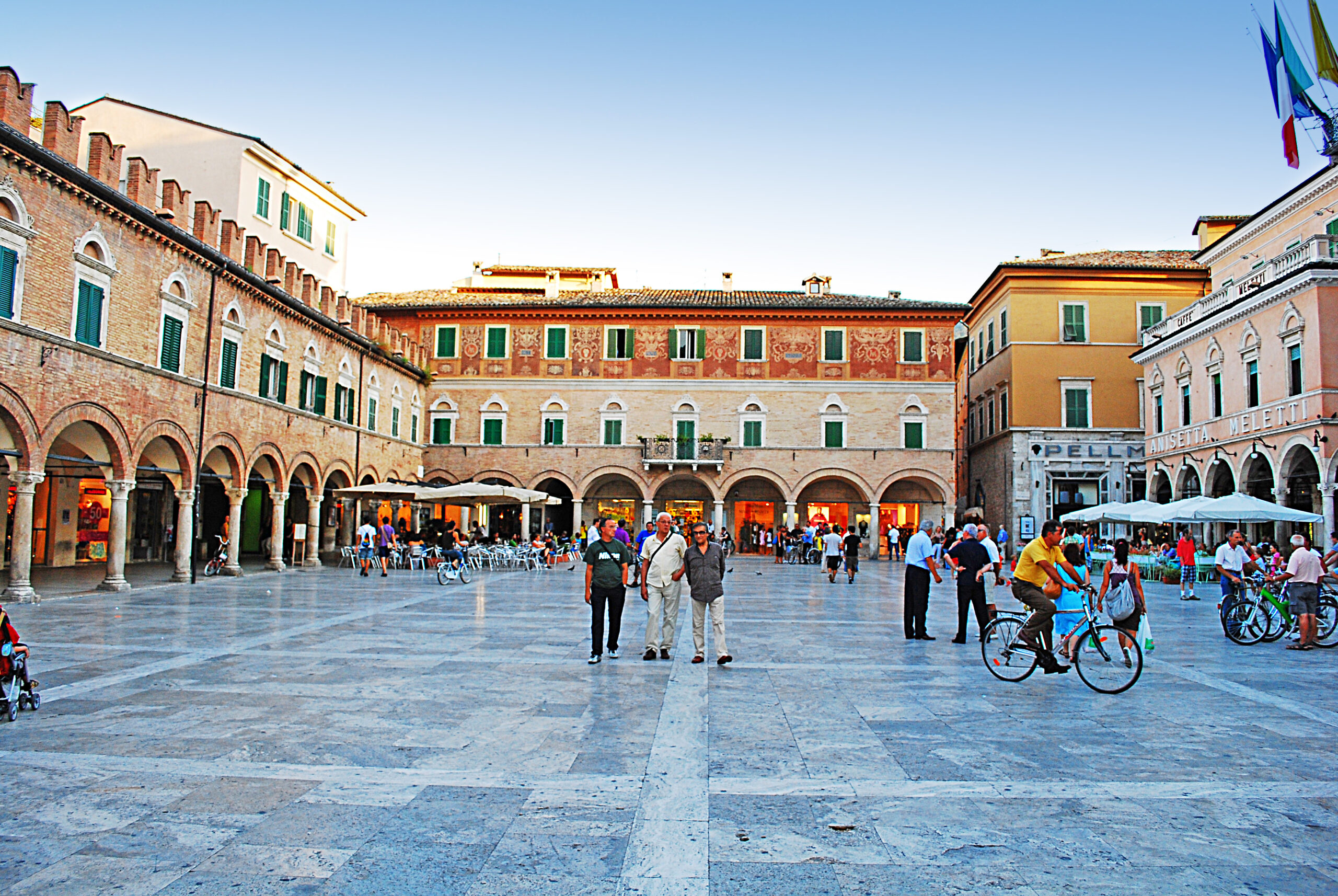
The pale paving of Piazza del Popolo gives Ascoli Piceno a remarkable sense of space: arcades frame the square, a church rises along one side, and the pink facade of Caffè Meletti interrupts the stone. Stay for two days and that first view becomes the starting point for a more rewarding trip, with Renaissance paintings, Roman engineering and meals built around the food of the southern Marche.
This itinerary is for independent travellers who enjoy art and walking, especially those adding a smaller city to a longer Italian journey. It keeps both days in town. You can arrive by train, leave the car parked if you have one, and spend your evenings close to the same squares you explored in daylight.
At a glance: Allow two full days and preferably two nights. Spring and autumn are comfortable choices for walking; winter works well if you plan around shorter museum hours. A car is unnecessary for this city itinerary. Choose accommodation in or beside the historic centre, and avoid making Monday your main museum day.
Why give Ascoli Piceno two days?
Ascoli lies inland in the southern part of Marche, the region on Italy’s Adriatic side. Its historic centre occupies the meeting point of the Tronto and Castellano rivers. This is a city of stone streets and substantial public buildings, not a seaside resort: the coast belongs to a different part of your journey. Our overview of the regions of Italy helps place Marche within a wider itinerary.
Travertine provides the visual thread. Look at a doorway, the paving beneath it and the building across the street, and the repeated material begins to explain why the centre feels so coherent. Ascoli’s appeal is not confined to a single monument. It emerges through the relationship between its squares, lanes, churches and river edges.
A day trip can cover Piazza del Popolo, Piazza Arringo and a museum. Two days let you separate the art from the wandering, and make room for the city after day visitors leave. You can return to a square without feeling that you should be moving on, or spend longer with a painting without sacrificing lunch.
It is a particularly good fit if you prefer a compact cultural break to another major-city checklist. If you are still deciding where to travel, compare it with other Italian art cities and their alternatives. The strongest reason to choose Ascoli is the combination of significant art and manageable distances, rather than a promise that it will always be quiet.
A two-day Ascoli Piceno itinerary
The following plan assumes two full sightseeing days, with luggage already at your accommodation. A Saturday–Sunday stay is useful in winter if the Osvaldo Licini gallery matters to you. On other days, use the Pinacoteca and Forte Malatesta as your anchors and check each museum’s opening calendar before fixing the order.
| Part of the trip | Route and priority | Time to set aside |
|---|---|---|
| Day one, morning | Piazza Arringo, cathedral and Pinacoteca Civica | About 3 hours, including pauses |
| Day one, afternoon | Piazza del Popolo, San Francesco and Caffè Meletti | About 2–3 hours at an unhurried pace |
| Day two, morning | Porta Solestà, the Roman bridge and Rua delle Stelle | About 1½–2 hours for the walk and stops |
| Day two, afternoon | Forte Malatesta; alternatively the Licini gallery when open | About 1–1½ hours inside one museum, plus the walk there |
| Both evenings | Dinner in the centre and a return to the main squares | Keep the evening free of onward travel |
These are suggested visit budgets, not official tour durations or transport times. The two main squares are only a few minutes apart on foot. The river walk and the fortress take you to different edges of the centre, so treat them as separate outings rather than racing between them. Keep an offline map for the smaller streets and allow extra time if uneven paving or steps slow you down.
Day one: Piazza Arringo, Crivelli and Piazza del Popolo
Begin with the cathedral and its paintings
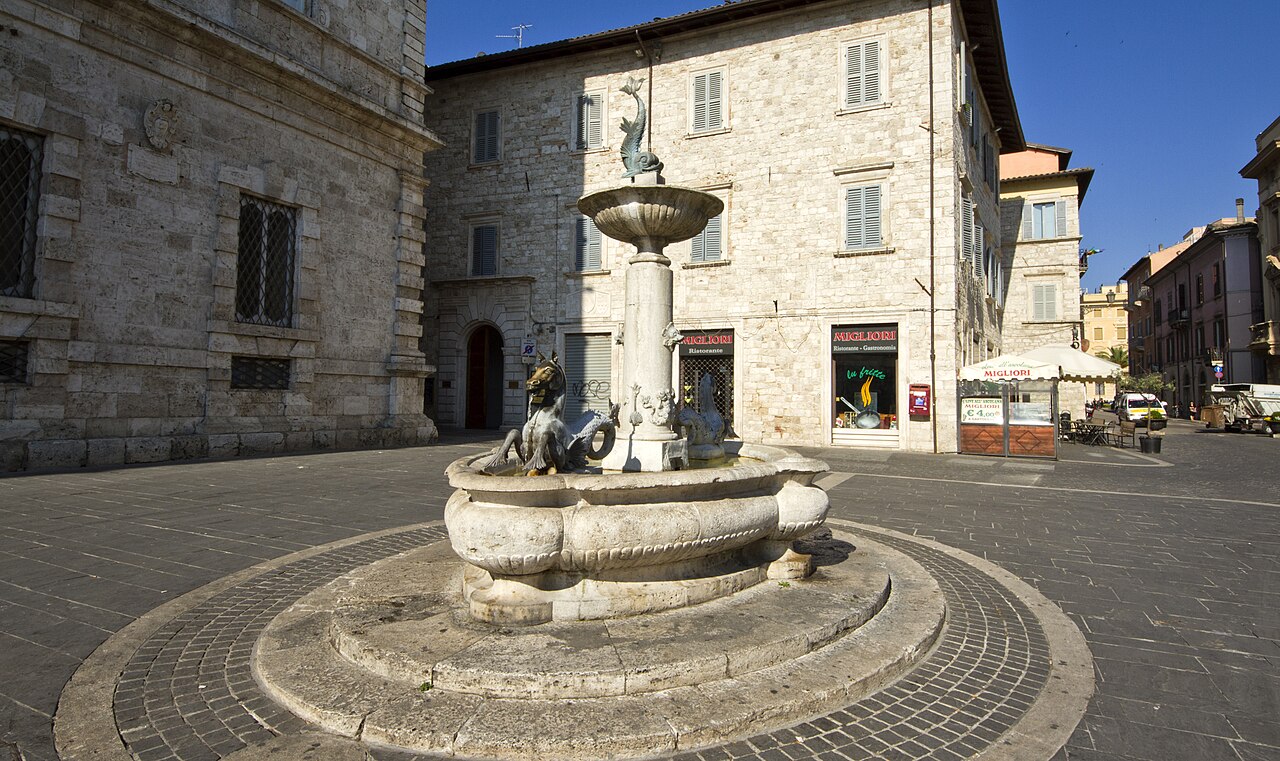
Piazza Arringo gives you an immediate introduction to the city’s religious and civic life. The cathedral and Palazzo dell’Arengo share the square, so you can begin with a church and continue into the municipal art collection without a transfer across town. First walk around the open space and its fountains; the arrangement of buildings is worth noticing before you go indoors.
The Cathedral of Sant’Emidio contains Carlo Crivelli’s signed polyptych of 1473. A polyptych is an altarpiece made of several painted panels, and this one rewards looking at the individual figures as well as the whole arrangement. The Venetian painter’s intricate surfaces offer a very different experience from the broad architectural views outside.
Visit respectfully around worship, and check access to the areas you want to see rather than assuming every part of the cathedral follows museum hours. If a service is taking place, reverse the order and begin at the Pinacoteca. This simple swap is more useful than scheduling a church visit to the minute.
Make the Pinacoteca your principal museum
The Pinacoteca Civica occupies Palazzo dell’Arengo. Its paintings are displayed among richly furnished rooms, so the interiors are part of the visit rather than a neutral backdrop. The collection includes works by Carlo Crivelli, Titian and Guido Reni, alongside later art such as Giuseppe Pellizza da Volpedo’s The Lovers’ Walk.
Allow roughly 90 minutes as a starting point, longer if painting is the main purpose of your trip. Choose a handful of works to look at closely. Moving between those and the furnished rooms gives the visit a rhythm; trying to absorb every object can leave little energy for the city outside.
The museum’s official opening times and ticket information currently distinguish the winter weekday schedule from weekends. From October, it lists Tuesday–Friday opening from 10am to 1pm and 3pm to 6pm, with Saturday and Sunday opening from 11am to 6pm. Last admission is half an hour before closing. Holiday exceptions apply, so check your exact day.
If you intend to visit several museums, compare individual tickets with the combined museum ticket at the information desk. Ask which sites and exhibitions are included and how long the ticket remains valid. Buying the combined option only makes sense if the museums you want are open during your stay.
Spend the afternoon around Piazza del Popolo
After lunch, move to Piazza del Popolo. Walk its perimeter before choosing a table: the arcades, Palazzo dei Capitani and the side of San Francesco create different views from each corner. The square is a place to spend time, not simply a location for a photograph before the next attraction.
San Francesco adds another layer to the architecture. Its side faces the square, while the principal facade is on Via del Trivio. Looking at both helps you understand the building’s shape within the surrounding streets. Step inside if it is open, then continue around the adjoining lanes rather than immediately returning along the same route.
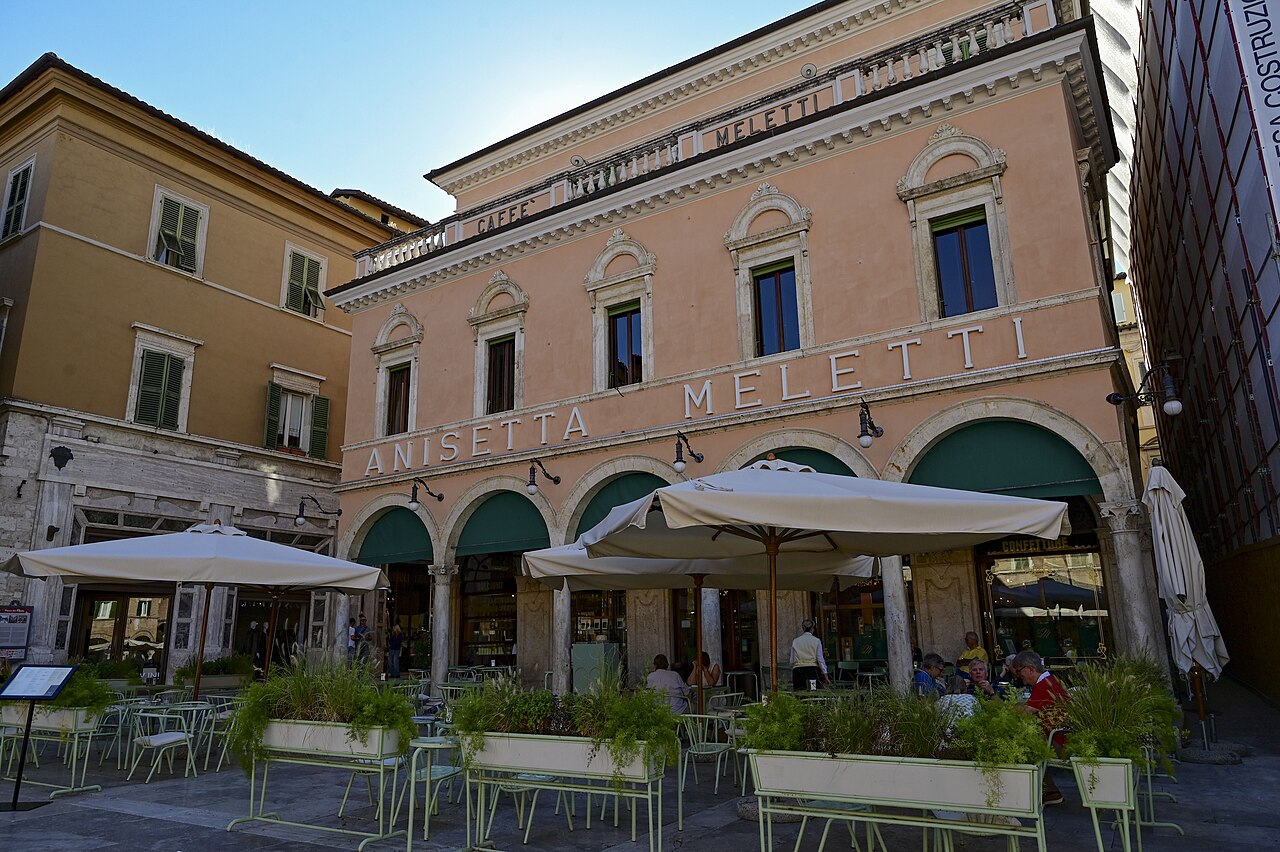
Caffè Meletti is the recognisable pink building beside Palazzo dei Capitani. Its Liberty-style interior and association with anise liqueur make it a worthwhile pause even if you normally avoid famous cafés. Decide whether you want a quick coffee or a seated break, and check the menu for the service you choose.
For a morning visit on your second day, our guide to Italian breakfast and how to order it explains the customs that can puzzle first-time visitors. Here, the attraction is taking your time with the setting. Leave the rest of the afternoon flexible enough for that.
Day two: Roman stonework, riverside lanes and a fortress
Walk towards Porta Solestà
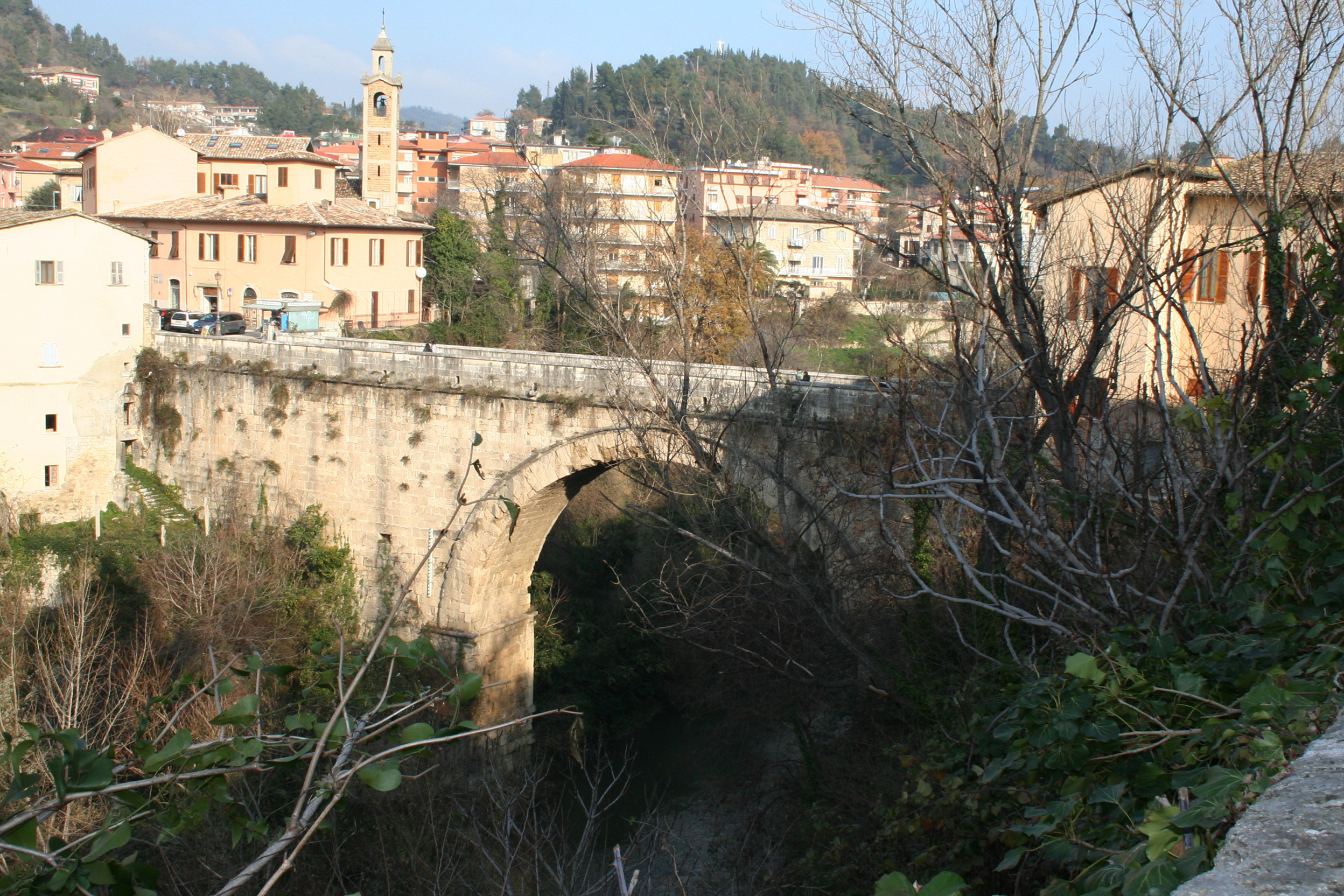
Begin with the northern side of the old centre and the Roman bridge at Porta Solestà. The bridge crosses the Tronto in a single substantial arch. The municipal tourism site dates its origins to the Augustan period; later restoration means it should not be imagined as an untouched object from antiquity.
That continuity is part of its interest. Rather than seeing Roman history only as an excavated fragment, you encounter a structure that has remained part of the city’s connections. Pause to look at the relationship between bridge, river and built-up banks. Use public viewpoints and pavements, without seeking an improvised route down to the water.
Continue along Rua delle Stelle, also known as Via delle Stelle. This lane follows the old defensive edge above the Tronto, with modest houses and traces of medieval workshops on one side. It changes the scale of the trip: after yesterday’s formal squares, the details are smaller and the river becomes more present.
Allow time to retrace a section if you enjoy it. This is a city walk, not a riverside hiking route, and its appeal lies in looking closely rather than covering distance. Wet stone can be slippery; shoes with grip are more useful here than footwear chosen only for a restaurant evening.
Choose your second museum by interest
After lunch, Forte Malatesta takes the story towards the Castellano and the eastern approach to the old centre. Its present Renaissance form incorporates earlier layers, including a twelve-sided church. The building subsequently served as a prison and now houses exhibitions and archaeological material from the area.
Choose it if defensive architecture and the changing uses of a building interest you. The fortress visitor page lists an autumn and winter lunch closure, with afternoon opening from 3pm. Aim to arrive when the afternoon session begins, rather than using the museum as a place to fill the gap immediately after an early lunch.
If twentieth-century painting appeals more, substitute the Osvaldo Licini gallery. Its collection includes Licini alongside artists such as Morandi, Fontana and De Pisis. It offers a useful counterpoint to the older art at the Pinacoteca, particularly if you want the trip to include more than Renaissance and medieval history.
Check the Licini gallery’s own opening schedule: in the winter timetable it lists Friday afternoon and Saturday–Sunday sessions, plus specified holiday openings. Do not assume that all civic museums share identical days. One well-chosen visit is preferable to reaching two closed doors.
What to eat: olives, a proper lunch and wines of the Piceno
Olive all’ascolana are the obvious starting point, but they deserve more attention than a quick mention as a snack. The traditional preparation uses the local Ascolana Tenera olive, opened around the stone, filled with meat, then breaded and fried. The olive itself should still be an important part of what you taste, rather than merely a casing for the filling.
Try a small freshly cooked portion before committing to a larger plate. They work as street food or as part of a meal, but the traditional version is not vegetarian. Ask about ingredients and preparation if you have dietary requirements; an olive-based dish should not be assumed to be meat-free.
Leave room for a seated lunch or dinner beyond the fried olives. Read the seasonal menu, ask what is prepared locally, and choose somewhere whose opening hours fit your museum plans. A long lunch is especially useful between split winter opening sessions, but reserve dinner if there is one particular restaurant you do not want to miss.
For wine, look for names from the Piceno rather than ordering a familiar Italian label by default. Pecorino and Passerina are local white-wine grapes; Rosso Piceno is a regional red. Here, Pecorino on a wine list refers to the grape, not a cheese. Ask for a glass that suits your food and the style you enjoy.
Anisetta, associated with Meletti, offers another local flavour: anise rather than grapes. You need not order it to appreciate the café, and coffee or another non-alcoholic drink is an equally sensible choice. The pleasure of the stop is also architectural: look above the counter and towards the furnishings, rather than spending the whole visit facing your phone.
Getting to Ascoli and moving around
By train
The usual rail approach is via San Benedetto del Tronto on the Adriatic main line, connecting with regional services to Ascoli Piceno. Search for the complete journey to Ascoli Piceno, not just the coastal station. Depending on the service and your starting point, the connection may involve a change; check the itinerary rather than assuming a through train.
Trenitalia’s regional timetable shows many journeys between Ascoli and San Benedetto taking roughly 40–50 minutes, with some faster services. That is the train journey alone, not the total transfer from a coastal hotel or your long-distance arrival platform. For your date, use Trenitalia’s journey planner and allow a sensible connection margin, particularly before an onward flight.
Ascoli’s station is outside the main historic squares. Plan the final leg to your accommodation before arriving, especially with luggage, rain or limited mobility. Ask the hotel whether walking is practical for your bags or whether it can advise on a taxi. Our guide to trains in Italy, stations and tickets covers the wider rail-planning questions.
By car: park first, explore second
From the Adriatic motorway corridor, the city is reached using the inland connection from the San Benedetto del Tronto area. A car becomes useful if you plan to continue into the surrounding hills, but it adds little to the two days described here.
The historic centre includes a ZTL, a restricted traffic zone, as well as pedestrian areas. A hotel booking does not automatically grant permission to drive through every restricted street. Ask your accommodation for the permitted arrival route, any number-plate registration procedure and the exact luggage-drop arrangements before entering.
The municipal visitor site lists Torricella, Ex Seminario and Ex Gil among the parking options. Use its arrival and parking information as a starting point, then confirm current access, charges and overnight conditions. Choose parking in relation to your hotel, not solely the nearest pin to Piazza del Popolo.
Walking and accessibility
The centre is compact, but compact does not mean step-free. Paving, thresholds, church entrances and historic hotel layouts can make a short route more demanding than its distance suggests. If you need accessible rooms or step-free museum access, request specific information about the complete route, including lifts and bathrooms. Avoid relying on a general “accessible” label.
When to visit and how to adapt the plan
Spring and autumn are good starting choices for a walking-focused break. You can divide the day between interiors and streets without making beach weather part of the decision. Our month-by-month guide to visiting Italy provides the broader seasonal context if Ascoli is one stop on a longer trip.
Winter suits travellers who enjoy museums, cafés and evenings close to their accommodation. Plan the river walk for daylight, carry a rain layer, and pay attention to split opening hours. A Sunday–Monday stay can still work, but put the museums on Sunday and leave outdoor wandering for Monday; do not expect Monday to offer the same indoor choices.
In summer, move the longer outdoor sections towards the cooler part of the day and use the warmest hours for lunch or a museum. Check the city’s event calendar before booking if quiet evenings matter to you. A compact centre can feel quite different during a major celebration, and an ordinary weekend itinerary should not be mistaken for an event-access plan.
For rain, keep the Pinacoteca as the main anchor and select a second museum that is actually open. For a shorter trip, retain the two squares, the cathedral and one museum. For an extra day, choose either a coastal extension or the Piceno hills, then plan its transport separately. Offida and the surrounding countryside are not stops to squeeze into the same walking day.
Where to stay: choose a base that supports the trip
For this itinerary, a central room is usually the most useful choice. Returning briefly between a museum and dinner becomes easy, and you can enjoy the squares after dark without arranging another journey. A countryside stay solves a different problem: it makes more sense when rural excursions are central to the holiday.
| Base | Best reason to choose it | What to check |
|---|---|---|
| Historic centre | Walking to sights, dinner and evening cafés | ZTL arrival, stairs or lift, room position and potential street noise |
| Edge of the centre | A balance between city access and a car-based onward journey | The real walking route, parking availability and luggage handling |
| Surrounding countryside | A longer stay with time in the hills | Transport for every evening out and whether on-site dining is available |
Palazzo Guiderocchi for a historic-centre stay
Palazzo Guiderocchi, at Via Cesare Battisti 3, occupies a sixteenth-century residence close to Piazza del Popolo. Its position fits a break organised around the central squares, while the historic building provides continuity with the architecture you have come to see. This is a location-led choice for travellers who want to spend their time in town.
Expedia lists Superior Double Rooms, Deluxe Double Rooms and Junior Suites, among other categories. The hotel’s own room names differ, so match the actual listing and photographs to the room you select. Do not assume that every room has the same frescoes, layout or bed configuration.
The Expedia property page lists air conditioning, Wi-Fi and parking availability. Confirm the parking arrangement and charge, breakfast inclusion for your chosen rate, and any accessibility requirements before paying. A historic address is appealing, but the room’s practical details matter as much as the building’s atmosphere.
Read our Palazzo Guiderocchi accommodation guide for the dedicated overview, or browse places to stay in Marche if you are choosing several bases across the region.
Italy2Love may earn a commission if you book through the Expedia link below.
Check Palazzo Guiderocchi availability on Expedia for your dates, then compare the room description, cancellation terms and total price. A listed property is not a guarantee of availability for every stay.
Before you book your two nights
Choose your museum days first, then the accommodation that makes those days comfortable. For a winter art break, check the Licini gallery’s limited opening pattern; for a car-free trip, match your rail arrival to the hotel’s check-in arrangements. With those decisions made, Ascoli Piceno becomes a straightforward place to slow down: two squares to return to, one river walk, and enough time for the art and food between them.
Featured photograph: Piazza del Popolo by Alessandro Bonvini, CC BY 2.0; resized.
Keep exploring Italy