Visiting Naples: Complete Travel Guide Like a Local
Naples Travel Guide – There’s nowhere quite like Naples. This is a city that grabs you by the heart and doesn’t let go—chaotic and beautiful, ancient and alive, where every corner tells a story and every meal feels like coming home.
Picture this: You’re walking through narrow streets where laundry hangs like colorful flags between centuries-old buildings. The scent of wood-fired pizza drifts from a doorway. Vespas zip past as locals argue passionately about football, their hands painting the air. In the distance, Mount Vesuvius watches over the bay, a reminder that this city has survived everything history could throw at it—and emerged with its soul intact.
Naples isn’t polished. It’s raw, real, and unapologetically itself. This is where pizza was born, where coffee is an art form, where ancient Greek streets lie beneath your feet, and where the gateway to Pompeii, the Amalfi Coast, and Capri begins.
If Rome is Italy’s grand stage and Florence its Renaissance masterpiece, Naples is its beating heart—passionate, unpredictable, and unforgettable.
Why Visit Naples?

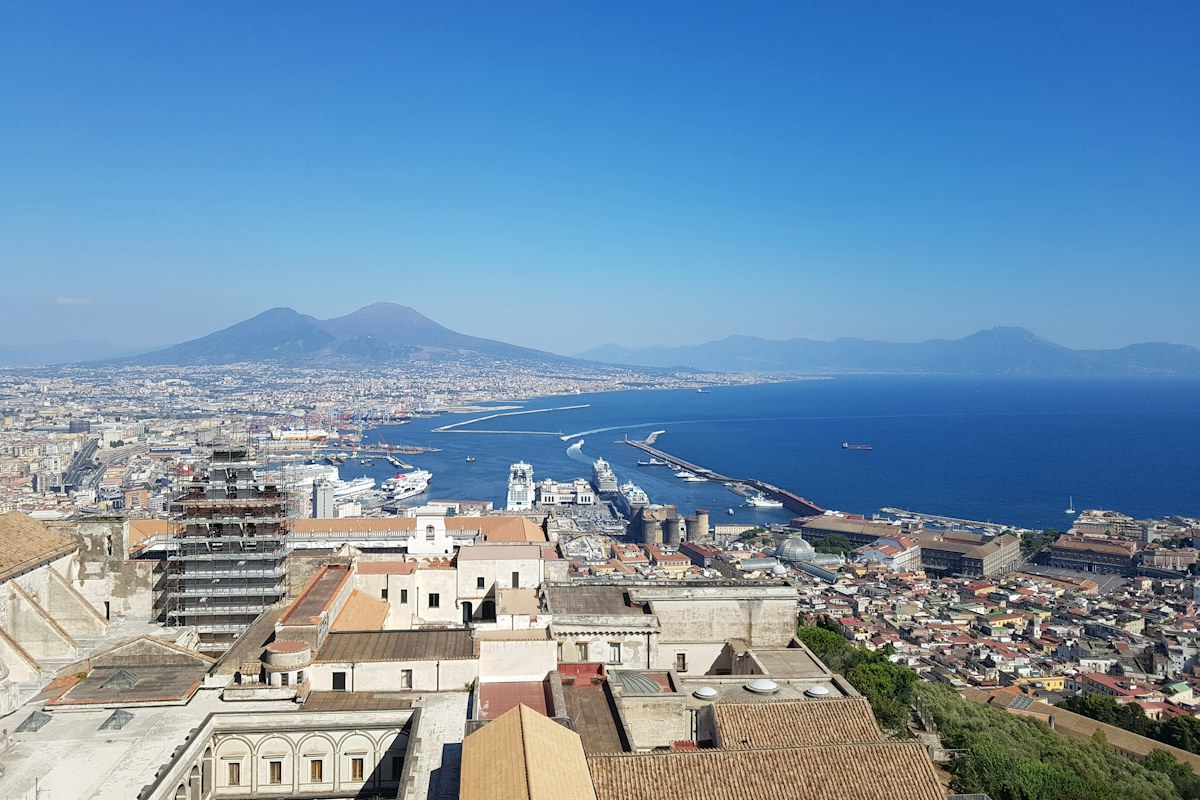
The stunning Bay of Naples with Castel dell’Ovo and Mount Vesuvius creating one of Italy’s most iconic views
A City of Contrasts and Authenticity
Naples doesn’t try to impress you. It simply is. And that’s exactly what makes it so captivating.
This is one of Europe’s oldest continuously inhabited cities, where Greek ruins, Roman catacombs, Baroque churches, and modern street art coexist in glorious chaos. It’s a UNESCO World Heritage Site where history isn’t preserved behind glass—it’s lived in, walked on, and woven into daily life.
The contrasts are what make Naples magnetic. Elegant boulevards open onto gritty alleyways. World-class museums sit blocks from street markets where vendors shout over each other. Michelin-starred restaurants share neighborhoods with hole-in-the-wall pizzerias that have been making the same perfect margherita for three generations.
But what truly sets Naples apart is its people. Neapolitans are warm, loud, expressive, and fiercely proud of their city. They’ll argue about the best pizzeria, insist you try their grandmother’s recipe, and treat you like family after five minutes of conversation.
Gateway to Italy’s Greatest Treasures
Naples’ location is unbeatable. Within an hour, you can stand in the ruins of Pompeii, hike up an active volcano, sail to the island paradise of Capri, or wind along the Amalfi Coast’s legendary cliffs.
This makes Naples the perfect base for exploring Campania—Southern Italy’s most dramatic region. You get the authenticity and affordability of a real Italian city, plus easy access to some of the country’s most iconic destinations.
And unlike those picture-perfect coastal towns, Naples gives you Italy unfiltered. This is where locals actually live, where traditions haven’t been polished for tourists, where you experience Italian culture at its most genuine.
Best Time to Visit Naples
Spring (March-May): Perfect Weather
Spring is Naples at its finest. Temperatures hover between 15-22°C (59-72°F), perfect for walking the historic center and climbing to hilltop castles without breaking a sweat. The city blooms with wisteria and bougainvillea, and outdoor cafés fill with locals enjoying the sunshine.
Easter brings special processions and traditional pastries like pastiera napoletana. May is especially beautiful—warm enough for the beach but not yet crowded with summer tourists.
Best for: Sightseeing, day trips to Pompeii and the Amalfi Coast, outdoor dining, photography
Summer (June-August): Beach Season
Summer in Naples is hot—often reaching 30°C (86°F) or higher. But it’s also when the city truly comes alive. The waterfront buzzes with activity, beach clubs open along the coast, and evening passeggiata (strolls) last until midnight.
July and August are peak tourist season, especially for Capri and the Amalfi Coast. Expect crowds and higher prices, but also the most vibrant atmosphere and the best beach weather.
Best for: Beach days, island hopping, late-night dining, festivals and concerts
Fall (September-November): Ideal Conditions
Many consider fall the absolute best time to visit Naples. September still feels like summer but with fewer crowds. October offers perfect weather for exploring—warm days, cool evenings, and that golden Mediterranean light photographers dream about.
This is also harvest season. Restaurants feature fresh porcini mushrooms, chestnuts, and new wine. The Amalfi Coast is still accessible but far less crowded than summer.
Best for: Food experiences, hiking Vesuvius, exploring without crowds, wine tasting
Winter (December-February): Quiet & Authentic
Winter is Naples’ secret season. Temperatures rarely drop below 8°C (46°F), and many days are sunny and mild. You’ll have museums and churches almost to yourself, and locals treat you like a friend rather than just another tourist.
Christmas markets fill Spaccanapoli, and nativity scene artisans display their crafts on Via San Gregorio Armeno. January sales make shopping a bargain. The only downside? Some Amalfi Coast towns close, and ferry service to the islands is limited.
Best for: Budget travel, authentic experiences, museums and culture, avoiding crowds
Top 10 Things to Do in Naples
1. Explore the Historic Centro Storico
Naples’ historic center is a UNESCO World Heritage Site and one of the largest in Europe. This is where the city’s 2,500-year history unfolds in layers—Greek walls beneath Roman streets beneath medieval churches beneath Baroque palaces.
Start at Spaccanapoli, the impossibly straight street that cuts through the heart of the old city, following the ancient Greek road plan. Wander into churches where gold drips from every surface, peek into courtyards hiding Renaissance fountains, and get delightfully lost in alleyways barely wide enough for two people.
Don’t miss San Gregorio Armeno, the street of nativity scene artisans where workshops have been carving figurines for generations. And make sure to visit the stunning Complesso Monumentale di Santa Chiara, with its majolica-tiled cloister that feels like stepping into a painting.
Insider tip: The centro storico is best explored on foot in the morning when shops are opening and locals are buying fresh bread. Wear comfortable shoes—those cobblestones are ancient and uneven.
2. Visit the Naples Archaeological Museum
This isn’t just one of Italy’s best museums—it’s one of the world’s finest collections of Greco-Roman antiquities. If you’re planning to visit Pompeii or Herculaneum, come here first. The museum houses most of the treasures excavated from those sites, including stunning mosaics, frescoes, and the famous Secret Cabinet of erotic art.
The Farnese Collection alone is worth the visit, featuring massive Roman sculptures like the Farnese Bull and Farnese Hercules. And the Egyptian collection rivals any outside Cairo.
Give yourself at least 2-3 hours. The museum is massive, and every room reveals something extraordinary.
Pro tip: Book tickets online to skip the line, and consider a guided tour to understand the context of what you’re seeing.
3. Discover Underground Naples (Napoli Sotterranea)
Beneath Naples’ chaotic streets lies another city entirely. Napoli Sotterranea takes you 40 meters underground into ancient Greek quarries, Roman aqueducts, and World War II bomb shelters.
The tour is atmospheric and slightly claustrophobic—you’ll squeeze through narrow passages by candlelight and see where 4,000 Neapolitans sheltered during Allied bombing raids. It’s a fascinating glimpse into the city’s hidden history and a welcome escape from the heat in summer.
For more underground adventures, check out the Catacombs of San Gennaro or the Bourbon Tunnel, which runs beneath the Royal Palace.
Book ahead: Tours are limited in size and fill up quickly, especially in peak season.
4. Climb to Castel Sant’Elmo for Panoramic Views
Perched on Vomero hill, this 14th-century fortress offers the single best view of Naples. From its star-shaped ramparts, you can see the entire city sprawling below, the Bay of Naples stretching to Capri, and Vesuvius looming on the horizon.
The castle itself is impressive—massive stone walls and vaulted chambers that once imprisoned political prisoners. But most visitors come for the view, especially at sunset when the city glows golden and pink.
You can reach Sant’Elmo via the Montesanto funicular or by walking up through the elegant Vomero neighborhood. Either way, bring your camera.
Combine with: Certosa di San Martino monastery next door, which houses a museum and has equally stunning views.
5. Stroll Along the Lungomare Waterfront
The Lungomare is where Naples shows its elegant side. This seafront promenade stretches for kilometers along the bay, lined with palm trees, Belle Époque hotels, and cafés with million-dollar views.
Start at Castel dell’Ovo, the city’s oldest castle sitting on a tiny island, then walk toward Mergellina, stopping for gelato or an espresso at one of the waterfront bars. On weekends, the road closes to traffic and fills with families, joggers, and street performers.
This is Naples at its most relaxed—where locals come to see and be seen, where the chaos of the centro storico feels a world away, and where you can finally understand why people fall in love with this city.
Best time: Late afternoon into evening, when the light is soft and the passeggiata begins.
6. Marvel at the Duomo di San Gennaro
Naples’ cathedral is dedicated to San Gennaro, the city’s patron saint whose dried blood miraculously liquefies three times a year. Neapolitans believe that if the blood fails to liquefy, disaster will strike the city—a tradition that draws thousands of faithful believers.
The cathedral itself is a stunning mix of styles, from Gothic to Baroque, with a ceiling so ornate it’s almost overwhelming. Don’t miss the Chapel of the Treasure of San Gennaro, dripping with silver and precious stones.
Beneath the Duomo, you can explore the archaeological zone with Greek and Roman ruins, including an ancient baptistery with beautiful mosaics.
Miracle dates: First Saturday in May, September 19, and December 16—if you’re in Naples on these dates, witnessing the ceremony is unforgettable.
7. Experience Quartieri Spagnoli Street Life
The Spanish Quarter is Naples at its most authentic and unfiltered. This dense grid of narrow streets was built in the 16th century to house Spanish troops, and it still feels like a world unto itself—chaotic, colorful, and completely captivating.
Laundry hangs between buildings like prayer flags. Shrines to Maradona (Naples’ football god) appear on street corners. Tiny shops sell everything from fresh mozzarella to vintage Vespa parts. And the energy is electric—voices echo off stone walls, scooters weave through impossibly tight spaces, and life unfolds in full view.
This isn’t a sanitized tourist attraction. It’s a living neighborhood where real Neapolitans go about their daily lives. Some find it overwhelming; others find it magical. Either way, it’s essential Naples.
Safety note: The Quartieri Spagnoli has a rough reputation, but it’s generally safe during the day. Keep valuables secure, stay aware of your surroundings, and you’ll be fine.
8. Visit Capodimonte Museum and Park
Perched on a hill overlooking the city, the Royal Palace of Capodimonte houses one of Italy’s finest art collections. Caravaggio, Titian, Raphael, Botticelli—the masterpieces here rival anything in Rome or Florence, but with a fraction of the crowds.
The palace itself is stunning, with royal apartments decorated in 18th-century splendor. But don’t miss the park surrounding it—120 hectares of gardens, woods, and panoramic viewpoints where Neapolitan families picnic on weekends.
This is a half-day experience that combines world-class art with a peaceful escape from the city’s intensity.
Getting there: Bus or taxi from the centro storico (about 15-20 minutes).
9. Take a Day Trip to Pompeii and Vesuvius
No visit to Naples is complete without seeing Pompeii—the Roman city frozen in time by Vesuvius’ eruption in 79 AD. Walking through streets where Romans walked 2,000 years ago, seeing homes with frescoes still vibrant, standing in the forum where daily life once unfolded—it’s one of the most powerful historical experiences in the world.
Combine Pompeii with a hike up Mount Vesuvius itself. The crater rim offers stunning views across the Bay of Naples, and there’s something surreal about standing on the volcano that buried an entire city.
Recommended tour: Pompeii and Mount Vesuvius Day Trip from Naples includes skip-the-line access, expert guides, and transportation—making it easy and enriching.
10. Explore the Amalfi Coast from Naples
The Amalfi Coast is one of the world’s most beautiful stretches of coastline, and Naples is the perfect base for exploring it. Positano’s pastel houses tumbling down cliffs, Amalfi’s dramatic cathedral, Ravello’s gardens floating above the sea—each town is more stunning than the last.
You can do it independently via train and bus, but the winding coastal roads can be stressful. Many travelers prefer organized tours that handle the logistics and stop at multiple towns in one day.
Recommended tour: Amalfi Coast Full-Day Tour from Naples covers Positano, Amalfi, and Ravello with plenty of photo stops and free time to explore.
Where to Eat in Naples: Pizza and Beyond
The Birthplace of Pizza: Where to Find the Best

There’s pizza, and then there’s Neapolitan pizza—fresh from a wood-fired oven, the way it’s been made for centuries
Let’s be clear: pizza was invented in Naples, and Neapolitan pizza is still the gold standard. This isn’t the thick, heavily topped American version. It’s simple, elemental—soft, chewy crust with a slight char, minimal toppings, fresh mozzarella, and San Marzano tomatoes.
The classic is pizza Margherita, created in 1889 to honor Queen Margherita with the colors of the Italian flag: red tomatoes, white mozzarella, green basil. That’s it. And it’s perfect.
Where to go:
- L’Antica Pizzeria da Michele – Made famous by “Eat Pray Love,” but genuinely excellent. They only make two pizzas: Margherita and Marinara. Expect lines.
- Sorbillo – Multiple locations, always packed, consistently delicious. The original on Via dei Tribunali is the most atmospheric.
- Starita – Locals’ favorite in the Materdei neighborhood. Try the montanara (fried pizza) before your main pizza.
- 50 Kalò – Modern take on tradition with creative toppings and a focus on quality ingredients.
- Concettina ai Tre Santi – In the Sanità neighborhood, worth the trip for some of the city’s best pizza in a less touristy area.
Pizza etiquette: Neapolitans eat pizza with a fork and knife, not hands. Order a whole pizza per person—they’re meant to be individual servings. And don’t ask for pineapple. Seriously.
Want to learn the secrets yourself? Naples Pizza Making Class teaches you to make authentic Neapolitan pizza from scratch, then you eat your creation with local wine.
Traditional Neapolitan Dishes You Must Try
Pizza is just the beginning. Neapolitan cuisine is rich, flavorful, and deeply connected to the sea and the land around Vesuvius.
Must-try dishes:
- Pasta alla Genovese – Despite the name, this is pure Naples: pasta with a rich onion and beef ragù that cooks for hours. It’s comfort food at its finest.
- Spaghetti alle Vongole – Spaghetti with fresh clams, garlic, white wine, and parsley. Simple and sublime, especially near the waterfront.
- Parmigiana di Melanzane – Layered eggplant with tomato sauce, mozzarella, and parmesan. Every nonna has her own version.
- Frittura di Paranza – Mixed fried seafood, crispy and light, perfect with a cold beer by the sea.
- Ragù Napoletano – Sunday sauce that simmers all morning, served with pasta and the meat eaten as a second course.
For an in-depth exploration of Neapolitan food culture, check out our guide to Italian Food Facts and discover why Italian Breakfast traditions are so different from what you might expect.
Street Food: Eating Like a Local
Naples’ street food scene is legendary. These aren’t tourist gimmicks—they’re what Neapolitans actually eat.
Essential street foods:
- Pizza Fritta – Fried pizza pocket stuffed with ricotta, cicoli (pork cracklings), and tomato. Indulgent and delicious.
- Cuoppo – Paper cone filled with fried seafood or vegetables. Perfect for eating while walking.
- Tarallo – Savory ring-shaped bread with almonds and pepper, sold from street carts.
- Panino Napoletano – Sandwich with various fillings, but try it with polpo (octopus) or salsiccia e friarielli (sausage and bitter greens).
Where to find it: Via dei Tribunali and the streets around Porta Nolana market are street food central.
Experience it all on a Naples Street Food Tour that takes you to family-run spots tourists never find.
Best Cafés for Coffee and Sfogliatella
Coffee in Naples is serious business. Espresso should be strong, hot, and consumed quickly at the bar—not sipped slowly at a table (that costs extra).
Historic cafés:
- Gambrinus – Elegant Belle Époque café near Piazza del Plebiscito, perfect for people-watching.
- Gran Caffè La Caffettiera – Beautiful Art Nouveau interior and excellent coffee.
- Scaturchio – Famous for sfogliatella, the shell-shaped pastry filled with sweet ricotta and candied fruit. Get there early for the freshest.
- Attanasio – Locals line up here for sfogliatella riccia (crispy) and frolla (soft). Both are excellent.
Learn more about Italian coffee culture in our Italian Breakfast Guide.
Seafood by the Bay
With the Mediterranean at its doorstep, Naples does seafood exceptionally well. The best restaurants cluster around the waterfront neighborhoods of Mergellina and Borgo Marinari.
Top seafood spots:
- Zi Teresa – Right on the water in Borgo Marinari, with views of Castel dell’Ovo and impeccably fresh fish.
- La Cantina di Via Sapienza – Tiny, authentic, and beloved by locals for crudo (raw seafood) and pasta.
- Taverna dell’Arte – Modern approach to traditional seafood dishes in an elegant setting.
Naples’ Most Authentic Neighborhoods
Centro Storico: The Historic Heart
The centro storico is where most visitors spend their time, and for good reason. This UNESCO-listed maze of streets contains 2,500 years of history in less than two square kilometers.
Spaccanapoli cuts straight through the middle, lined with churches, palaces, and shops. Via dei Tribunali runs parallel, famous for its pizzerias. And Via San Gregorio Armeno is the artisan street where nativity scene makers have worked for generations.
It’s crowded, chaotic, and absolutely essential. Stay here if you want to be in the thick of Naples’ energy.
Quartieri Spagnoli: Raw and Real Naples

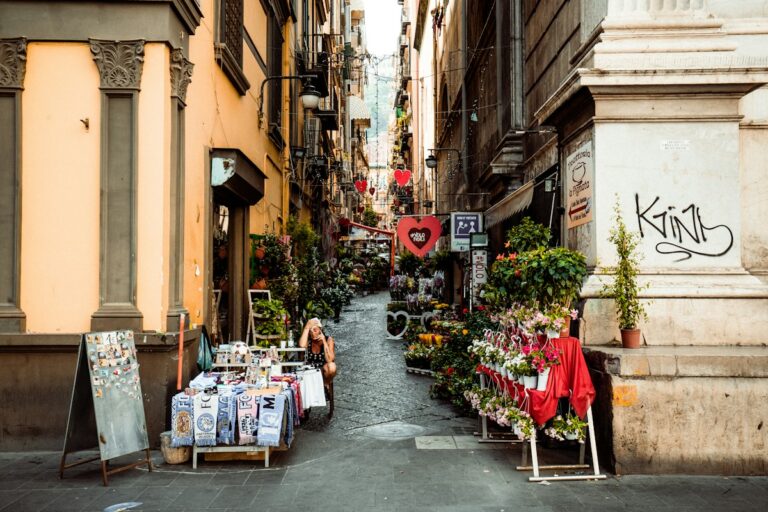
Laundry hanging between buildings, scooters on cobblestones, locals chatting—this is the authentic Naples that captures hearts
The Spanish Quarter is not for everyone. It’s gritty, loud, and unapologetically working-class. But it’s also where you see Naples at its most authentic—where life unfolds in the streets, where neighbors know each other for generations, where traditions survive unchanged.
In recent years, street art has transformed many walls into open-air galleries, and a few hip bars and restaurants have opened. But it remains fundamentally unchanged—a neighborhood that lives by its own rules.
Visit during the day to experience the atmosphere safely. And if you’re brave, climb the steep streets to the top for unexpected views over the city.
Vomero: Elegant Hills with Views
Vomero is Naples’ upscale residential neighborhood, perched on a hill above the chaos below. Wide streets, elegant buildings, upscale shops, and three funiculars connecting it to the city center give it a completely different feel.
This is where middle-class Neapolitans live, where you’ll find the best views (from Castel Sant’Elmo and San Martino), and where you can escape the intensity of the centro storico without leaving the city.
Stay here if you prefer quiet evenings and don’t mind taking the funicular down to the historic center.
Chiaia: Sophisticated Seaside District
Chiaia is Naples’ most elegant neighborhood—waterfront promenades, designer boutiques, Art Nouveau buildings, and some of the city’s best restaurants and nightlife.
Via Chiaia and Via dei Mille are the main shopping streets. The Villa Comunale park stretches along the waterfront. And Piazza dei Martiri is the heart of the neighborhood, surrounded by cafés perfect for aperitivo.
This is where you come for sophistication without sacrificing authenticity—where Neapolitans dress up for their evening passeggiata and where you can enjoy the city’s elegance alongside its edge.
Day Trips from Naples
Pompeii: Walking Through Ancient History

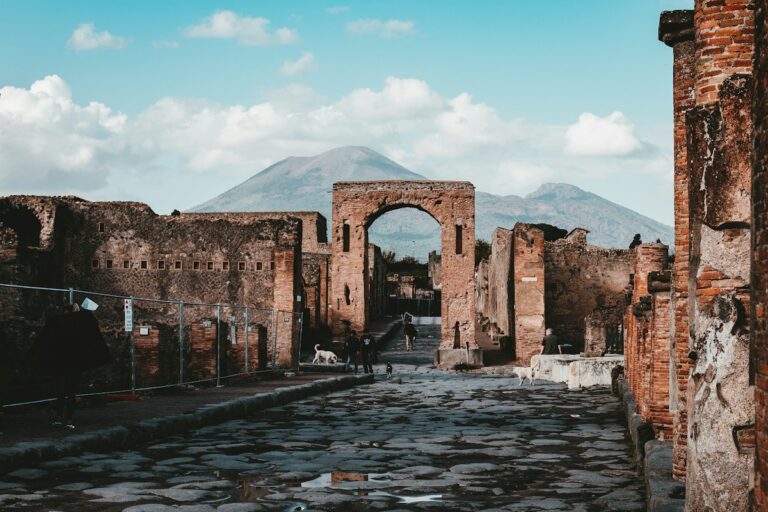
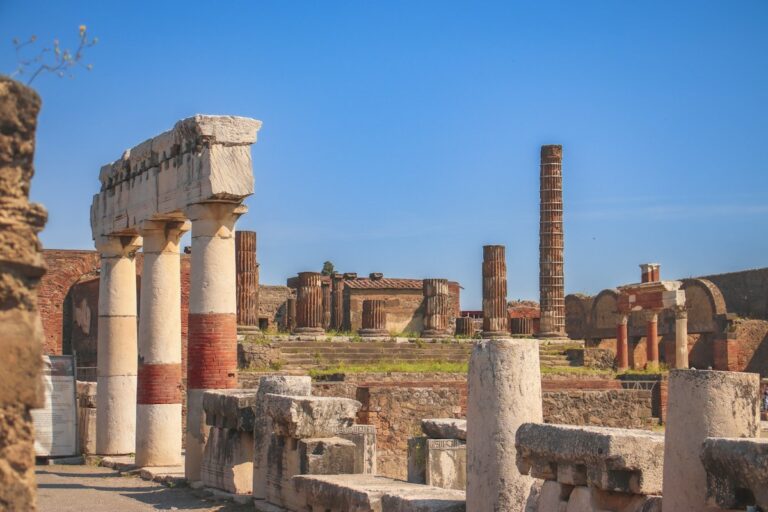
Stand where Romans walked 2,000 years ago, with the volcano that preserved this ancient city looming behind you
Pompeii is one of the world’s most important archaeological sites—a Roman city preserved exactly as it was when Vesuvius erupted in 79 AD. Walking through streets where Romans walked, seeing homes with frescoes still vibrant, standing in the forum where daily life once unfolded—it’s profoundly moving.
Give yourself at least 3-4 hours. The site is vast, and there’s so much to see: the Forum, the amphitheater, the brothel with its explicit frescoes, the plaster casts of victims, the grand villas with their stunning mosaics.
Getting there: Circumvesuviana train from Naples to Pompeii Scavi-Villa dei Misteri station (about 40 minutes, €3-4).
Better option: Skip-the-Line Pompeii Guided Tour with an archaeologist who brings the ruins to life with stories and context you’d miss on your own.
Mount Vesuvius: Hiking an Active Volcano
Vesuvius is still active—the most dangerous volcano in Europe, with 3 million people living in its shadow. But it’s been quiet since 1944, and hiking to the crater rim is safe and spectacular.
The trail to the summit takes about 30 minutes from the parking area, winding up through volcanic rock to the crater rim. From there, you can peer into the crater and see steam vents, and the 360-degree views across the Bay of Naples are breathtaking.
Combine it: Most visitors do Pompeii and Vesuvius in one day. Pompeii and Vesuvius Combo Tour handles all logistics and timing perfectly.
Amalfi Coast: Positano, Amalfi, and Ravello

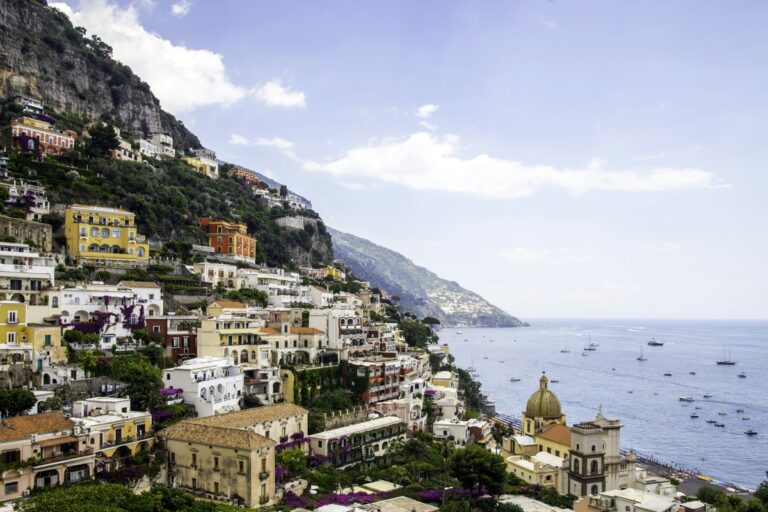
Just an hour from Naples, the Amalfi Coast’s dramatic cliffs and pastel villages create one of the world’s most breathtaking landscapes
The Amalfi Coast is one of the world’s most beautiful stretches of coastline—dramatic cliffs plunging into turquoise sea, pastel villages clinging to hillsides, lemon groves perfuming the air, and views that literally take your breath away.
Positano is the postcard favorite—colorful houses cascading down to a pebble beach, chic boutiques, and an atmosphere of effortless elegance.
Amalfi is the coast’s namesake town, with a stunning cathedral, charming piazzas, and a more authentic, less touristy feel than Positano.
Ravello sits high above the coast, famous for its gardens (Villa Cimbrone and Villa Rufolo) with views that inspired Wagner and countless artists.
Getting there: Train to Sorrento, then SITA bus along the coast. Or take a Full-Day Amalfi Coast Tour that covers all three towns without the stress of driving those hairpin turns yourself.
For more coastal inspiration, explore our guide to Italian Garden Gems.
Capri: Island Paradise
Capri is the jet-set island—glamorous, expensive, and undeniably beautiful. The Blue Grotto’s ethereal light, the Faraglioni rock formations rising from the sea, the Gardens of Augustus with views over the Marina Piccola—it’s easy to see why emperors and celebrities have been coming here for centuries.
Getting there: Hydrofoil from Naples’ Molo Beverello port (about 50 minutes, €20-25 each way).
What to do: Capri Island Day Trip includes boat transfers, island tour, and Blue Grotto visit (weather permitting).
Herculaneum: Pompeii’s Lesser-Known Neighbor
Herculaneum was buried by the same eruption as Pompeii, but it’s smaller, better preserved, and far less crowded. Where Pompeii was buried in ash, Herculaneum was engulfed in superheated mud that carbonized wood and preserved organic materials.
You can see intact wooden furniture, food, and even a library of scrolls. The houses are more complete, with upper floors and roofs still standing. It’s more intimate and, in some ways, more moving than Pompeii.
Getting there: Circumvesuviana train to Ercolano Scavi station (about 20 minutes from Naples).
Where to Stay in Naples
Centro Storico: For History Lovers
Stay in the historic center if you want to be in the heart of the action. You’ll be steps from major sights, the best pizzerias, and the most atmospheric streets. But expect noise—this is Naples at its loudest and most vibrant.
Best for: First-time visitors, history enthusiasts, those who want to walk everywhere.
Chiaia: For Elegance and Nightlife
Chiaia offers sophistication, waterfront location, excellent restaurants, and Naples’ best nightlife. It’s more expensive but also more polished, with better hotels and a more relaxed atmosphere.
Best for: Couples, those seeking comfort and style, nightlife lovers.
Vomero: For Views and Tranquility
Vomero gives you residential Naples with stunning views, good restaurants, and easy funicular access to the centro storico. It’s quieter and feels safer, but less atmospheric.
Best for: Families, those who prefer quiet evenings, view seekers.
Lungomare: For Seaside Charm
The waterfront offers beautiful views, elegant hotels, and a more relaxed pace. You’re slightly removed from the historic center but still within easy reach.
Best for: Those who want sea views, romantic getaways, a balance of elegance and accessibility.
Practical Tips for Visiting Naples
Getting Around Naples
Naples is walkable, especially the centro storico. But the city also has metro, buses, funiculars, and taxis.
Metro: Two lines (Line 1 and Line 2) connect major areas. Line 1 stations feature contemporary art installations—they’re worth seeing in themselves.
Funiculars: Four funiculars connect the waterfront to Vomero hill. They’re efficient and offer great views.
Buses: Extensive but can be confusing. Google Maps works well for planning routes.
Taxis: Use official white taxis or apps like FreeNow. Agree on a price before getting in, or insist on the meter.
Driving: Don’t. Naples traffic is legendary, parking is impossible, and you don’t need a car in the city.
Safety Tips and What to Watch For
Naples has a reputation for crime, but most visitors have no problems. Use common sense:
- Keep valuables secure and out of sight
- Be aware of your surroundings, especially in crowded areas
- Watch for scooter thieves who snatch bags
- Avoid deserted areas at night
- The Quartieri Spagnoli and train station area require extra awareness
That said, violent crime against tourists is rare. Most issues are pickpocketing and bag snatching, which are preventable.
For more on navigating Italy safely, check our Driving in Italy Guide and Tipping in Italy customs.
Money-Saving Advice
- Eat pizza for lunch (it’s cheaper) and save dinners for other dishes
- Drink coffee at the bar, not seated (it’s half the price)
- Buy a daily or multi-day transit pass if using public transport frequently
- Many churches are free; museums offer free entry on certain Sundays
- Stay in less touristy neighborhoods for better value accommodations
- Shop at local markets for picnic supplies
Essential Italian Phrases for Naples
Neapolitans appreciate any effort to speak Italian, even if it’s just a few words:
- Buongiorno – Good morning/hello
- Grazie – Thank you
- Per favore – Please
- Scusi – Excuse me
- Quanto costa? – How much does it cost?
- Il conto, per favore – The check, please
- Dov’è…? – Where is…?
- Non parlo italiano – I don’t speak Italian
Learn more about Italian customs in our Interesting Facts About Italy guide.
Frequently Asked Questions
Is Naples safe for tourists?
Yes, Naples is generally safe for tourists who use common sense. Petty crime like pickpocketing exists, especially in crowded tourist areas and on public transport, but violent crime against tourists is rare. Stay aware of your surroundings, keep valuables secure, and avoid deserted areas at night. Most visitors have wonderful experiences without any issues.
How many days do you need in Naples?
3-4 days is ideal. This gives you 1-2 days to explore Naples itself (historic center, museums, neighborhoods, food) and 1-2 days for day trips to Pompeii, the Amalfi Coast, or Capri. If you’re short on time, 2 days works—one for the city, one for Pompeii. But Naples rewards those who linger.
Is Naples worth visiting?
Absolutely. Naples offers authentic Italian culture, incredible food, world-class history and art, and access to some of Italy’s most famous destinations—all at a fraction of the cost of Rome or Florence. It’s not polished or easy, but it’s real, passionate, and unforgettable. If you want to experience Italy beyond the tourist veneer, Naples is essential.
What’s the best way to get from Naples to the Amalfi Coast?
The easiest way is an organized tour that handles transportation and stops at multiple towns. If going independently, take the Circumvesuviana train to Sorrento (about 1 hour), then catch a SITA bus along the coast. The bus ride is scenic but can be nerve-wracking on those narrow, winding roads. Alternatively, private drivers offer more comfort and flexibility but cost more.
Can you do Pompeii and Amalfi Coast in one day?
It’s possible but rushed. Pompeii deserves 3-4 hours minimum, and the Amalfi Coast is best enjoyed at a relaxed pace. If you only have one day, choose one or the other. If you have two days, do Pompeii and Vesuvius on one day, Amalfi Coast on another. Some tours combine them, but you’ll be exhausted and won’t fully appreciate either.
What food is Naples famous for?
Pizza! Neapolitan pizza is the original and still the best. But Naples is also famous for sfogliatella pastries, espresso, pasta alla Genovese, spaghetti alle vongole, fried pizza, street food, buffalo mozzarella from nearby Campania, and limoncello. The city’s cuisine is rich, flavorful, and deeply connected to local ingredients and traditions.
Ready to Fall in Love with Naples?
Naples isn’t for everyone. It’s loud, chaotic, and refuses to conform to anyone’s expectations. But for those who embrace its contradictions, who look past the rough edges to the soul beneath, Naples offers something no other Italian city can match—authenticity.
This is Italy unfiltered. Where history lives in the streets, where food is a religion, where strangers become friends over espresso, and where every day brings unexpected moments of beauty and connection.
So come hungry. Come curious. Come ready to be challenged and charmed in equal measure. Because once Naples gets under your skin, it never really leaves.
Start planning your Neapolitan adventure today, and discover why this chaotic, beautiful city captures hearts like nowhere else in Italy.
Map of Naples
[/vc_column_text]
[/vc_column][/vc_row]