

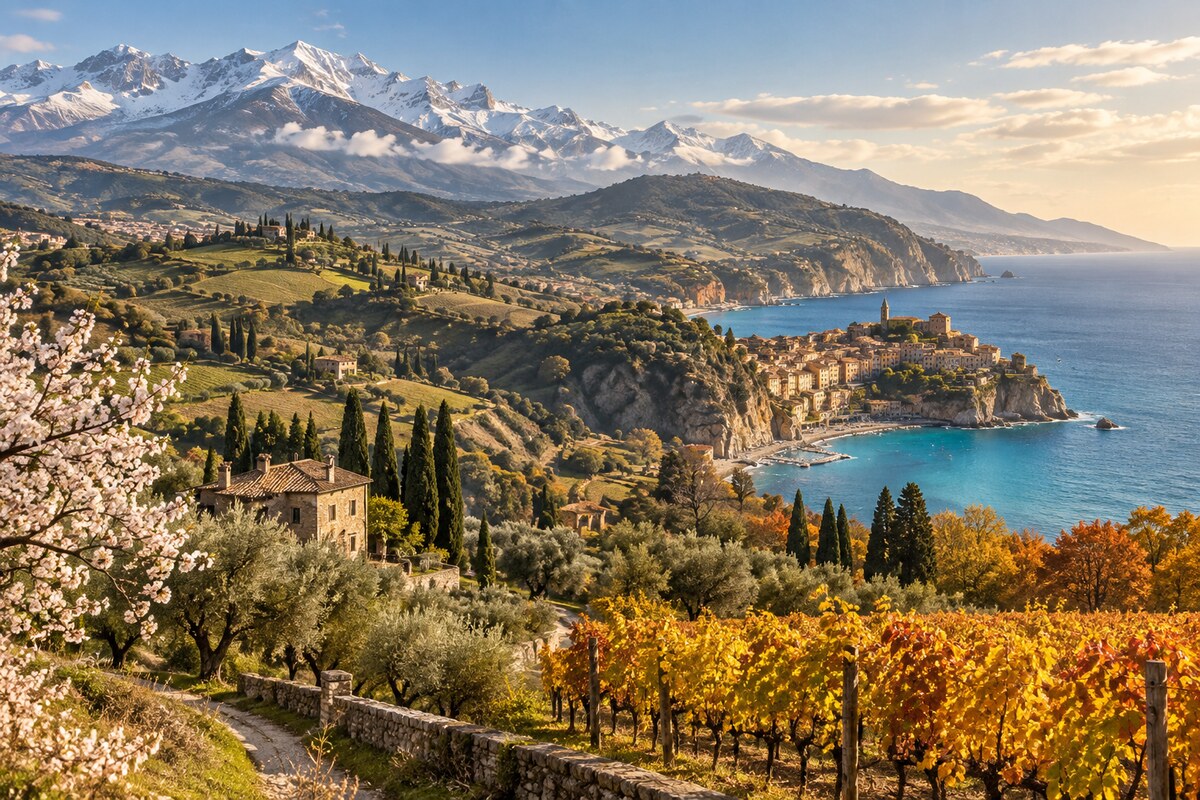
Quick answer: for many first-time trips built around art cities, food and day trips, late April to June and September to October offer the most balanced trade-off between usable weather, daylight and visitor pressure. That is not a universal rule. The Alps, the Po Valley, Rome, Puglia, Sicily and Sardinia follow different seasonal rhythms, while major attractions can remain busy well beyond summer.
The best time to visit Italy is therefore not one date on a calendar. It is the point where your preferred region, activities, tolerance for heat or rain, budget and booking flexibility meet.
Italy by month: the decision table
| Month | Broad conditions | Visitor pressure | Relative cost | Best suited to |
|---|---|---|---|---|
| January | Winter; cold in the north and mountains, generally milder in the south | Low outside ski resorts and holiday dates | Low–medium | Museums, cities, skiing, thermal stays |
| February | Winter continues; Carnival changes demand in selected cities | Low–high by event | Low–medium | Carnival, culture, winter landscapes |
| March | Transitional and changeable; longer days | Low–medium | Medium | Art cities, flexible road trips, early spring |
| April | Mild in many lowland areas; rain remains possible | Medium, higher around Easter | Medium–high | Cities, gardens, countryside |
| May | Often one of the most versatile months | High in famous cities | High | Multi-city trips, walking, food and wine |
| June | Warm, long days; summer services largely active | High and rising | High | Coast, islands, cities with early starts |
| July | Hot in many cities and inland areas; Alpine season active | Very high in icons and resorts | High | Mountains, coast, festivals |
| August | Heat, beach demand and Ferragosto patterns | Very high on coasts; mixed in cities | High | Seaside trips, mountain escapes |
| September | Summer conditions may linger, especially south and on islands | High early; easing later | High–medium | Coast, cities, harvest landscapes |
| October | Cooler, more variable and wetter in many areas; strong regional contrast | Medium, not empty | Medium | Cities, food, villages, wellness |
| November | Shorter days and greater rain risk in many regions | Low outside events | Low–medium | Museums, truffles, slower city breaks |
| December | Winter conditions; festive demand changes by place and date | Medium–high around holidays | Medium–high | Christmas cities, mountains, seasonal events |
These are planning patterns, not a forecast. Check local conditions and opening calendars shortly before departure.
Spring in Italy: flexibility with a holiday caveat
Spring is attractive because sightseeing temperatures are often more comfortable than midsummer and landscapes become greener. April and May suit travelers who want to combine cities with countryside, while June increasingly behaves like summer. Easter, public holidays and major exhibitions can raise demand sharply, so “shoulder season” does not always mean lower prices or empty landmarks.
Choose spring for Rome, Florence or Naples if you are willing to book headline attractions in advance and keep one weather-flexible day. In mountain areas, some high trails and lifts may still be unavailable until later in the season.
Summer in Italy: full access, maximum pressure
Summer brings long days and the broadest choice of coastal services, but it also concentrates heat and demand. July and August work best when the sea or mountains are the core of the trip. In Rome and Florence, plan outdoor sightseeing early, reserve timed-entry attractions, and leave the hottest part of the day for museums, lunch or rest.
Ferragosto on 15 August is a national holiday and affects transport demand, opening hours and local business patterns. Verify the specific services you need rather than assuming that everything is either open or closed.
Autumn in Italy: food, cities and regional trade-offs
September can still feel like summer, particularly in southern Italy and on the islands. October brings shorter days and more changeable conditions, yet it can be highly rewarding for art cities, food travel, vineyards, villages and thermal wellness. November is quieter in many places but demands a rain-ready plan.
Autumn is not uniformly calm. Rome, Florence, Venice and celebrated food-and-wine destinations can remain busy, especially on weekends and around major events. For a detailed October decision guide, read Italy in October. For smaller-town discovery, continue to Hidden Villages in Italy for Fall.
Winter in Italy: culture, snow and selective value
Winter can create excellent museum and city-break conditions, but daylight is shorter and weather disruptions are more likely. Alpine resorts enter peak periods around holidays and school breaks, while many coastal businesses reduce hours or close. January and February may offer value in cities, yet Carnival or major trade events can reverse that pattern locally.
Thermal destinations become especially appealing when outdoor itineraries are less predictable. Explore hot springs and thermal baths in Italy and verify each facility’s current access rules before traveling.
September or October: which is better?
Choose September if swimming, island connections and later sunsets matter most. Expect stronger residual summer demand, particularly in the first half of the month.
Choose October if your priorities are cities, food, wine, villages and wellness—and you can accept more variable weather and reduced coastal services. Early October usually preserves more summer-like possibilities than late October, but conditions vary by region and year.
Why region matters more than a national average
Northern Italy includes Alpine environments, large lakes and the continental-influenced Po Valley. Central Italy combines inland hills, art cities and two coastlines. Southern Italy, Sicily and Sardinia often retain warmth later, but autumn can also bring heavy rain, wind and disrupted marine services. Altitude and distance from the sea can change conditions within the same region.
Use destination-level information for final decisions. Start with the live Italy2Love hubs for Rome, Florence, Naples and Puglia.
Best time by trip type
Art cities
April to June and September to November can be easier for long walking days than peak summer. Famous museums and monuments still require planning. Book the essential timed entries first, then build the rest of the itinerary around them.
Coast and islands
June to September gives the strongest probability of full seasonal services. May and October can be beautiful, but beach clubs, ferries, restaurants and excursions may operate reduced schedules. Verify every connection that your itinerary depends on.
Villages and road trips
Spring and early autumn often provide useful daylight and more comfortable walking conditions. Avoid describing lesser-known places as “empty”: weekends, events and famous viewpoints can still draw crowds.
Food and wine
Autumn is rich in harvest, truffle and local festival activity. Dates change annually, and some experiences require direct booking. Use official organizers as the final authority.
Nature and mountains
Summer is the main high-altitude hiking season; autumn conditions can change quickly and lift schedules vary. Spring works well at lower elevations but may be too early for high trails.
Wellness
Thermal stays work year-round and become particularly useful in cooler or wetter months. Distinguish free natural sites from regulated spas and check access, safety and closures.
Choose by traveler profile
- First visit: May, June, September or early October for a Rome–Florence itinerary, subject to prices and availability.
- Heat-sensitive traveler: April, May, October or mountain-focused summer travel.
- Beach-led traveler: June through September for the broadest service availability.
- Food traveler: October and November for truffles, wine landscapes and seasonal menus.
- Budget-focused traveler: compare January, February and November, excluding holidays, ski weeks and major events.
- Family: prioritize predictable logistics, moderate walking temperatures and pre-booked headline attractions over a generic “best month.”
Commercial module — plan the high-value moments first
Reserve only the experiences that define the trip: a timed museum visit, a small-group food tour, a countryside day trip or a thermal stay. Browse Italy2Love experiences and confirm date-specific availability before purchase. Affiliate disclosure: Italy2Love may earn a commission from selected partner bookings at no additional cost to the traveler.
Frequently asked questions
What is the best month to visit Italy?
There is no single best month. May, June, September and October often provide a useful balance for multi-city trips, but the right choice depends on region, weather tolerance, crowds, budget and planned activities.
When is Italy least crowded?
Many destinations are quieter from November to March outside holidays, ski periods and major events. Famous attractions can still be busy, and reduced opening hours may offset the benefit.
What is the cheapest time to visit Italy?
Lower prices are more likely in parts of winter and late autumn, but airfare and accommodation vary by city, event and booking window. Compare actual dates rather than relying on one “cheapest month.”
Is October a good time to visit Italy?
Yes for cities, food, villages and wellness, provided you accept variable weather and verify seasonal services. See the full Italy in October guide.
When should I visit Italy for beaches?
June through September usually offers the broadest choice of beach and excursion services. May and October are more weather-dependent and may have reduced operations.